The French Vaudois word raisinée refers to a syrup made of the must of apples and pears. It was originally cooked in grape juice, thus the name — raisin means grape in French. Often called vin cuit, or “cooked wine”, it is in the form of a dark brown, viscous liquid. In still other parts of Switzerland, another concoction similar in consistency to jam and using the same ingredients is called cougnarde and probably dates back to at least the Middle Ages. Raisinée was used as a sweetener in many regions in Europe, and the tradition has lingered in Switzerland, especially in the cantons of Vaud, Fribourg and Neuchâtel. Today, it is mainly used for cakes and pies, and is not fermented, so it not technically a wine.
History
In the 17th century, raisinée meant a thick fruit jam, generally made of apples and pears, and slow-cooked in concentrated grape juice. According to the Encyclopédie d’Yverdon, published in the 1770s, raisinée was made from the must of very ripe green grapes cooked until reduced by two thirds, then kept in barrels. Drinking it was said to give energy to people of a frail nature.
Raisinée is no longer drunk as a cooked or fortified wine, although in the 18th century one finds recipes for fruit must syrup made from apples and pears (dropping the use of grape juice) and used to replace sugar. Like today, the apple and pear juice was cooked until thick, until a drop on a plate didn’t run anymore. During periods of scarcity and hardship — for example, during and after World War II when sugar was low or not available — it was and still is used as a sweetener.
Cantons like Fribourg and the Vaud have kept up the tradition more than elsewhere, partially because they have a history of orchards. Recipes had been maintained and they were brought back to life in the 1980s.
Traditions similar to this were to be found in Mesopotamia and Ancient Rome.
Recipe
Use apples and pears not suitable for eating. The fruit shouldn’t be overly ripe. You should be able to crush it and press it, but it mustn’t turn into a purée. The juice is filtered to get rid of hard bits. It is then decanted overnight (no more).
Unlike industrial fruit concentrates, the juice is not clarified. It is simply brought to a boil in a large copper kettle over a wood fire. Try to use up any bits of wood not suitable for a regular fire. A coil-type steam burner can be used to prevent risk of overheating, especially when making large quantities.
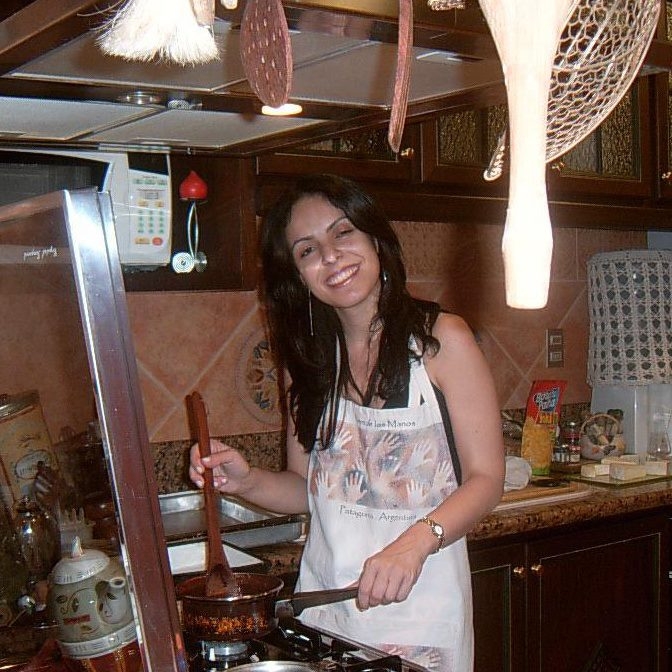
E por falar em subjetividade, a partir da minha escrita sobre a obra de M.F.K. Fisher, “The Gastronomical Me”…Você já pensou na cozinha como metáfora? Pois a reflexão de hoje é sobre o ato culinário e seus horizontes, sua subjetividade… Deste universo, nasceu minha escrita de cozinha, em começo de 2012, pelo meu desejo de compartilhar as epopeias criativas de forno-e- fogão. Não apenas as receitas, mas toda a riqueza que a culinária pode produzir em nosso mundo interno, do autoconhecimento à percepção de aptidões, anseios, sensibilidade e tantas outras riquezas. Assim, surgiram meu blog Serendipity in Cucina, em março, e meu livro, nove meses depois. No entanto, esta história tem início há trinta anos atrás, lá na minha infância.
Explico.
Para mim, a cozinha sempre foi um território mágico, um espaço de descobertas, de experiências, de sabores, de liberdade. Quando éramos crianças, meu irmão e eu fazíamos o ‘bolo inventado’, onde tudo era possível na elaboração da massa do bolo, estimulados e supervisionados pela mãe. Aprendíamos a sentir o efeito dos ingredientes na textura da preparação, a conhecer os aromas e cores que cada etapa assumia, a viver nossa criatividade de modo lúdico, livre e, sem dúvida, cauteloso nas tarefas que só os adultos poderiam executar. Espiávamos o bolo crescendo no forno, sentíamos o cheiro inundando a cozinha, e entendíamos que o resultado era produto de nossas ideias, possibilitado pela expertise da mãe. Preparar receitas, conhecer elementos e reações químicas aplicados, vivenciar a diversão ímpar de mexer a massa e de vê-la crescer no forno, tudo isso era viver a culinária como objeto de nossa primeira autoria. E, além de tudo, saboreávamos o bolo no lanche da tarde!
Com sete ou oito anos, disse para a Vó Léia que desejava fazer um bolo de Natal, de maçã com castanha-do-pará, recheado e coberto com doce de leite e castanhas raladas. Nem imagino de onde tirei esta ideia, e nem mesmo porque escolhi esses ingredientes. Cozinheira de mão cheia, ela me deu um dos maiores presentes que eu poderia ganhar naquele Natal: a confiança na minha ideia e os ensinamentos práticos de como realizá-la – explicou-me tudo, tim-tim por tim-tim, deixando que eu mesma fizesse cada passo, exceto quando a atividade envolvesse cortar alimentos ou mexer no forno. Ali, pude descobrir que poderia inventar uma receita, mas isso envolvia uma nova etapa: descobrir que as medidas devem ser seguidas à risca, que há uma metodologia para o desenvolvimento da criação, que certos cuidados são essenciais, e tantas outras coisas que sei hoje sobre as receitas culinárias. Inventar ganhava um método.
Entretanto, o mais importante que aquela ocasião me proporcionou foi saber que eu poderia, a partir de um desejo, elaborar sua realização através de passos definidos, prestando atenção em cada detalhe de cada etapa. Então, a autora daquela torta seria eu mesma, da teoria à prática, com supervisão cuidadosa dos adultos. Claro que minha compreensão, na época, estava muito longe desta complexidade toda, mas me lembro de ter sentido alegria, muita alegria, e um orgulho por ter criado a receita. Era como o prazer de abrir um presente de Natal. Aquela experiência ficou profundamente marcada em mim, assim como a prática do bolo inventado. Criatividade e método eram atributos que começavam a me despertar encanto. Repeti o ‘como-se-faz’ da torta de maçã com castanha-do-pará nos outros Natais, seguindo os registros da primeira experiência. Com isto, verifiquei que o método, seguido à risca e com atenção aos passos do processo, resultava muito semelhante entre uma e outra vez. Acredito mesmo que tenha nascido ali meu prazer em inventar receitas e repeti-las.
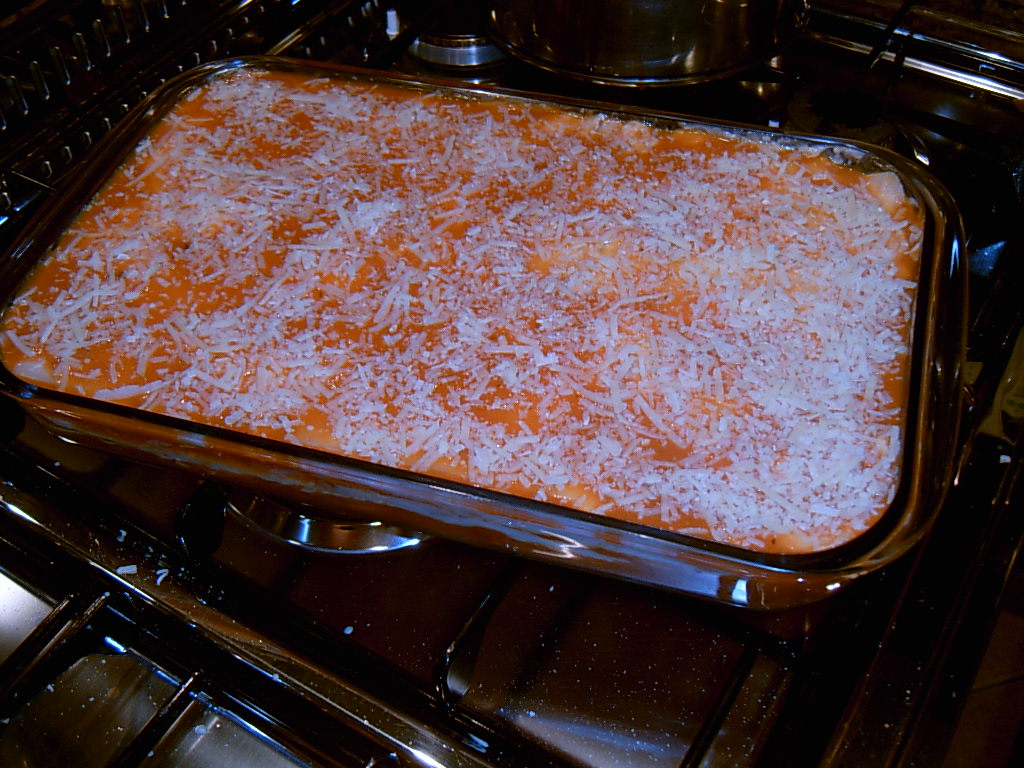
A lasanha feita por minha mãe, desde nossa infância…
Seguiu-se então o aprendizado de preparar receitas já conhecidas, como a da Nega Maluca, sempre sob supervisão. E, como toda a família era adepta da prática culinária, as oportunidades de observação e de treinamento eram múltiplas, e o encanto era crescente. Via minha mãe fazendo a lasanha anotada em seu caderno de receitas – feito à mão por uma tia –, camada por camada da lasanha, tudo passo a passo. E fui gostando cada vez mais de ler cadernos de receita: dos ingredientes ao modo de fazer, da leitura das receitas escritas à mão ao exercício mágico do preparo dos quitutes. Além disso, via o entusiasmo coletivo da mesa da cozinha nas vésperas de festas, principalmente nos Natais, em que a mãe, as avós e as tias picavam oleaginosas, preparavam sabores e compartilhavam a alegria festiva de produzir os cardápios de nossa história. Aquelas reuniões de cozinha pareciam ser a coisa mais divertida do mundo, um lugar em que se reuniam o prazer e a prática de todas as gerações, em uma vivência contagiante. Ajudando nos preparativos, observando a força de cada uma das criações próprias da mãe, da Vó Léia, da Vó Alda – cuja ambrosia ensolarava qualquer mesa de doces – e das minhas tias, descobri que cada uma tinha suas especialidades, suas preferências por esta ou aquela receita e a habilidade fervorosa na execução das gostosuras.
Based in Switzerland and France
Skype telephone number: 1-270-859-1112
Skype name: jonell.galloway.white
E-mail: jonell@theramblingepicure.com
Professional History and Experience
I started my culinary career in Paris in the early 80s. At the Sorbonne, where I studied French, I asked for special authorization to write my thesis on the history of French cuisine, which was, exceptionally, granted. I later studied at both the Cordon Bleu and La Varenne, and studied wine in various locations all over France, including Steven Spurrier’s Académie du Vin, often associated with the 1976 Judgment of Paris, and at CAVE S.A. in Switzerland. While in France, I developed and taught a method, Spontaneous Cuisine, a market-based derivation of classic French cuisine; was a contributing editor for the English version of GaultMillau for France, wrote freelance for Paris Voice, and worked as a food translator and interpreter. My articles are available on TheRamblingEpicure.com, 10Best.com/USAToday, GenevaLunch.com, Travora.com, TheRamblingEpicure.tumblr.com, in the Paris Voice archives, as well as those of CityGuide Paris and Gayot Publications for France.
I recently collaborated with Jean-Philippe de Tonnac on Le tour du monde en 80 pains / Around the World with 80 Breads, a bilingual French-English book published by Orphie in Paris. I also collaborated on a review of the life work of contemporary Swiss sculptor André Raboud for Edipresse in Lausanne. I am currently producing an American-adapted version of Christophe Certain’s book Ma Cuisine Méditerranéenne, which I will call Small Plates of the Mediterranean in English.
After moving to Switzerland in 2003, I didn’t work for 7 years. I have recently dedicated myself to a “literary” food website. The Rambling Epicure joins the voices and visions of professional writers and photographers from around the world who promote a mindful, responsible approach to real food shopping, cooking, and eating, as well as wine tasting and pairing, food politics, safety, history, art, literature and philosophy. I invite you to browse the site to see the depth and professionalism of the coverage. http://theramblingepicure.com/
A few years ago, I opened a farm-to-table with my sisters in my hometown of Hardinsburg, Kentucky, where we used local agricultural products and organic ingredients.
I am fluent in English (native tongue), French and Spanish, with rudimentary Italian and Portuguese. Having a scientific background, I thrive on investigative journalism and writing that requires in-depth research and documentation.
I currently divide my time between Switzerland and France, where I have a 1,000-year-old house in Chartres.
One should never think that everybody in Switzerland eats the same thing for Christmas dinner. With four languages and a multitude of “mini-cultures” tucked away its various mountain niches, and with a huge international population, Switzerland may well have more Christmas menus than any other country in the world.
In the French-speaking part of Switzerland, Geneva’s traditions are quite apart from the Vaud, for example, due to the late date Geneva finally decided to become part of Switzerland. Geneva traditions are often more influenced by their Savoyard and French neighbors, since they share about 100 km of border with them and only 5 km with canton Vaud.
What’s so special about a Longeole?
Many Genevois eat a sausage specific to Geneva called longeole. Every region and many villages have their own sausage recipes, but the longeole is quite apart from the others for several reasons.
Longeole sausage and potatoes cooked in
white wine, a Geneva Christmas specialty.
For one thing, it contains not only ground pork but also ground pork rind. This keeps it from drying out and gives it fuller flavor. The other, and quite major, difference is that that it is speckled with fennel seeds, probably a Savoyard influence.
Any good local butcher makes his own longeole. If not, it is advisable to find one who does. It’s Christmas, so you want to be certain it’s of good quality.
Cooking Longeole
Longeole is easy to cook, but you must allow yourself enough time. It takes longer to cook than other cooking sausages because of the addition of the pork rind, which is harder than simple ground pork.
Use a soup pot tall enough to hold your sausage. Fill with water and bring water to boil. Add a touch of salt. Drop in sausage, lower heat, and let it simmer for 2 hours 45 minutes or 3 hours. The water should be just on the verge of boiling during the whole cooking time. It is then ready to slice and eat.
Some cooks prick the Longeole with a fork before cooking, but purist that I am, I think you risk losing some of the juices, which would take away from the flavor and make the sausage less succulent in the mouth. It is also important not to let it boil, because this too will dry it out.
What do Genevois eat with Longeole?
Like everywhere, different families have different traditions, different favorites, but the most common accompaniments are potatoes cooked in white wine, lentil stew and cardoon gratin, all Geneva specialties as well.
In A Geneva Christmas: Longeole sausage, I think I got your mouth watering talking about longeole, or fennel seed sausage. But did you see the potatoes in the photo? That’s THE essential side dish: potatoes cooked in broth and white wine.
Longeole sausage served with potatoes cooked in white wine and broth
Ingredients
1 kg / 2.2 lbs type 2 all-purpose potatoes
Olive oil, just enough to lightly coat potatoes
1 tablespoon spelt flour (farine d’épeautre), or otherwise whole wheat
240 ml / 1 cup chicken broth
1 onion, diced
1 laurel leaf
3 whole cloves
300 ml / 1 1/4 cup dry white wine
1 bouquet garni
Fresh parsley, chopped
Salt and pepper to taste
Instructions
Fennel-flavored Longeole sausages for Christmas, made by Jacky Bula butcher in Geneva
Scrub potatoes. If you really don’t like potato peels, or your potatoes have lots of black spots on them, peel them. Just remember: all the fiber and vitamins are in the peel.
Chop potatoes into large cubes. Put potatoes in a large saucepan. Coat lightly with olive oil and mix well.
Sautée for 2 or 3 minutes, stirring constantly.
Heat broth. Pour hot broth over potatoes. Add chopped onion, laurel, cloves, salt, pepper and bouquet garni. Bring to a boil. Cover, then lower heat and let it boil gently.
Cook until potatoes are soft, about 15 or 20 minutes, depending on the kind of potato and the kind of pan.
While the potatoes are cooking, mix flour and olive oil in a small utility bowl, until it becomes a smooth paste. Add a couple tablespoons of the hot broth from the potatoes to paste, and beat with wire whip until smooth.
Add paste to potatoes, and beat gently with a wire whip. When smooth, add white wine.
Continue cooking, stirring often so that it doesn’t stick, and gently boiling until the sauce starts to thicken.
Taste. Add salt and pepper if required.
Sprinkle with chopped parsley when serving. Traditionally, in Geneva this is served with longeole sausage at Christmas, but it goes well with many dishes, for example a smoked cooking sausage from the canton of Vaud.
Cooking notes: I use a Kuhn Rikon Durotherm to maintain the vitamins and decrease cooking time. This also allows you to use less liquid, which gives a more intense flavor. In this case, you would use just enough broth to cover the potatoes.
Simone van den Berg is a food photographer in the Netherlands. She runs a professional photography studio, Junglefrog Images, as well as a personal food photography site, Fresh Food Photos. She also gives photography workshops for food bloggers and beginners, teaching them to use the photo gear they have to the best of its advantage. She also runs the culinary magazine De Glazen Vork in Dutch.