One Reader’s Response: Melissa Bedinger on the Future of Food Writing

Published by Thursday, April 19, 2012 Permalink 0

Here is some more reading to inspire you for tomorrow’s live Twitter chat @RamblingEpicure at 2 p.m. EST, 8 p.m. Paris time, hashtag #futurefoodwriting. We look forward to you joining the conversation. For more details and more reference reading, click the related links below.

by documentary

Where I grew up, we used to have grocers who relied on their suppliers, and knew about their practices in depth. With supermarket chains now dominating our supply, and the Internet at our fingertips, we have become our own grocers. In a state of (sometimes deserved) scepticism of the modern supply chain, we have taken it upon ourselves to source information about the food we choose — and everything else that we participate in or consume. Is it organic? Is it fair trade? Is it local, sustainable, traceable? Readers want to know everything, and product ‘transparency’ has migrated from the occasional call to dodgy corporations, to a granted right of the consumer.

This hunger for knowledge is no longer reserved for the trendy foodies who can afford it; it’s alive and well amongst the general public. At the same time as this rise in “food awareness”, there has been an undeniable eruption of personal food blogs, shaping change not only in the volume of food writers and readers but in what they want out of the content they read. It’s not just food writing, but journalism on the whole that is changing, marked by events like the last hard-copy edition of Gourmet in 2009, and highlighted by the media in pieces like the recent documentary on how The New York Times is learning to co-evolve with its readers.

As in every other industry, multi-faceted staff are the new standard; you can’t swing a virtual cat without hitting a PR-pro-turned-web-designer-turned-backyard-farmer (or some combination thereof). And although modern food journalists hail from equally varied backgrounds, they are now forced to compete with a sea of online food bloggers who have split personalities specializing in editing, photography, web design, networking and promotion. For those hopefuls hunting a career in food writing, the task seems almost insurmountable. Food & Environment Reporting Network last week struck a chord with many published and aspiring writers, by painting a brutally honest picture of the financial state of the industry, citing advertising dollars as a central issue. Hesser did, however, point readers in the direction of building a varied skill set that would provide a springboard for work in a new era in the food industry. With the information overflow diluting advertising funds, a career more directly engaged with food production appears to be the best way to make ends meet. By all means, write, she says — but make any other venture the main priority.

Continue Reading…

Never miss a post
Name: 
Your email address:*
Please enter all required fields
Correct invalid entries

Wilson Dizard III: More reading for Friday, April 20, Twitter chat @Ramblingepicure #futurefoodwriting

Published by Thursday, April 19, 2012 Permalink 0

I wanted to share #futurefoodwriting panelist and veteran journalist Wilson Dizard III‘s thoughts about the state of food writing. Dizard is author of our “Quelling Quitchen Qualamities” column. It should serve as food for thought for your questions at tomorrow’s Twitter chat.

He says:

Disclosure of Financial Backing – Conflicts of Interest

I think that, somewhere there has to be disclosure of potential conflicts of interest.

Here in D.C. we are in a bit of a special environment because we are beset by PR flacks from all over the world who would just love to get press passes and represent the house organs (magazines) of their trade associations as bona fide media outlets.

With all the money sloshing back and forth over issues like health care reform, etc., the only way to keep those vile flacks in check is to draw a bright line: members of the Periodical Press Gallery (the basic D.C. press pass) are required to receive all of their income only from bona fide news organizations rather than lobbies or trade associations.

So, I do understand that reporters elsewhere do have less rigid prohibitions on accepting baksheesh from the industries they cover.

So: if those people can’t live without that money…then…at the very least, they should disclose those financial links.

Because otherwise, how would you know if Monsanto wasn’t paying your editor’s mortgage, if you were a food writer?

Especially in the Slow Food field, I would think that disclosure, at the very least, is a step in the right direction.

That’s available now, to reporters who join organizations like the SPJ (Society of Professional Journalists).

The Place of PR in Food Writing and Ethical Journalism

Ever since the beginning of commercial public relations by food companies, those companies have used recipes to promote use of their own products as ingredients.

So: by this means, countless recipes entered the global hivemind of food knowledge, uncopyrighted.

To some degree, this was a good development, insofar as packaged food is and was healthful.

But: insofar as manufacturer-sponsored cookbooks and recipes infiltrated high school and university home economics programs in the 1940s, 1950s and later (and they are coming back again, sometimes under a different moniker), they promoted practices and consumption not wholly in the consumers’ interests.

For example: the Chicago meatpacking industry relentlessly promoted its effectiveness in “using everything but the squeal” as it promoted canned pork products and lard. But: abuses in that industry prompted the Pure Food and Drug Act.

After that law was passed (largely because of Upton Sinclair’s novel The Jungle and similar exposes by muckrakers), the food and pharmaceutical attorneys started working steadily and successfully to tame the FDA.

One of the great meatpacking industry successes, politically, was to shift regulation of slaughterhouses to the Agriculture Department. Abattoirs in the U.S. today are, in many cases, absolutely disgusting. Poor slaughterhouse regulation actually is responsible for multiple consumer deaths annually, because of the spread of pathogens like salmonella, etc, through those filthy slaughterhouses. Meanwhile, working conditions are so horrible that many of them have greater than 100 percent employee turnover annually — even when they rely on labor contractors to provide illegal immigrants as their labor force.

The decline, if not the actual suppression, of food safety, health and cooking education in the U.S. at the hands of budget-cutters in state legislatures has left food education in the hands of the supermarket and packaged food industries. So: would you trust Wal-Mart to teach your kids how to eat? The mind recoils, and the gorge rises.

If the Slow Food movement, and the writers who promote it, can pick some targets of opportunity among the unhealthy practices promoted by the packaged food industries, then they’ll gain my respect. What if they targeted the soft drink vending machines in schools?

I can’t tell you how revolted I am by all the propaganda about child obesity, when it focuses on minority and low-income populations. It’s no comfort at all that that openly racist “blame the victim” ideology goes hand in hand with the deadly neuroses promoted by the fashion industy, namely, anorexia, bulimia, and other disorders associated with body image problems, like cutting.

Socially responsible education about food is too important to be left to the Walton family. Kraft and Altria will have America’s kids gobbling transfats while smoking Kools and drinking God knows what if it feeds their profit numbers.

Could these food writers agree to hammer out a manifesto for ethics in food writing? Or a pro bono approach to home economics so that there’s some alternative to Barbie’s Dream Kitchen in American homes?

As far as the funding from sponsors: at the end of the day, the key is disclosure.

The goal is, quite simply, just to not try to trick the readers. Which of course, the PR types are all about: hijacking a food writer’s credibility to flog their pink slime, or other product.

Never miss a post
Name: 
Your email address:*
Please enter all required fields
Correct invalid entries

Simon Says: Daily Food Quote, April 19, 2012

Published by Thursday, April 19, 2012 Permalink 0

by Simón de Swaan

To ask a woman to become unnaturally thin is to ask them to relinquish their sexuality.–Naomi Wolf

The Beauty Myth is an American author and political consultant. With the publication of The Beauty Myth, she became a leading spokesperson for what was later described as the “third wave” of the feminist movement.


Never miss a post
Name: 
Your email address:*
Please enter all required fields
Correct invalid entries

Bill Daley: More reference reading for #futurefoodwriting Twitter chat on Friday, April 20, @RamblingEpicure

Published by Wednesday, April 18, 2012 Permalink 0

One of our panelists from the Chicago Tribune, Bill Daley, has just added another article to the reading list for our Twitter chat @RamblingEpicure at 2 p.m. EST on Friday, April 20, 2012, about the future of food writing, hashtag #futurefoodwriting.

Food lends itself to good writing because, as M.F.K. Fisher so famously wrote long ago, writing about food often means writing about “other, deeper needs for love and happiness.” In defense of her craft and her subject, she declared: “There is a communion of more than our bodies when bread is broken and wine is drunk.”

Click here to read entire article.

Bill will be on hand Friday as a panelist to answer readers’ questions about the future of food writing.

Never miss a post
Name: 
Your email address:*
Please enter all required fields
Correct invalid entries

Reference Reading for Friday’s Twitter Chat #futurefoodwriting @RamblingEpicure

Published by Wednesday, April 18, 2012 Permalink 0

For those participating in the Twitter chat @RamblingEpicure on Friday, April 20 at 2 p.m. EST and 8 p.m. Paris time, here is a reading list to get you up-to-date on what other people in the food world have been saying. We look forward to your questions and comments on Friday. See you there!

The panelists are:

  • Amanda Hesser, former The New York Times food editor and writer, and co-founder of @Food52
  • Corie Brown, former food editor and writer at the Los Angeles Times, deeply involved in the food publishing world, founder of @ZesterDaily
  • Bill Daley, food feature writer at Chicago Tribune @BillDaley
  • Dianne Jacob, food writing coach @diannej
  • Monica Bhide, cookbook writer @mbhide
  • Gloria Nicol, food writer for The Guardian @thelaundry
  • Wilson Dizard III, former Newsweek and McGraw Hill, author of “Quelling Quitchen Qualamities” column on The Rambling Epicure, @wdizard

Click on the panelists’ names for more information about what they do in the food writing world.

Reference reading:

Advice For Future Food Writers,” by Amanda Hesser, former New York Times food editor and writer, co-founder of @Food52

Dear Amanda Hesser: Food Writing’s Golden Age is Now,” by John Birdsall, Senior Editor of @CHOW

“FERN is Changing Food: As journalism ranks shrink, the Food & Environmental Reporting Network is funding needed food reporting,” by Corie Brown founder of @ZesterDaily

Dishing about food writing: Out of a crowded field, seven writers you should know, by Bill Daley of Chicago Tribune @billdaley

“Sofia Perez: What Constitutes Good Food Writing,” by Sofia Perez, food blogger @SofiaPerez_nyc

“5 things that Dreaming of Being a Food Writer Got Me,” by Naomi Bishop, food blogger @gastronome

“Is a Career in Food Writing Dead?” by Mollie Watson @iacp

“Is Food Writing a Dismal Way to Make a Living?” by Dianne Jacob, food writing coach @diannej

Disclosure of Financial Backing – Conflicts of Interest, The Place of PR in Food Writing and Ethical Journalism,” by Wilson Dizard III @wdizard

One Reader’s Response: Melissa Bedinger on the Future of Food Writing, by Melissa Bedinger


Never miss a post
Name: 
Your email address:*
Please enter all required fields
Correct invalid entries

Food News: Target 100, A Sustainable Australian Meat Production Industry by 2020

Published by Tuesday, April 17, 2012 Permalink 0

by Amanda  McInerney

An admirable new initiative by Meat & Livestock Australia, Target 100, aims to deliver sustainable cattle and sheep farming in Australia by 2020.

Sustainability is no recent thing for the Australian meat industry, which has been investing in environmental research and development for many years. By implementing a selection of 100 individual research, development, and extension initiatives which will be funded through the various meat industry organisations. The industry intends to focus this and reduce the resources it uses, thus reducing its footprint, improving its efficiency, and providing a focal point for environmental, social and ethical farming action in order to to ensure a sustainable food source.

Professor Tim Flannery - Target 100 launch


Continue Reading…

Never miss a post
Name: 
Your email address:*
Please enter all required fields
Correct invalid entries

Simon Says: Daily Food Quote, April 16, 2012

Published by Monday, April 16, 2012 Permalink 0

by Simón de Swaan

No one can be wise on an empty stomach.–George Eliot

Mary Anne Evans, better known by her pen name George Eliot, was an English novelist, journalist and translator, and one of the leading writers of the Victorian era. She is the author of seven novels, including and Daniel Deronda.


Continue Reading…

Never miss a post
Name: 
Your email address:*
Please enter all required fields
Correct invalid entries

Newfangled Food Vocabulary: Shemomedjamo

Published by Wednesday, April 11, 2012 Permalink 0

I love this article from Cracked about nine foreign words we really need to incorporate into English. Here is an excerpt of one of my favorites:

Shemomedjamo (Georgian)

Means:

To eat past the point of being full just because the food tastes good.

Here is a word that describes such a quintessentially American phenomenon it’s shocking that another culture came up with it first. After all, there are entire civilizations that have never heard of “never-ending pasta bowls” or “dessert pizzas.” Fortunately, the Georgians (the European Georgians, that is) devised a word to describe it exactly. “Shemomedjamo” is the act of eating to the point where your body says, “OK, we did it! We’re all done now,” and then muscling through another three steaks.

The literal translation for shemomedjamo is “I accidentally ate the whole thing,” which is a charming way of saying “Oh my God, why isn’t somebody stopping me?!”

Continue Reading…

Never miss a post
Name: 
Your email address:*
Please enter all required fields
Correct invalid entries

Quelling Quitchen Qualamities: Help! It’s not my fault! How to Tame a Raging Stovetop

Published by Wednesday, April 4, 2012 Permalink 0
by The Quonstant Quonnoisseur

Conquering the Basic Cooking Techniques of Poaching, Simmering and Boiling

One of the advantages of cooking for others is that no matter how those you are cooking for might attempt to intervene in the process, offer advice, snoop on your activities & etc., in most cases they lack the expertise, aptitude, patience and experience to take your place in front of the stove. However much those individuals might seek to run mind games on you because you are, in a sense, doing some work that they might have helped finance, in the very short term their relation to you is one of dependence.

The people you’re feeding, typically family members, will almost always be hungrier than you. And they will lack your access to sharp knives and convenient missiles (fruits and vegetables, for example) needed to drive them off.

This power relationship can be reversed in the case of your relationship to kitchen appliances. Remember: those things were designed by engineers and programmers who themselves were oppressed by doltish marketing managers and senior executives. The engineers’ goals and values might have led them to seek the most efficient and graceful designs.


To you, a lovely kitchen stove; to the engineers who designed it,
a purgatory they’re enduring
until they can design rocket ships and race cars.

Continue Reading…

Never miss a post
Name: 
Your email address:*
Please enter all required fields
Correct invalid entries

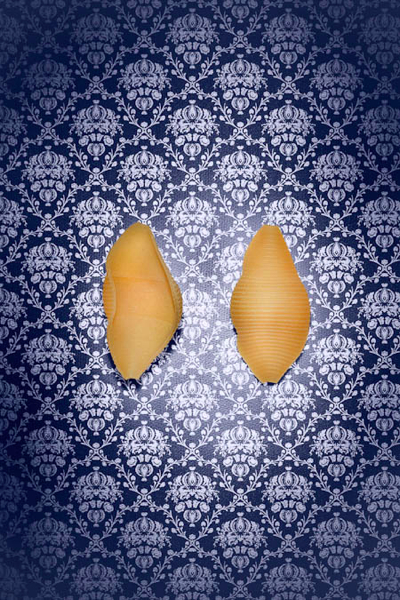
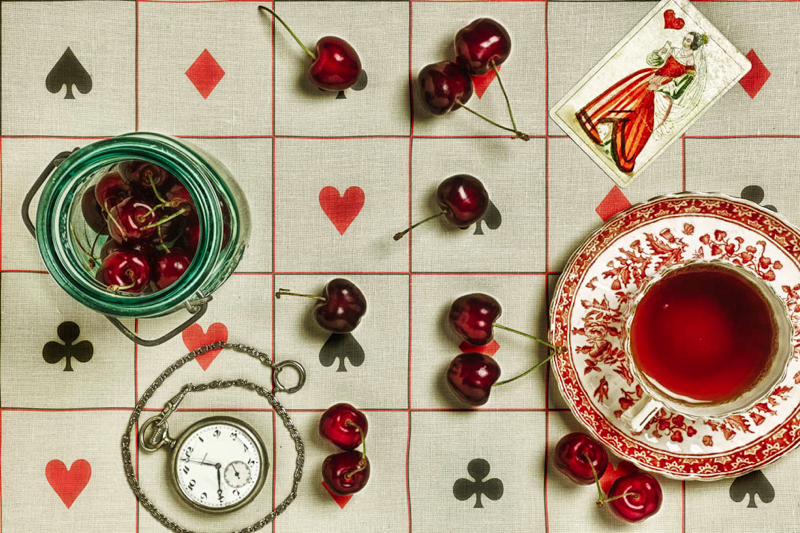
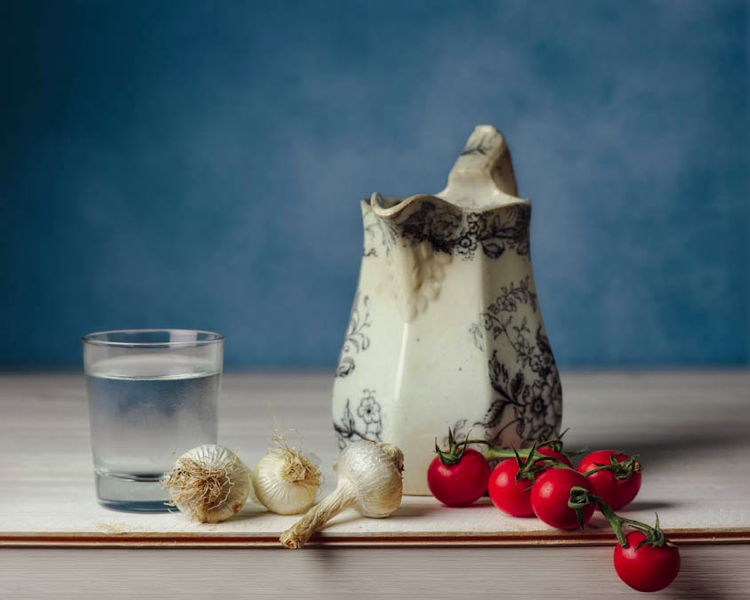
Food Art: The Incredible Sensuality of Food, a food photography exhibit by Alessandro Guerani

Published by Wednesday, April 4, 2012 Permalink 0

by Jonell Galloway

Alessandro Guerani‘s food photography approaches true art.

Photo courtesy of Alessandro Guerani.


Food is not, after all, only a story of taste. It is about texture and how it feels in your mouth. It is about whether it looks appetizing, how it is presented on the plate. It is about the smells coming from the kitchen, gently seducing you to the table, and the taste you have while it’s in your mouth and the aftertaste that lingers. It can even be about sound, for example, when the alcohol goes up in flames as they flambé your crêpes Suzette.

Guerani manages to bring all the senses together in a single photograph, even though the smells, texture and other senses are not concretely present. It remains, after all, a photograph, but a photograph like none other, because though visually beautiful, it takes you beyond the confines of visual.

Take a look and let us know what you think.

You can see more of Alessandro’s photos on his website, Fotografia.

Never miss a post
Name: 
Your email address:*
Please enter all required fields
Correct invalid entries

UA-21892701-1