Slow Food News: The Conundrum of Buying Healthy, Fair and Cheap

Published by Friday, January 27, 2012 Permalink 0

Slow Food U.S.A. founder Josh Viertel ended up losing a large number of his core supporters after sponsoring what seemed like an idea in line with the hard economic times. How did he do this? By sponsoring the “ Challenge,” in which people were asked to “sign a pledge to cook a slow-food meal for not much more than the cost of a McDonald’s Extra Value Meal. To some, it was heresy.”

Many of its core members didn’t agree, since Slow Food’s message has been from the beginning that Americans were going to have to accept to pay more if farmers were to get fair pay.

Click here to read more.


Never miss a post
Name: 
Your email address:*
Please enter all required fields
Correct invalid entries

Our favorite food books of 2011

Published by Friday, December 23, 2011 Permalink 0

by Jonell Galloway

Cookbooks:

Ancient Grains for Modern Meals, by Maria Speck

My favorite cookbook of the year. Maria Speck knows how to incorporate ancient whole grains from around the world into dishes that remain rustic on the edges, but healthy, original and elegant at the same time. The technical explanations about ancient grains are excellent, as well as her explanations about general cooking techniques. The food stories she incorporates here and there about growing up in Greece and Germany add a touch of charm.

A must for any health-conscious real food lover who wants to eat interesting food combinations and dishes with a touch more sophistication that can pleasantly surprise guests, but not take them totally away from their references, because the dishes are for the most part influenced by Mediterranean cuisine.

For poetry-loving foodies:

The Poet’s Cookbook: Recipes from Germany, poems by 33 American poets with German translations

The Poet’s Cookbook: Recipes from Tuscany, poems by 28 Italian and American poets

I love the original concept of these books, pairing a food poem with a recipe. A poem by our Food Poetry Editor, Christina Daub, “Wine“, appears in the Tuscany version.

Farming: A Hand Book, by Wendell Berry

As a Kentuckian, Wendell Berry has forever been my mentor. He is, in my mind, the precursor of the Slow Food philosophy in the U.S., through the philosophy he has cultivated and spread for over 50 years now, well before Petrini and company started the Slow Food movement. Whether writing prose or poetry, he is always eloquent, and the same message of integrity, respect for others and for the land is the central message. This is one more inspiring book of poetry to add to our shelves of books to keep forever, that will comfort us in times of trouble, that we will pick up time and time again when we’re losing faith in humanity, devastated by the disrespect shown to the land, losing touch with our roots. Berry always says what he thinks in all his eloquence and with true gentillesse, but more than that, he lives the life he preaches, and that is consoling.

For food lovers, wine lovers, and culinary travelers:

Food Wine Rome, by David Downie and Alison Harris, published by The Little Bookroom, part of The Terroir Guides series

Food Wine Burgundy, by David Downie and Alison Harris, published by The Little Bookroom, part of The Terroir Guides series

Paris, Paris: Journey into the City of Light, by David Downie

David Downie writes wonderful articles for The Rambling Epicure and Alison does exquisite food photo exhibits for our Food Art section. I can never get enough of their work, because the writing is exquisite and full of literary and historical references, and the photos are truly art. Downie always shows you the insider’s view of whatever he writes about, and Alison has a great eye for catching the very essence of what they’re covering, whether it be truffle hunting or discovering little out-of-the way restaurants in isolated villages. You can never go wrong with their books.

For bread lovers:

Dictionnaire Universel du Pain, by Jean-Philippe de Tonnac

Jean-Philippe de Tonnac also writes for The Rambling Epicure, and has recently become THE bread writer all bakers want to meet. This book should in my mind be translated into English immediately. It offers a wealth of information about bread from time immemorial, covering techniques and breads from around the world, as well as spirituality, sex, gluten intolerance, bakers as poets, bakers as prophets and much more. “Encyclopedia” would be a more appropriate term than “dictionary”.

Mindful eating:

The Self-Compassion Diet: Guided Practices to Lose Weight with Loving-Kindness by Jean Fain

Jean Fain has tried every diet out there, so she can speak with authority about the subject of weight loss. She is also affiliated with Harvard Medical School as a psychotherapist, so she has the credentials to talk about the subject. Her book takes a totally different approach to weight loss than any I’ve seen. She doesn’t count calories and restrict what you eat. Her approach is instead through the mind, to become mindful of what we eat, when we eat (when stressed or lonely, for example), why we eat (out of need to nourish ourselves or out of boredom or frustration); to appreciate what we eat, and above all to be conscious of our entire relationship with food.

The book teaches you how to take control of yourself and your relationship to food so that you can change the way you think about food in general, so that eating becomes a totally different experience. Jean does this through loving-kindness, self-hypnosis, meditation and numerous other weight-loss approaches, which you follow gradually, not all in one go. She also offers a CD including guided meditations to help patients after they have stopped therapy.

Her main thrust is self-love, that we must not be too hard on ourselves, or we’ll fall back in to our old and bad habits quickly. The beauty of the book and CD combination is that you can live half way around the planet and still follow her method.

For lovers of literature: food essays and prose:

Slow Food: Collected Thoughts on Taste, Tradition, and the Honest Pleasures of Food, by Carlo Petrini and Ben Watson

This book consists of an anthology of articles by the world’s top food writers, making me remember the old days when we’d visit the family in the countryside and how I thought it odd that they grew all their vegetables themselves and knew how to can them; how they drank milk straight from the cow (one of my fondest childhood memories), and how we relished in those meals, how it built bonds between us. “Drawn from five years of the quarterly journal Slow (only recently available in America), this book includes more than 100 articles covering eclectic topics from “Falafel” to “Fat City.” From the market at Ulan Bator in Mongolia to Slow Food Down Under, this book offers an armchair tour of the exotic and bizarre. You’ll pass through Vietnam’s Snake Tavern, enjoy the Post-Industrial Pint of Beer, and learn why the lascivious villain in Indian cinema always eats Tandoori Chicken.”

For pastry makers and lovers:

Mich Turner’s  Masterclass: The Ultimate Guide to Cake Decorating Perfection, by Mich Turner, published by Jacqui Small LLP, London

Mitch Turner’s cake decorating book is worthy of a fine art book in its presentation, and of an encyclopedia in terms of the detailed explanations about cake decorating. Her pastry and cakes are truly works of art. A must for all pastry makers, whether professional or amateur.

Food art:

From Plate to Pixel: Digital Food Photography, by Hélène Dujardin

This book is special for many reasons. There are lots of people out there trying to learn food photography without a clue as to even the basic techniques required and no possibility of taking a food photography workshop. This is the book for them, because all the basics plus quite a lot more are explained in a clear, direct manner. It also verges on being an art book, because it is illustrated by Dujardin’s beautiful food photography.



Never miss a post
Name: 
Your email address:*
Please enter all required fields
Correct invalid entries

Switzerland: About Cardoons, Geneva’s Favorite Winter Vegetable

Published by Monday, December 19, 2011 Permalink 0

by Jonell Galloway

Anyone living in Geneva really should know how to prepare cardoons, since it is Geneva’s favorite winter vegetable, and even has a right to an AOC, i.e. an official certified appellation, the “Geneva cardoon.” The problem is it is time-consuming and tedious, namely due to its prickly thistles.

Cardoons are one of Geneva’s favorite Christmas dishes, when it is most often served au gratin, but they are served in a variety of ways all winter long.

Viviane Bauquet Farre gives a wonderful explanation on how to prepare and blanch those tasty but thistly dears.

The Chapuis family, who does the Boulevard Hélvétique market in Geneva on Wednesday and Saturday, started preparing them and sealing them in vacuum packs a couple of years ago, and it has been so successful that everyone is following suit.

So if you’re brave enough, prepare them yourself. Otherwise, know you have an alternative. More and more sellers are copying the Chapuis and removing the thorns for you.

Originally published on GenevaLunch.

Never miss a post
Name: 
Your email address:*
Please enter all required fields
Correct invalid entries

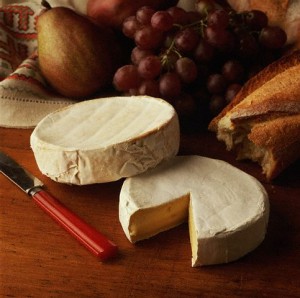
Say Cheese!

Published by Monday, December 19, 2011 Permalink 0

by Alice DeLuca

Many years ago, on a train traveling slowly through the French countryside – I don’t remember exactly where and I refuse to invent a location for the sake of a story — I met a man whose job it was to sell cheese mold. This friendly man was sitting in the same compartment with me. I was naturally apprehensive when he started to speak. Sometimes men traveling on trains want to share stories and sometimes they want to show young women other things whether the women are interested or not, but that is another story.

Continue Reading…

Never miss a post
Name: 
Your email address:*
Please enter all required fields
Correct invalid entries

David Downie: Christmas in Paris is All about Eating and Drinking, What Happened to Jesus?

Published by Monday, December 19, 2011 Permalink 0

In most Christian countries, Christmas is about celebrating the birth of Jesus, to more or lesser degrees. In consumer-driven countries, much of Jesus’ birthday is lost as people scurry around looking for the perfect Christmas gifts.

Birth of Jesus in a Kabyle Catholic book


David Downie thinks Christmas in Paris is focused mostly on food, and just a little on Jesus. The more foie gras, smoked salmon, champagne, and everything else rich under the sun you can slide down your gullet, the better. It’s about good food, but also about excess. It’s about dressing up all pretty and going from one meal or party to another. It’s about having a crise de foie or “liver attack”, as the French call it, after the holidays.

Read David Downie’s take on it.

Continue Reading…

Never miss a post
Name: 
Your email address:*
Please enter all required fields
Correct invalid entries

Simon Says: Daily Food Quote, December 19, 2011

Published by Monday, December 19, 2011 Permalink 0

by Simón de Swaan

There is a remarkable breakdown of taste and intelligence at Christmastime. Mature, responsible grown men wear neckties made of holly leaves and drink alcoholic beverages with raw egg yolks and cottage cheese in them.–P.J. O’Rourke

Patrick Jake “P. J.” O’Rourke (1947-) is an American political satirist, journalist, writer, and author. O’Rourke is the H. L. Mencken Research Fellow at the Cato Institute and is a regular correspondent for The Atlantic Monthly, The American Spectator, and The Weekly Standard.


Continue Reading…

Never miss a post
Name: 
Your email address:*
Please enter all required fields
Correct invalid entries

Portuguese Delights: Arbutus or “Tree Strawberry” Cream

Published by Friday, December 16, 2011 Permalink 0

by Gerês

I love to go to Gerês in autumn: The warm colors of the leaves. The tranquility of the surroundings and the breathtaking landscape always take me to another dimension, hard to define in only words. I lose myself in those glorious woods; I lose track of time too.

I take my time walking, enjoying nature’s generosity and gathering mushrooms and arbutus, also known as “tree strawberries”. And this year I was happy to discover that the arbutus trees were covered with vibrant yellow, red, and orange berries, most of them ready to be picked and eaten. They have a delicious sweet/tart taste and a singular texture. Soft but with very small pips, that give them a tiny bit of crunch, and perfect when dipped and baked in a smooth cream. They remind me of my care-free childhood in the hills of Gerês, when only the present existed and every moment had a magical aura.

When I returned home, I still had all these tastes and scents floating in my mind and I wanted to make them into some delicious concrete delight instead of just a memory. Once more, I found myself pottering in the kitchen, cooking a smooth fruity cream made out of memories.

Recipe

Continue Reading…

Never miss a post
Name: 
Your email address:*
Please enter all required fields
Correct invalid entries

Simon Says: Daily Food Quote, December 16, 2011

Published by Friday, December 16, 2011 Permalink 0

by Simón de Swaan

In my experience, clever food is not appreciated at Christmas. It makes the little ones cry and the old ones nervous.–Jane Grigson

Jane Grigson was a notable English cookery writer who wrote over 20 cookbooks and whose growing interest in food and cooking led to the writing of her first book, Charcuterie and French Pork Cookery (1967), which was accorded the unusual honour for an English food writer of being translated into French.


Continue Reading…

Never miss a post
Name: 
Your email address:*
Please enter all required fields
Correct invalid entries

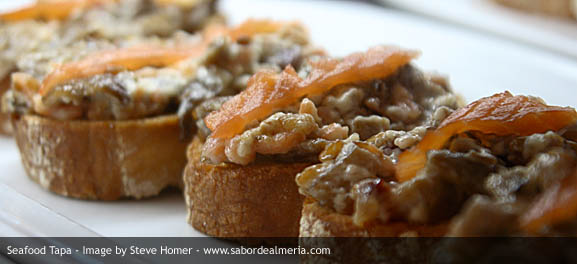
Food Art: Tapas, Tapas, by Steve Homer

Published by Friday, December 16, 2011 Permalink 0

Our latest food artist discovery: food photographer Steve Homer of Sabor de Almería in the southeast of Spain.


Never miss a post
Name: 
Your email address:*
Please enter all required fields
Correct invalid entries

Culinary Chemistry: 10 Gluten-Free Tips for the Holiday Meals

Published by Thursday, December 15, 2011 Permalink 0


Culinary Chemistry: 10 Gluten-Free Tips for the Holiday Meals

by Jenn Oliver

The upcoming festivities are all about sharing, seeing friends and family, creating new memories and reliving old ones. It’s a time of joy, inspiration, goodwill, and laughter that I look forward to each year, while looking ahead to the New Year and the fun and exciting experiences the coming seasons will bring. We stroll around the Christmas markets tasting chocolate, nougat, mulled wine, and roasted chestnuts, flavors and delights not just for the taste buds but all five senses — and has become something I look forward to at this time every year.

But for some — such as those who are gluten intolerant or celiac — holiday festivities can bring about a certain anxiety, a stress caused by imposing dietary restrictions on those doing the cooking, or fear of gluten contamination from the grand holiday meal. Just having had a successful family Thanksgiving dinner that everyone, including the gluten free enjoyed, I thought it might be useful to share some of our tips for surviving, and keeping the holidays fun without stressing out about food. So here are 10 gluten-free tips for surviving the holidays.

  1. Be involved – The more you are involved in the process of deciding what gets made and from where everything comes from, the better chance you will have to help direct the meal towards foods and dishes that are safe for you. Being proactive from early on rather than waiting til the last minute may save a lot of stress and worry.
  2. Educate friends and family – It is beneficial for others to know about your dietary needs and what is involved in creating a safe environment. Not everyone fully understands the risks of cross contamination, or that croutons can’t just be picked off of a salad and that a knife can’t be double dipped into the apple butter when spreading on rolls.
  3. Suggest naturally gluten-free dishes – Recipes abound for a myriad lovely and flavorful courses that never contained any flour to begin with, such as salads, roast meats, vegetables. Feel free to explore/suggest dishes that require no alterations to prepare gluten free.
  4. Cook from scratch – Processed foods have a tendency to have a long list of ingredients, including some off limits and questionable ingredients, such as barley malt syrup, modified food starch, etc. Cooking from scratch gives one more control over what goes into a dish and is also easier to modify in order to make a food gluten free.
  5. Offer to host  – While hosting is often a lot of work, you know the safety status of your own kitchen with regard to holidays foods, and it may be easier to host than making sure that someone’s kitchen counter that was dusted with flour earlier that day from baking holiday cookies doesn’t end up contaminating your dinner. If you can’t host, offer to cook some of the dishes to help make it easier for the host to accommodate you, or at least to help with the cooking when you arrive so that you can help keep food prep safe for you.
  6. Make GF versions of your favorites – Many dishes require very simple substitutions to be made gluten free – stuffing can be made by just substituting GF bread; gravy and creamed sauces by substituting GF all-purpose flour, or GF cookies can be used to make your favorite cookie crumb crust for a pie.
  7. Keep GF foods completely separated from gluten foods – If you are eating at a mixed GF/gluten dinner, make sure that the foods you want to be able to eat are completely separated, so no one mistakes which serving spoons go into which dish and bread crumbs don’t find their way into the GF courses. Another idea is to serve the gluten-free folks first, before anything has a chance to get contaminated.
  8. Try new traditions and recipes – Holidays are all about traditions, but they can be as much about making traditions as keeping them. Rather than trying to replicate a longstanding favorite dish, why not try something completely different? A new set of flavors perhaps, so you don’t feel as if you are replacing your great grandmother’s heirloom recipe, but more just creating a new tradition for friends and family to enjoy in the years to come.
  9. Don’t gamble with your dinner – If you are not sure whether or not a dish is GF, it may be best to pass on it. No one enjoys being sick from having a gluten reaction over the holidays or while traveling. Depending on how long you will be there and who you are staying with, it may be a good idea to also bring some snacks just in case.
  10. Remember, it’s just a meal – There is so much more to the holidays than simply one dinner together – the holidays are also about spending time with friends and family, and sharing those special moments. If dinner doesn’t end up being the idyllic meal you had dancing around with those sugarplums in your head, remember the fun moments and spirit of the season, and the real reason for getting together in the first place.
Wishing everyone a happy and safe holiday season, and a joyous New Year!
_________________
Jenn Oliver writes our column Culinary Chemistry. She has a Ph.D. in science, and explains the scientific aspects of what really goes on when you cook (the next Harold McGee?). She’s been running a gluten-free blog, Jenn Cuisine, since 2008 and her kitchen is more like a laboratory than a kitchen. She’s focuses her chemical calculations and experiments on figuring out how to make traditionally glutinous food gluten-free.
Never miss a post
Name: 
Your email address:*
Please enter all required fields
Correct invalid entries

UA-21892701-1