A Mesolithic Dinner: Food, Wine and Art by Jane Le Besque

Published by Tuesday, June 4, 2013 Permalink 0

by Jonell Galloway

A Mesolithic Dinner: Food, Wine and Art by Jane Le Besque


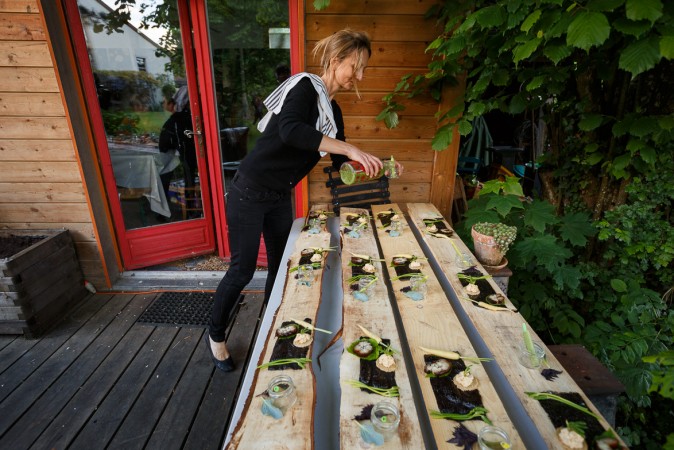
Jane Le Besque hosted a “mesolithic dinner” on June 30, 2013, in her home in the Pays de Gex just over the border in France, an event sponsored by Slow Food Geneva. The dinner was cooked using ancient flavor combinations and techniques, and served on split logs onto which slate plates were placed and used as plates.

What Food Did Jane Le Besque Serve at Her Mesolithic Dinner?

Although Jane’s dinner was labeled “Mesolithic”, it was indeed much more than that. She covered the evolution of food from the post-glacial hunter-gather periods, through the Mesolithic and Neolithic, and going on to the Ancient Greeks and Romans, centering on Europe.

It started with the Mesolithic era, with an assortment of coastal and lake fish, eel, root vegetables and wild greens. The meal then slipped in to the Neolithic era with galettes made from ground lentils, peas and barley, served with spit-roasted boar. The menu ended with an Iron-Age “travelers pack” of dried fruits and dried-porridge slices fried in cumin and butter. The Bronze Age brought blue cheese and butter.

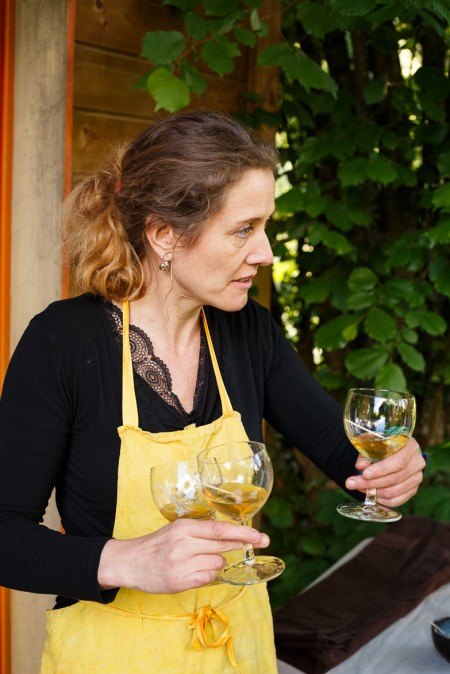
Drinks consisted of mead, more often referred to as “honey wine,” more in the style of the ancient Greeks and Romans than of more ancient peoples, and beer.

What is the Mesolithic?

As a reminder, the Mesolithic Age refers to the pre-agricultural period between 10,000 and 5,000 BCE in Europe, and variations of this period in other parts of the world. The term “pre-agricultural” is key in understanding what ingredients were available. The three terms paleolithic, mesolithic and mesolithic refer to what is generally called the “Stone Age,” i.e. the post-glacial hunter-gatherer period, when humans started to use stone tools and food was gathered rather than farmed.


During the early Stone Ages or paleolithic (2.6 million years ago to around 10,000 BP), humans used some stone tools and utensils, but many tools were made from organic matter such as bone, fibers, and wood. Hunting and gathering were the chief ways of providing food. During the neolithic, starting around 10,200 BCE and ending between 4,500 to 2,000 BCE, depending on the location, we saw the beginning of farming. The mesolithic overlapped the other two ages, once again, at different times in different places. Metal tools brought these three Stone Ages to an end.

Jane Le Besque, artist and Mesolithic chef, serving mead


Early Stone Age cooking was generally on leaves or directly over the embers, although clay cookware has recently been found in China dating from 19,2000–20,000 years ago, during the ice age. Stone Age plates usually consisted of a rock or other flattish surface found in nature, such as the flattened split logs Jane used in the same manner as we use wooden tables today. Earthenware did not appear on the dinner table until much later.

What Did You Usually Eat at Mesolithic Dinners?

What did they eat? Pretty much whatever they found and killed that was edible: meat, fish, wild plants. The specifics of this depended on the location, climate and season. Meals included the day’s finds. This might consist of berries, wild greens and other wild vegetables and plants.

Meat and later fish were not an everyday affair. They were difficult to come by and difficult to preserve, depending on the location (salt was found in Romania as early as 10,000 years ago). Stone  Age people ate very little grain, since agriculture didn’t exist yet. Hazelnuts and other nuts were often roasted, and stored for winter. Wild boar was common; dairy products and cheese were on the menu, although a limited variety.

About Jane Le Besque

Jane Le Besque lives and works with her family at the foot of the French Jura, a few minutes from Geneva, in the foothills of the Jura mountains.

She was born in England and has a Breton grandfather, hence the name. Since graduating from Birmingham Art College in 1986, she continued her studies at l’Ecole des Beaux Arts in Paris. She afterwards lived and worked in Toulouse, London, and now outside Geneva.


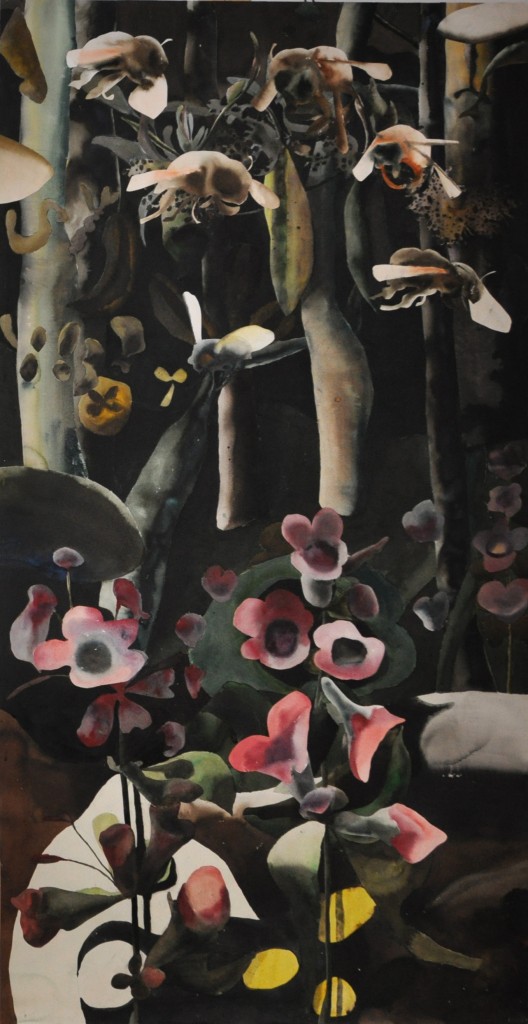
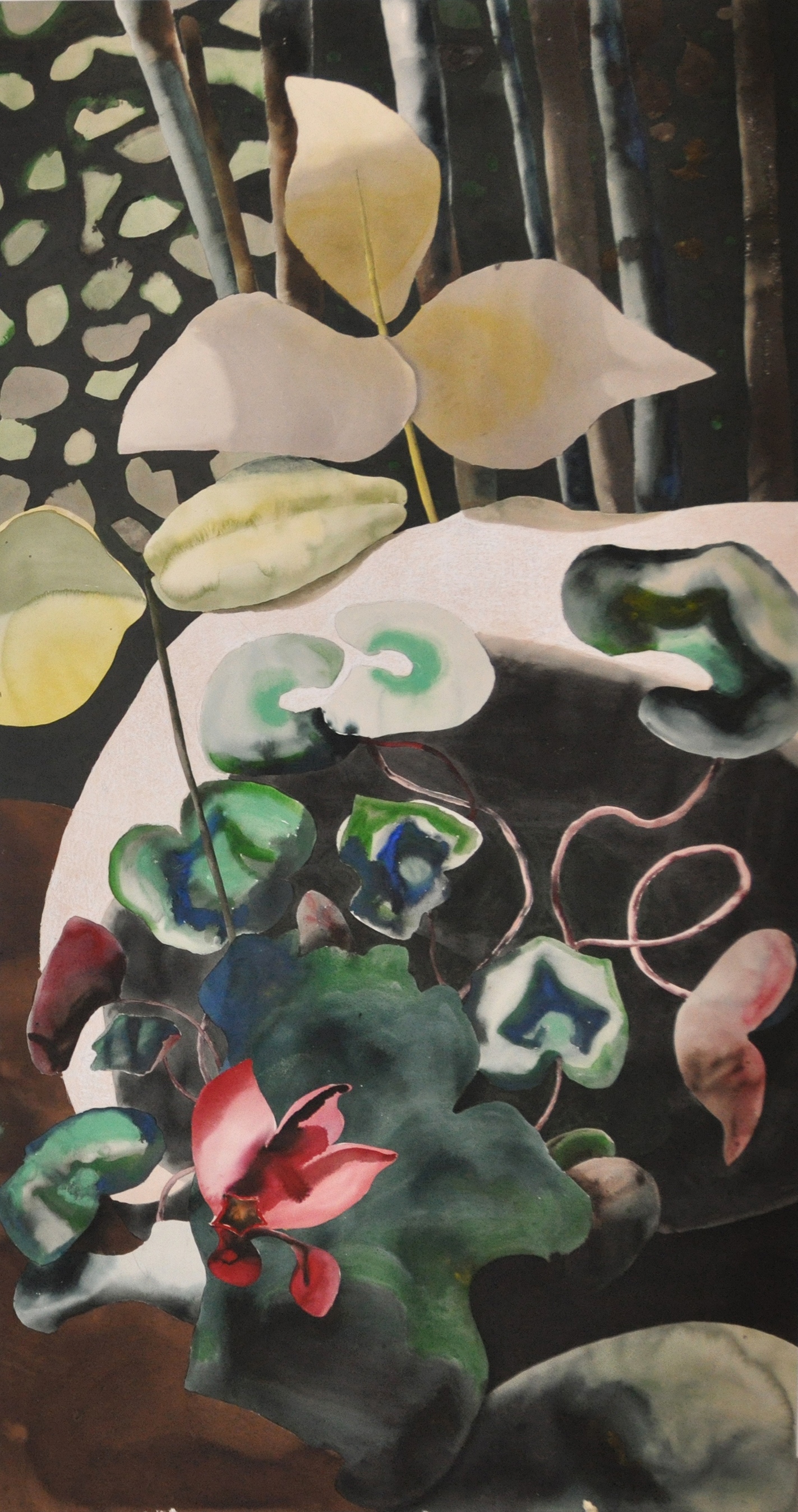
Jane has always painted. She is her happiest walking through the woods and gathering berries, mushrooms, acorns, flowers and leaves to use in her cooking and painting.

One might say Jane has been interested in mesolithic cooking even before she learned the word. As a child, she spent her time gathering the wild things she now uses in her paintings,  making dresses out of them.

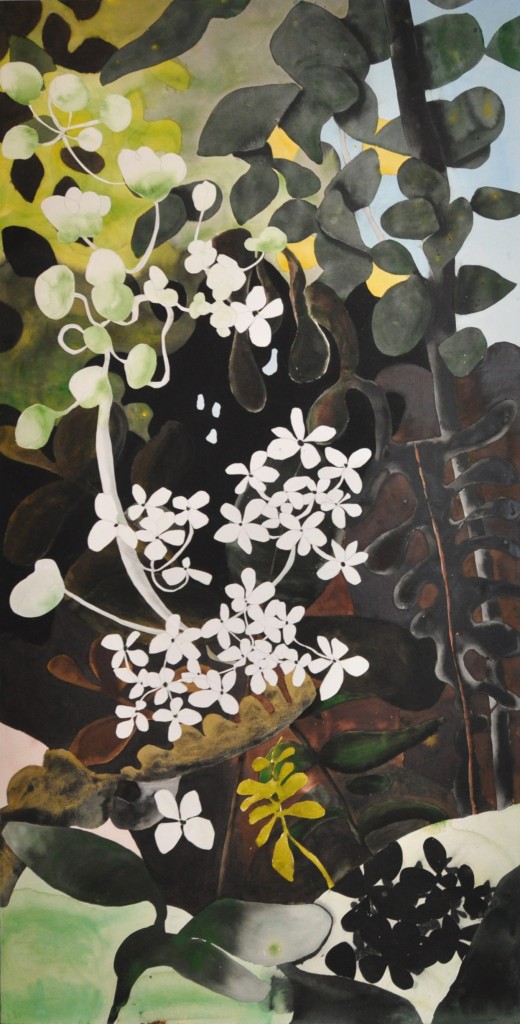
Her paintings are an intense reflection of her “gatherer” spirit. The Mesolithic dinner was held in her studio, lined with her paintings of flora of all types.


Never miss a post
Name: 
Your email address:*
Please enter all required fields
Correct invalid entries

Culinary Travel: Jonell Eats her Way through Mannheim, Germany

Published by Sunday, June 2, 2013 Permalink 0

Culinary Travel: Jonell Galloway Eats her Way through Mannheim, Germany

Photos from my culinary travels in Mannheim, Germany. Mannheim is not known for its cuisine, but it is known for its white asparagus, just like in Alsace. So we took a jaunt to the farmers market and bought the choicest spears from a vendor who sells only white asparagus. The Mannheim cheesecake we bought in the market is the best I’ve ever eaten.

Never miss a post
Name: 
Your email address:*
Please enter all required fields
Correct invalid entries

Apollonia Poilâne and the Making of the Paris Poilâne Bread “Empire”

Published by Saturday, June 1, 2013 Permalink 0

by Jonell Galloway

Did the French Bread Revolution start with Poilâne Bread?

The familiar French word for friend, “copain,” means “to share bread with each other.”–Apollonia Poilâne, now head of the Poilâne bread “empire”

A humble baker called Pierre Poilâne started a bakery on the rue du Cherche-Midi in Paris in 1932. The 6th arrondissement was not a chic neighborhood at the time; penniless artists lived there, and often paid Poilâne in paintings. We might ask, did the French Bread Revolution start here at 8 rue du Cherche-Midi?

Poilâne used stoneground, unprocessed, whole-grain flour and sourdough starter, baking his bread in a wood oven — then unheard of in Paris, the capital of the baguette. It was unfashionable to eat anything other than white bread. This way of thinking was further reinforced by WWII, during which the French had no choice but to eat heavy, dark bread. He continued making it nonetheless, says France Today, and today, Apollonia Poilâne, Pierre’s granddaughter, runs the bakery.

Until 2007, she studied at Harvard and ran the bakery at the same time, having her personal supply of bread sent to her every week in Boston.

Note the elegant “P” carved into the top of each loaf.


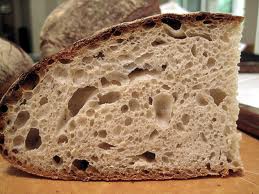
This now-classic Poilâne loaf has a hard, crusty outside and a firm, dense crumb on the inside. It can keep be eaten fresh for up to 5 days after baking, after which it can be toasted.

Inside Pain Poilane bread creative common license http://www.thefreshloaf.com/keyword/pointeacalliere


Pain Poilâne or miche, meaning “round loaf,” weighs in at around 2 kg / 4.4 lb. The recipe is secret, and it is not a whole-grain bread in the traditional sense of the word. Environmentally correct, pesticide-free varieties of wheat are grown and stored. They are then stone-ground, thus preserving the wheat germ. Stone grinding makes it possible to eliminate any coarse bran that might contain impurities.

Poilâne flour is what is called in French farine biseor wheatmeal — a brown flour intermediate between white flour and wholemeal flour — which maintains a higher nutritional value than white flour. Levain or sourdough starter and salt from the salterns of Guérande, a swamp of salt water in Brittany.

Pierre brought this type of bread with him from his native Normandy, where loaves were large and round, in the style of what the French now call “country bread.” Today, it is distributed all over the world.

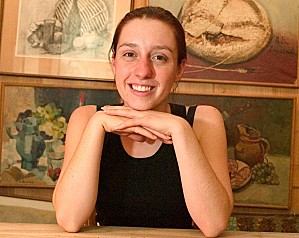
Apollonia Poilâne, current owner of Poilâne bread bakeries


Pierre’s sons Lionel and Max took over the bakery in 1970. Just like Apollonia, they had learned bread baking by working right alongside their father, and continued the tradition of the original round loaf marked with the signature “P.” They eventually took separate paths, with Lionel keeping the original bakery started by his father, and Max going off on his own to start a bakery under his own name, Max Poilâne. In Paris, people have long discussions over which of the brothers makes/made the better bread, since both have continued to bake their father’s signature recipe.

Lionel Poilâne is better known outside France, since he grew the original family business, making it into an international name. This growth was made possible by his excellent teaching skills and his embracing of modern developments in the industry, such as the use of machine kneading, while at the same time maintaining his father’s philosophy of each baker following and taking responsibility for his or her loaves from start to finish. He referred to his concept as “retro-innovation.”

Lionel and his wife died when their helicopter, piloted by Lionel, crashed in 2002, leaving behind daughters Athena and Apollonia, the latter who is now following in her father’s footsteps. She started running the bakery on graduation from high school.

In this video, Martha Stewart visits the Poilâne bakery in Paris and learns about the bread making process in an interview with 22-year-old Apollonia Poilâne when she was still at Harvard. Click here to watch the video interview of Apollonia by Martha Stewart herself.


Martha Stewart

The offiical Poilâne site lists a number of recipes, for making and using some of the Poilâne bread and pastries.


Poilâne Bakeries

8 rue du Cherche-Midi, Paris 6th arrondissement
Tel. +33 (0) 1 45 48 42 59
 
49 bld de Grenelle, Paris 15th arrondissement
Tel. +33 (0) 1 45 79 11 49
Open on Sundays
 
38 rue Debelleyme, Paris 3rd arrondissement
Tel. +33 (0) 1 44 61 83 39
Open on Sundays
 
46 Elizabeth Street, London SW1W
Tel. +44 (0) 207 808 4910


To read more about the French Bread Revolution, see also (bilingual in French and English):

The Revolution of French Bread Baking (part 1), by Jean-Philippe de Tonnac

The Revolution of French Bread Baking (part 2), by Jean-Philippe de Tonnac

Book Review: Jean-Philippe de Tonnac’s “Dictionnaire Universel du Pain” or Universal Dictionary of Bread, by Jean-Philippe de Tonnac

The 7 Lives of Bread: Pascal Auriac, master bread baker in Laguiole, a hidden corner of France, by Jean-Philippe de Tonnac

Never miss a post
Name: 
Your email address:*
Please enter all required fields
Correct invalid entries

Daily Food Quote: Mahatma Gandhi on Food and God

Published by Friday, May 31, 2013 Permalink 0

by Jonell Galloway

To a man with an empty stomach food is God.–Mahatma Gandhi

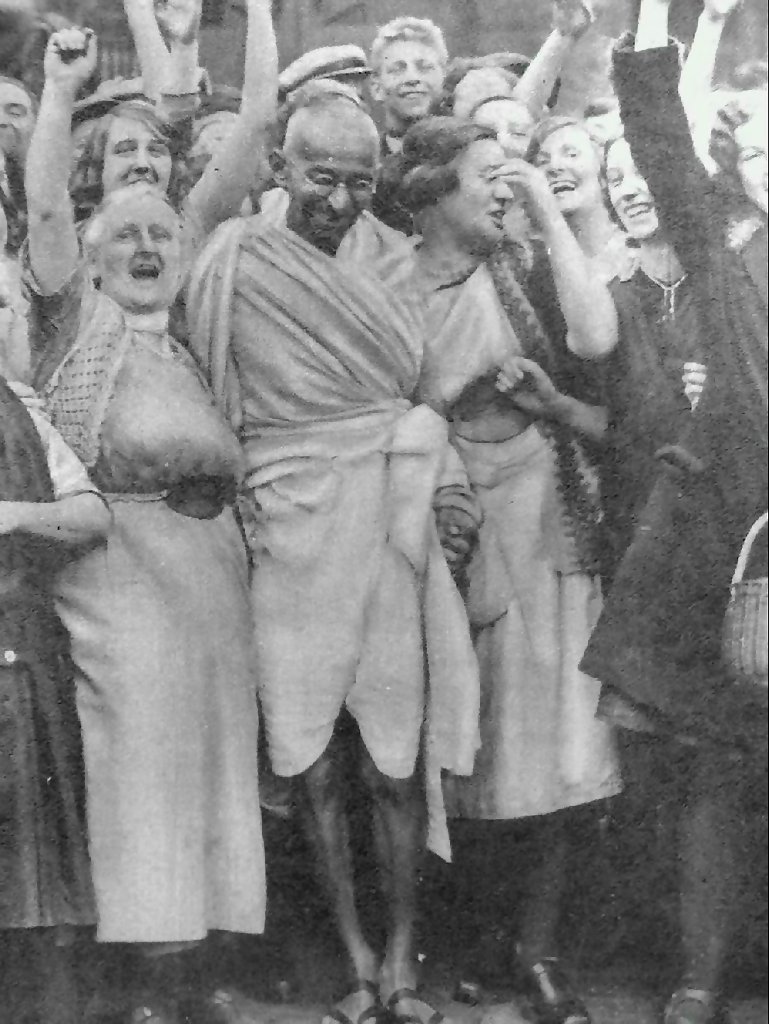
Mahatma Gandhi with textile workers at Darwen,...

Mahatma Gandhi with textile workers at Darwen, Lancashire, England, September 26, 1931.


Mohandas Karamchand Gandhi, more commonly known as “Mahatma Gandhi,” was born on October 2, 1869, in Porbandar, India. He studied law and became a defender of Indian rights both in India and South Africa, where he lived and worked for some 20 years. His method of opposing British rule and treatment was through mass non-violent civil disobedience, which has made him a model for peaceful revolution around the world.

Gandhi believed in living a simple life. He wove and made his own clothes, was a vegetarian and used traditional Indian fasts both for self-purification and protests against British discriminatory legislation against Indians. His philosophy of life and political “action” remain a beacon of hope for oppressed people around the world.


Never miss a post
Name: 
Your email address:*
Please enter all required fields
Correct invalid entries

Food Art: Cinghiale alla liquirizia / Wild boar and licorice, food photography by Alessandro Boscolo Agostini

Published by Thursday, May 30, 2013 Permalink 0


A wildly inventive take on a well-loved Italian dish: wild boar and licorice: food photography by Alessandro Boscolo Agostini.


Bio of Alessandro Boscolo Agostini

Bilingual English/Italiano

My first love for photography started with a little theft: as a little boy I stole my father’s Vöiglander and I started taking pictures on my own, just using my instinct. At that time my father’s camera seemed to me the best camera possible in the whole world, until I reached junior high school and I gave it up for a Bencini all my own. But my little theft came all back to me; my girlfriend to whom I had lent my camera never gave it back to me: that can be considered petty theft, no?

Growing up, I robbed again: in high school I stole time I might have devoted to photography and dedicated myself to my other passion, music. I studied drums and played jazz music. But it was just an infatuation, because I went back to my first love and never left it again. And as a pledge of love, I gave up my history studies in college, causing great distress to many people, but not to myself.

Today, I rob with no qualms, and I confess it with no shame. My spoils are my sensations, emotions, lines, colours, compositions: I catch everything that stops in front of my camera, I catch it with a click to close it in a graphic cage. It doesn’t matter if its a catalogue or a magazine. What I’m really interested in is the look, my view of the world. In the millions of images that pass in front of my eyes every day, that go on around me, that chase me in my silence. For this reason I  photograph subjects of any kind and still do it every day without specializing in anything in particular. From a luxury hotel suite, to the sexy transparencies of Murano glass. From art exhibitions to a ballet. From a golf course to actors on a stage. The list can go on and on, while this bio must finish here. I hope that I haven’t once more been a thief, that I haven’t taken up to much of your time. If this was the case, please don’t report me to the police, because I will give myself immediately up: I’m Alessandro Boscolo Agostini!

Continue Reading…

Never miss a post
Name: 
Your email address:*
Please enter all required fields
Correct invalid entries

The Art of Tasting Wine with James Flewellen: Wine Diamonds in White Wine

Published by Tuesday, May 28, 2013 Permalink 0

by James Flewellen

Wine Diamonds in White Wine

There are a number of legitimate reasons for sending a wine back at a restaurant: the wine could be oxidised, be contaminated by ‘cork taint’, suffer from excess volatile acidity, or have unpleasant Brettanomyces aromas. One common cause for complaint, however, is the presence of tartrate crystals or ‘wine diamonds’. Wine diamonds in white wine are a natural occurrence.

These are clear crystalline deposits found usually in certain white wines, especially Riesling. They are either potassium bitartrate (a.k.a. cream of tartar) or calcium tartrate — both found naturally in grapes, and which follow through to the final bottle in the winemaking process. They are certainly not tartaric acid, sugar, or bits of glass! These wine diamonds are perfectly natural and completely harmless. In the glass, they sink to the bottom and will barely impose on your enjoyment of the wine. Or, the wine can simply be decanted, with the crystals remaining in the bottle.

Wine diamonds in white wine left over from a glass of excellent Austrian Gruner Veltliner.

These crystals can be removed before bottling, however it is an involved process involving chilling the wine and passing it through filters. This is energetically expensive and the filtration process can remove flavour compounds that give the wine its complexity and character. Producers of fine wines prefer to mess with the wine as minimally as possible to deliver the best possible quality to the consumer.

So if you do see some wine diamonds in your wine, this is not a cause for complaint. Rather, be assured that the winemaker cares about his wine so much that he has chosen not to remove them to deliver the best possible wine to you!

__________________

James Flewellen is The Rambling Epicure wine columnist. James is a biophysicist at the University of Oxford. Originally from New Zealand, the huge range of wine James discovered in Europe spurred his interest in all things vinous. He became involved in the University’s Blind Wine Tasting Society and has recently completed a two-year term as its President. During this time he represented the University in a number of domestic and international wine tasting competitions, winning several awards. He is currently completing the WSET Diploma in Wine and Spirits. James has a passion for wine communication and education and runs the Oxford Wine Blog and wine tasting courses through the Oxford Wine Academy.


Never miss a post
Name: 
Your email address:*
Please enter all required fields
Correct invalid entries

Switzerland: Swiss Food: Rhubarb Cream Recipe

Published by Monday, May 27, 2013 Permalink 0

by Jonell Galloway

Cherry-Rhubarb Fool

When you talk about rhubarb cream in Switzerland, you mean rhubarb cream, not pudding or custard. This naughty dessert is one of the easiest rhubarb desserts around, and is so thoroughly Swiss.

Recipe for Rhubarb Cream

Ingredients

Photo courtesy of Robin Stewart


1 lb. / 500 g rhubarb
3/4 cup / 200 g cane sugar
 2 egg yolks
 Cinnamon or lemon juice, according to which taste you prefer
3/4 cup / 0.2 l whipping cream

Directions

  1. Scrape or cut off any hard outer surface of rhubarb.
  2. Dice rhubarb and put into saucepan. Add sugar. Cover with water. Cook until tender but firm, 5 to 10 minutes.
  3. While rhubarb is cooking, beat the yolks until smooth.
  4. Run cooked rhubarb through food processor or chinois to purée.
  5. Add hot rhubarb purée to beaten egg yolks. Beat until thoroughly blended and eggs start to cool.
  6. Mix in cinnamon or lemon juice. Set aside to cool.
  7. Beat whipping cream. When it starts to form hard peaks, fold in cooled rhubarb and egg mixture.
  8. Cool in refrigerator, either in individual serving dishes or in a large bowl.
  9. Serve cool.


Never miss a post
Name: 
Your email address:*
Please enter all required fields
Correct invalid entries

Switzerland: Easy Egg-Free Quark Chocolate Mousse Recipe

Published by Friday, May 24, 2013 Permalink 0

by Jonell Galloway

This egg-free quark chocolate mousse recipe was developed by Maison Cupcake, but the use of quark cheese is so incredibly Swiss, I thought I should list it as a “Swiss recipe”. Next week Maison Cupcake will be developing a rhubarb mousse using quark, so keep your eye on this site.


Click here for recipe.


Never miss a post
Name: 
Your email address:*
Please enter all required fields
Correct invalid entries

Daily Food Quote: Mahatma Gandhi on Hunger and Eating

Published by Friday, May 24, 2013 Permalink 0

Daily Food Quote: Mahatma Gandhi on Hunger and Eating

There are people in the world so hungry, that God cannot appear to them except in the form of bread.–Mahatma Gandhi


Mohandas Karamchand Gandhi, more commonly known as “Mahatma Gandhi,” was born on October 2, 1869, in Porbandar, India. He studied law and became a defender of Indian rights both in India and South Africa, where he lived and worked for some 20 years. His method of opposing British rule and treatment was through mass non-violent civil disobedience, which has made him a model for peaceful revolution around the world.

Gandhi believed in living a simple life. He wove and made his own clothes, was a vegetarian and used traditional Indian fasts both for self-purification and protests against British discriminatory legislation against Indians. His philosophy of life and political “action” remain a beacon of hope for oppressed people around the world.


Never miss a post
Name: 
Your email address:*
Please enter all required fields
Correct invalid entries

The Art of Tasting Wine with James Flewellen: Top 10 Red Wine Grapes

Published by Thursday, May 23, 2013 Permalink 0

The Art of Tasting Wine with James Flewellen: Top 10 Red Wine Grapes

by James Flewellen

My last post covered what I consider the ‘top 10’ white wine producing grapes. Finding a similar list for the top 10 red wine grapes is no less difficult — perhaps even more so with the propensity for red wines to be a blend of a number of different grapes. Again, the order is my own preference, based on commercial importance, potential quality of the grape, and whether it produces a ‘classic style’.

TOP 10 RED WINE GRAPES

10. Malbec

Malbec is one of the six permitted red wine grapes in Bordeaux, although few producers take advantage of its rich, plummy flavours. You are more likely to find Malbec predominating in blends of southern French appellations, such as Cahors, where the grape is called ‘Cot’. These wines are typically full-bodied, deep in colour, with plum flavours alongside ferric, inky notes too. Malbec has found a second home in Argentina, where it is the country’s signature red grape. In Argentina, the mineral notes subside somewhat, and a purer fruit note comes to the fore. The tannins, plentiful in Cahors, are softer in the Argentinian expression.


8. Sangiovese

This rather romantically named grape (‘Blood of Jupiter’) is the key component of wines from the Chianti region in Tuscany — arguably Italy’s most famous red wine export. The grape produces ruby-coloured wines with notes of cherries and almond. The palate can show high acid with tart cherry flavours, medium to high levels of alcohol and drying, austere tannins. The best examples develop savoury, tea-like notes with age and undeniable complexity. Brunello di Montalcino is perhaps the most interesting expression of Sangiovese, from a wine-lover’s perspective. Best served with food on account of the fierce tannins though! Sangiovese is also a component in many of the so-called ‘Super-Tuscan’ blends, along with Cabernet Sauvignon and Merlot.

Sangiovese ready to harvest


7. Tempranillo

As Sangiovese is to Tuscany, Tempranillo is to the Rioja region — and indeed to many parts of Spain. Rioja is now perhaps Spain’s most famous wine export after Cava and within this region the Tempranillo grape has found a plethora of styles. The traditional style of Rioja saw ageing in mostly American oak barrels, complementing the strawberry notes from the grape with a sweet vanilla and coconut aroma from the oak. The balance between oak and fruit notes depends on the length of time the wine is aged in the barrels. With age, these wines develop pleasant grassy and ‘farmyardy’ aromas. A ‘new’ style of Rioja has emerged in recent years, favouring French oak and pushing fruit notes to the fore. Tempranillo is also a key component in many other regions of Spain, such as Ribera del Duero, and in Portugal too, where it is known as Tinto Roriz.


6. Cabernet Franc

The second Bordeaux grape on the list, although in Bordeaux, Cabernet Franc usually plays second or third fiddle to Cabernet Sauvignon and/or Merlot. This by no means diminishes its importance for the region, however. For a classic expression of a varietal wine we head north to the Loire valley — to classic regions such as Saumur, Chinon and Bourgueil. Here, the grapes produce a medium-bodied purple wine with high acidity and fine, powdery tannins. Due to the cooler climate in the Loire, these wines have leafy, herbaceous notes to go with blackcurrant, blackberry and a distinctive mineral note many describe as ‘pencil shavings’!


5. Grenache

Grenache is the stalwart of the Southern Rhône, where it makes up the dominant component of blended wines along with Syrah, Mourvèdre and many others. This grape is a the heart of famous appellations such as Châteauneuf-du-Pape, Gigondas and Vaqueyras. Unusual among grape vines, it can tolerate heat and drought remarkably well with its ability to close its stomata to minimise water loss through evaporation. This feature also explains its success in South Australia — another hot, dry part of the world. The Aussies have followed the Southern Rhône model and produce similar blended wines — typically called ‘GSM’ after the three major grape components. Grenache is also to be found in Priorato and other parts of Spain, where it is known as ‘Garnacha’ and typically blended with Cariñena (a.k.a. Carignan). Grenache produces wines with high alcohol, low acidity and fine, dry tannins. The flavour profile is usually of strawberry with a characteristic white pepper spiciness.

Photo courtesy of WineFolly.com


4. Merlot

Merlot was much maligned by Paul Giamatti’s character in the film Sideways – although in an ironic twist, his prized bottle of 1961 Cheval Blanc contains a major component of Merlot. Perhaps Merlot’s unfairly poor image comes from the many mass-produced French and New World wines where the grape is used to make soft, undemanding, plummy, easy drinking wines. However, at its best, Merlot produces elegant wines with savoury flavours combining with juicy plum and fruitcake spice notes. While the grape does not lend to the most structured wines, there can still be relatively firm, drying tannins, allowing the best examples of Merlot to age very well. The most famous examples of Merlot come from the Right Bank of Bordeaux in appellations such as St Emilion and Pomerol. Here, Merlot is typically blended with Cabernet Franc to produce some of the finest wines in the world. Merlot is, of course, a component of the Left Bank Bordeaux wines, although here it comes in second to Cabernet Sauvignon. Merlot can also be found in Bordeaux-imitation blends around the world and as a varietal wine in parts of the New World – especially California, New Zealand and Chile.


3. Syrah/Shiraz

Whereas the Southern Rhône follows the model of blending many grapes to create Grenache-dominated wines, the Northern Rhône sticks to a single grape: Syrah. Historically, Syrah has produced the most revered wines in France — emanating from Hermitage, Côte-Rotie, St Joseph and Cornas — and it has only been relatively recently that the focus has shifted to Bordeaux and to Burgundy. The best examples are very long-lived and offer very good value to the fine wine connoisseur. Syrah from the Rhône is medium- to full-bodied, with firm, slightly coarse tannins, crisp acidity and complex notes of plum, blackcurrant, black pepper, roasted meat, liquorice, treacle, herbs, among others. Syrah is, of course, equally famous in Australia, where it is known as ‘Shiraz‘ and found throughout the entire country. In fact, Australia has the oldest Shiraz grape vines in the world, with a number of regions unaffected by the phylloxera blight that destroyed European vineyards in the late 1800s. The classic style is that of the Barossa Valley or McLaren Vale — jammy black fruits, often with notes of spicy salami, black pepper, and eucalyptus. Australian Shiraz is usually more full-bodied with lower acidity than that of the Rhône, although wine from the slightly cooler region of the Hunter Valley can approach a Rhône-like style.
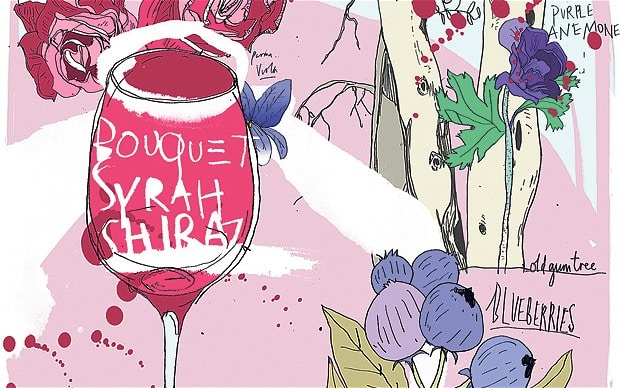
http://www.telegraph.co.uk/foodanddrink/wine/8706849/Syrah-from-Chile-and-New-Zealand.html

Photo link to the Telegraph


2. Cabernet Sauvignon

The predominant grape in some of the world’s most revered and expensive wines: those of the Left Bank of Bordeaux. In the right climate and on the right soils, Cabernet Sauvignon offers elegance, power, structure and harmony that few other grapes can match. However, in search of the perfect structure the grape can produce austere flavours in the wine, which is why this grape is best suited to blending with others. This is the origin of the ‘Bordeaux blend’, which sees Cabernet Sauvignon melded with Merlot, Cabernet Franc, Malbec and Petit Verdot. Cabernet Sauvignon brings classic notes of blackcurrant, cedar, and bell peppers alongside vanilla and nuts from maturation in new French oak, which is typical in Bordeaux. On the palate, the grape brings crisp acidity and firm, structured tannins, and both of these can ensure a long ageing potential. The Bordeaux style has found favour in many other parts of the world, from the ‘Super-Tuscans’ of Italy to equivalents in Spain, California, Australia and South America. The best examples of these are among these nations’ finest wines also.


1. Pinot Noir

As Chardonnay is the Burgundian king of white wines for me, so Pinot Noir is the queen of reds. Fickle, hypersensitive,  ill-tempered, yet oh-so-magical when it all pays off, tasting a great Pinot Noir is an unforgettable experience. At its best the grape offers up swirling, subtle aromas of raspberry, strawberry, cherry and blackberry, a refreshing minerality and an earthy, leafy quality that is quite indescribable, yet summed up beautifully in the French term sous-bois – or ‘forest floor’. Burgundy still holds the crown for the most desirable Pinots – indeed wines – on the planet, due in no small part to its 1,000-year history in growing the grape. The grape is notoriously difficult to work with and susceptible to very minor changes in climate. Various places around the world have taken on the challenge of making great Pinot – New Zealand, Oregon and Tasmania are considered the best pretenders to the crown and can produce some very good (and much better value-for-money) wines. But these are all new kids on the block, and have a few centuries ahead of them to really get to know the grape, and for the grape to get to know their new homes.

__________________

James Flewellen is The Rambling Epicure wine columnist. James is a biophysicist at the University of Oxford. Originally from New Zealand, the huge range of wine James discovered in Europe spurred his interest in all things vinous. He became involved in the University’s Blind Wine Tasting Society and has recently completed a two-year term as its President. During this time he represented the University in a number of domestic and international wine tasting competitions, winning several awards. He is currently completing the WSET Diploma in Wine and Spirits. James has a passion for wine communication and education and runs the Oxford Wine Blog and wine tasting courses through the Oxford Wine Academy.

Never miss a post
Name: 
Your email address:*
Please enter all required fields
Correct invalid entries

UA-21892701-1