Introducing our new “TRE Quality Label”

Published by Thursday, July 25, 2013 Permalink 0


//

Introducing our new “TRE Quality Label”: Healthy, Homemade Meals Delivered to Your Door, Geneva

The TRE Quality Label

The TRE Quality Label

Introducing our new “TRE Quality Label”

In this complex world of industrial food, where even organic food is sold by agro food conglomerates, it is important to know the quality and origin of what we eat. Thus the importance of a quality label that has been tested by people like us who are experienced in the real-food business. When we give the TRE Quality Label, we know where the ingredients came from, we know how the food was processed and treated — and most of it is entirely local,  allowing you too to eat locally. We also know how it tastes, because we’ve tasted it all.

All the important criteria make up part of the TRE Quality Label: quality, origin, and taste. You can be sure of what you’re buying if it has a TRE Quality Label.

Today, we’d like to introduce the first product to which we’re giving our label: panbeh, a Geneva grassroots operation that makes every attempt to meet all these criteria, and to put something healthy, natural and tasty on your plate.

panbeh‘s meals are delivered straight to your door in Geneva. Most of the ingredients are from Geneva or nearby in the countryside.

It is the perfect solution for those who are home bound and for the elderly, as well as for those who simply don’t have the time to do the shopping required to cook a healthy, well-balanced meal. It’s great for those weeks when your work schedule is heavy, and ensures that you’ll get a home-cooked, healthy meal every day, delivered straight to your door.

Geneva: Healthy, Homemade Meals Delivered to Your Door by panbeh

panbeh describes itself:

panbeh means “pure cotton” in Farsi: the purity of a healthy, home-cooked meal

Panbeh's very own cotton plant in Geneva, Switzerland

Panbeh’s very own cotton plant in Geneva, Switzerland

As we all know, what we eat is important for our daily activity and well-being, so we are introducing our new concept: the pleasure of eating healthy, natural, homemade food while fully enjoying the taste of what you eat, delivered right to your door.

No additives and no pesticides, no hormones and no chemicals — only the real, natural flavor of top quality, artisanal ingredients, the origin of which we systematically list. And you benefit from the real taste of the whole, untreated, unprocessed food, prepared fresh every day in a high-fiber, low-fat manner.

Whenever possible, we use only organic ingredients.

We propose a daily lunch menu and will deliver it to you at your home or your office, free of charge. Please find below are our daily menus for the month of July.

Delivery to your home or office
Order the night before (before 6 pm) for next day’s lunch, or order for the whole week
Orders are delivered between 12 and 1 pm

Order by email:
panbeh@servge.ch
or by phone:
076 630 79 56

 
Free delivery for Petit-Saconnex, Grand-Saconnex, Grand-Pré and Nations.
 

It is our right to know where our food comes from:

Bread: Eric Emery bakery, Geneva.
Vegetables, fruits and mountain herbs (organic): Marché à la Ferme de Budé, Geneva.
Cheese (organic) : Casa Mozzarella, Geneva.
Salmon: Wild from Alaska or Scotland, sold by Francesco Drago, Halle de Rive covered market, Geneva.
Tomato sauce (organic): Marché a la Ferme de Budé, Geneva.
Spaghetti (organic): Marché à la Ferme de Budé, Geneva.
Rice & Quinoa (organic): Marché de Vie, Geneva
Olive oil: Greece, sold by Marché à la Ferme de Budé, Geneva
Eggs (organic): Marché à la Ferme de Budé, Geneva.
Chicken (organic) : Swiss origin
Wheat (organic) : Swiss origin


Bon appétit!


MENU for July 2013 (24.00 CHF)

Monday
Mixed salad
Quinoa balls, oven-baked Homemade
panbeh cake

Tuesday
Shirazi salad (tomato, cucumbers, onion, fresh mint)
Indian Tilda rice with safran, berberis (barberries) and chicken, or wild rice with chicken and vegetables
Fresh fruit salad

Wednesday
Potato salad, onion, eggs
Eggplant and tomato sandwich
panbeh homemade crème caramel

Thursday
Tomato & mozzarella & fresh basil
Spaghetti, tomato sauce & mushrooms
Watermelon or melon

Friday
Salad (ricotta & tomato covered with aromatic herbs)
Wild smoked salmon sandwich
Homemade panbeh cake

Large portion of mixed salad: 12.00 CHF

Drinks: kefir, mineral water, or fruit juice.


Order by email:
panbeh@servge.ch
or by phone:
076 630 79 56


Never miss a post
Name: 
Your email address:*
Please enter all required fields
Correct invalid entries

New on The Rambling Epicure: List Your Real Food or Photo Blog

Published by Friday, April 26, 2013 Permalink 0

by Jonell Galloway

We’ve just created a widget in the right-hand sidebar that allows all real food sites, blogs and readers to enter their URL on our list of visitors, whether it be a recipe, photo, news, farming, or other real-food related site. All you need to do is enter your RSS feed URL. Sign up soon so we can form a community of like-minded people!

From artsy

Photo courtesy of Ilian


to philosophical and literary

The Unsettling of America: Culture & Agriculture

The Unsettling of America: Culture & Agriculture (Photo credit: elycefeliz)


Continue Reading…

Never miss a post
Name: 
Your email address:*
Please enter all required fields
Correct invalid entries

Documentary: Building a Slow Food Nation

Published by Friday, March 29, 2013 Permalink 0

by Jonell Galloway

Wendell Berry speaking in Frankfort, Indiana

Wendell Berry speaking in Frankfort, Indiana


The Atlantic‘s Corby Kummer interviews Wendell Berry, food philosopher, poet and advocate as well as farmer; Eric Schlosser, author of Fast Food Nation; Carlo Petrini, founder of Slow Food; Vandana Shiva, philosopher, environmental activist, eco feminist, and advocate in the domain of agriculture and food; and Alice Waters, American chef, restaurateur, activist, and humanitarian.

Part 1 of this movie-interview lasts 1 hour 21 minutes, but is broken up into shorter segments, consisting of interviews with the people listed above. Part 2 lasts 53 minutes.

Click here to view documentaries Building a Slow Food Nation, Part 1 and Building a Slow Food Nation, Part 2.


Never miss a post
Name: 
Your email address:*
Please enter all required fields
Correct invalid entries

Salone del Gusto versus Good, Clean, and Fair: Part 1

Published by Wednesday, December 12, 2012 Permalink 0


Salone del Gusto versus Good, Clean, and Fair: Part 1

by Diana Zahuranec

Salone del Gusto, an event held biannually in Turin, Italy by the organization Slow Food, gathers artisanal producers from around the world in five days of selling organic or biodynamic, high quality, artisanal, innovative and traditional products; tasting workshops; and conferences about the state of the world’s food system and what can be done to promote sustainable growth. It’s an amalgamation of the green movement and everything it could possibly stand for before such a thing as “green washing” existed.

So what were the Italian supermarket COOP, the internationally famous Italian espresso company Lavazza, and the ubiquitous road-side Italian convenience store Autogrill doing at the Salone?

A supermarket is the antithesis of Slow Food’s “good, clean, and fair” motto. Products are available at any quality, starting at “low” and often not reaching above “decent;” produce and packaged goods come from all over the world, with little thought as to what other countries deem as “safe” pesticides, and with less thought about the energy used to transport everything; and finally, it’s anyone’s guess as to how many products lining the shelves were made under unpleasant or dangerous working conditions with low wages as poor compensation.

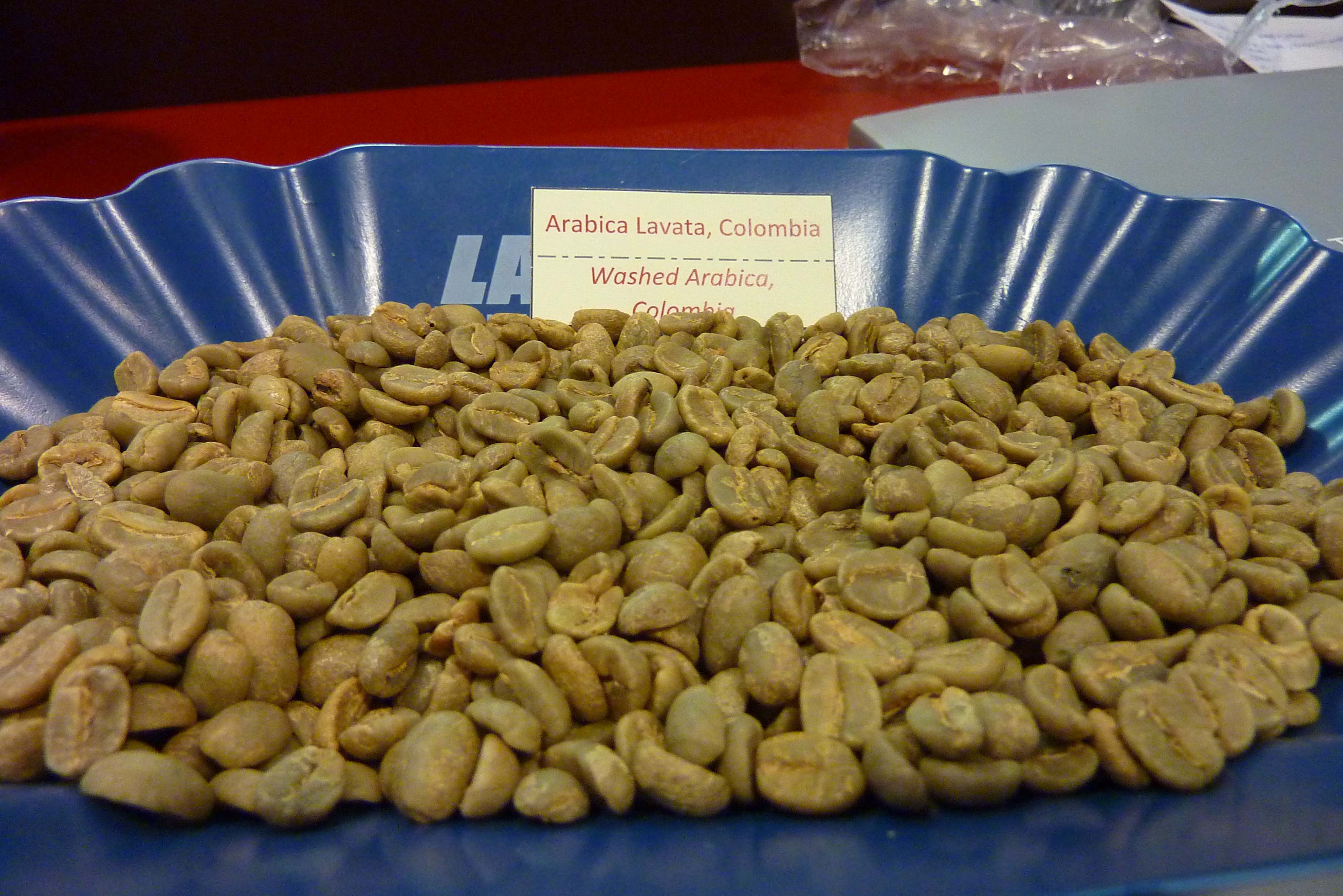
Coffee beans are notorious for their high demand pitted against their low cost, possible only through unfair working conditions and wages. Coffee plants are harvested using mono-cropping methods, which is environmentally friendly only in the interests of that particular crop.


Continue Reading…

Never miss a post
Name: 
Your email address:*
Please enter all required fields
Correct invalid entries

What makes fresh fruit and vegetables go bad, and how to separate them so they’ll keep longer

Published by Wednesday, October 26, 2011 Permalink 0

by Jonell Galloway

“Many fruits and vegetables produce ethylene gas, a colorless, odorless gas, as they begin to ripen. Some foods aren’t affected much by ethylene gas, while others are extremely sensitive to it.”

I never knew that it was a natural gas that fruit and vegetables produce that causes this to happen.

One thing I have noted is that when you buy fruit and vegetables that come from large agribusiness farms, they have a particularly high water content and they rot much faster than fresh garden and organic produce.

In any case, it is good to separate the ethylene-producing produce from the non-ethylene-producing. There is actually a method.

Click here for more details.


Never miss a post
Name: 
Your email address:*
Please enter all required fields
Correct invalid entries

Inspiration: Hungry Mother Organics, Encouraging Backyard Farms

Published by Monday, September 26, 2011 Permalink 0

What a noble effort to encourage backyard farms and urban gardening.! I would love to be part of it if I lived in the U.S.

Hungry Mother Organics has long wanted to not just sell produce, but get the average person to grow it, as well. Now the local farm is starting a 1,000 Backyard Farms campaign, along with the non-profit F.O.C.U.S. (For Our Country United States) to track and map the growth of the local food network in the Carson Valley and Reno area. Earlier in the year, Backyard farmers of any size were encouraged to sign up their gardens or farms with the campaign. Gardeners who sent a photo or rough sketch of their garden plan and their location to stacey@hungrymother.cc was entered to win $150 worth of soil and plants from Hungry Mother, which was awarded in May.

The idea was to discover how many people are already growing their own food, and how much they’re growing. This data will be used to create an interactive map, which will be available at 1000backyardfarms.org. “Ultimately, we hope to use the information to determine the number of backyard farms in the region, the acreage of the farms and estimated total food yield,” the website states.

Continue Reading…

Never miss a post
Name: 
Your email address:*
Please enter all required fields
Correct invalid entries

UA-21892701-1