by
With summer on its way, you may just want to have pulled pork for smaller family weekends, before all the big summer festivals start. Here’s an easy video recipe from Melissa Clark at Pulled Pork, for Crowds Large or Small.
|
|

A Literary Culinary Journal
by
With summer on its way, you may just want to have pulled pork for smaller family weekends, before all the big summer festivals start. Here’s an easy video recipe from Melissa Clark at Pulled Pork, for Crowds Large or Small.
|
|

What a flavor (oysters) have – mellow, coppery, with almost a creaminess when you chew and analyze. I drank some good beer with them and floated on a gastronomically sensual cloud.–James Beard

James Andrew Beard was an American chef, cookbook writer, cooking teacher and television celebrity. Beard became active in the culinary community in New York soon after World War II, going on to become a true culinary reference in the United States. He helped Americans discover, identify and define their culinary heritage through his travels, teaching, and work, and through some 20 cookbooks, about half of which are still in print. His lively and sometimes eccentric personality made him somewhat of a celebrity, but his true measure lies in “his vast culinary knowledge; they are the measure of the times, too. The James Beard collection is a slice of American history. Written between 1940 and 1983, the books tell us through the language of food what we had and what we longed for, who we were and whom we hoped to become,” said Alexandra Zohn and Peggy Grodinsky in James Beard (1903–1985): The Complete Works.
His work lives on through the Beard Foundation which continues to provide culinary education and encourage excellence in American cuisine.
|
|
 by Renu Chhabra
Food is art and magic; it evokes emotion and colors memory, and in skilled hands, meals become greater than the sum of their ingredients. — Anthony Beal

Sweet spices like cardamom and fennel, rose petals and rose water, pistachios and golden raisins
I am loving it already.
Flavors and scents I can taste and sense just by the mention of their names! They are very close to my heart. I grew up around them, or I can say I was often surrounded by them.
Cardamom and fennel used in sweet and savory dishes perfumed our kitchen with their intoxicating aroma. Rice pudding, pilaf, spiced tea, rich sauces, and several sweets are just a few to name. Rose petals and rose water to greet guests on special occasions, or simply to flavor sweets and drinks, made every experience memorable. Nuts and dried fruits in creamy sauces or in decadent desserts stamped food tastes forever in my mind.
Do I need say that I cherish these scents and flavors? We all have experiences from childhood, interwoven with lots of love and memories close to our hearts.
1 cup plain yogurt (Greek or regular)
1 green cardamom
|
|
 by Jonell Galloway
We’ve just created a widget in the right-hand sidebar that allows all real food sites, blogs and readers to enter their URL on our list of visitors, whether it be a recipe, photo, news, farming, or other real-food related site. All you need to do is enter your RSS feed URL. Sign up soon so we can form a community of like-minded people!
From artsy

Photo courtesy of Ilian
to philosophical and literary

The Unsettling of America: Culture & Agriculture (Photo credit: elycefeliz)
|
|
//

by Renu Chhabra
“Salt is born of the purest of parents: the sun and the sea.” –– Pythagoras

Pass the salt please.
We hear this often while eating meals. I sometimes think what life in the kitchen would be without salt. Nature’s pure offering and staple of any pantry! It’s one ingredient that can put life in any recipe. Just a pinch of it does wonders. But it’s the right amount of it, according to one’s taste buds that makes a recipe sing….. not too much or too little. Hence the term, “salt to taste.”
Some overly salty feta cheese was the center to make this dip. It was too salty for our taste buds. Really salty. And wasting it seemed unnecessary. To give it a new life, I combined it with a few ingredients on hand. A can of unsalted garbanzo beans worked well to mellow the saltiness of the feta. Parsley added color and freshness, and dill enhanced it with its delicate flavor. Lemon juice and garlic brought all the flavors together. I finished it with olive oil and a sprinkle of sumac.
|
|
by Renu Chhabra
Food is capable of feeding far more than a rumbling stomach.–Anthony Beal

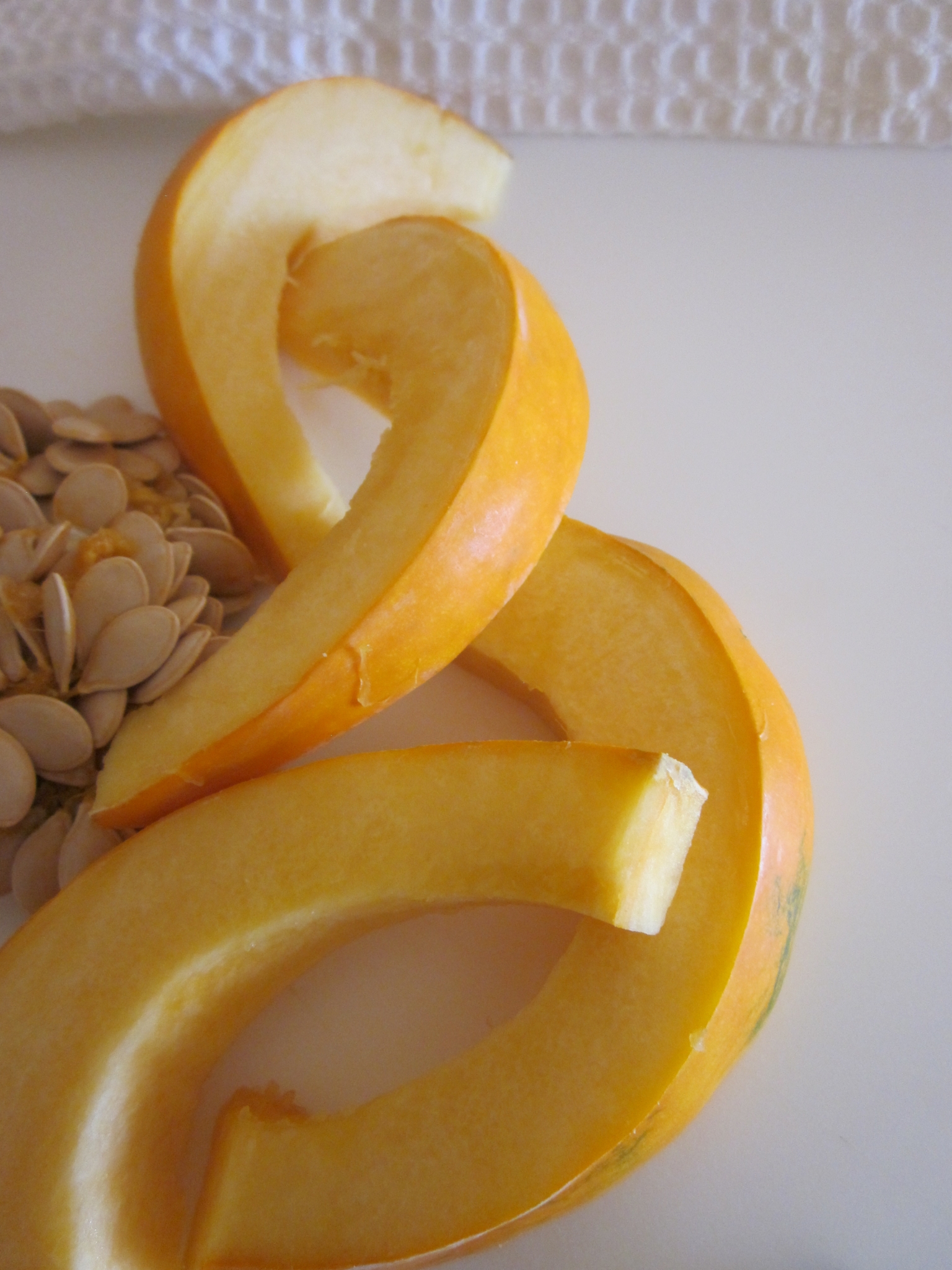
I have seen this acorn squash change from deep green to light golden on my kitchen counter over the last two weeks. Waiting for my much needed attention, it endured the neglect. I had a new idea about how to cook it every time I looked at it, so I would set it aside for yet another day. I loved seeing it sitting there turning into this beautiful objet d’art with a new stroke of color every day.
I enjoyed the the entire process, from start to finish, just as Monet enjoyed painting the same haystacks and façades day after day, in different lights.
Who would have thought a simple experience like this could also bring such curiosity? Every time I looked at it, I wondered if it would survive another day. Or would another stroke of green be lost. I touched it, inspected it, and set it aside, saying to myself, “I will make something tomorrow. Definitely.”
And it waited patiently for me, just like the Rouen Cathedral waited for Monet, looking more beautiful each day, and maintaining its freshness!

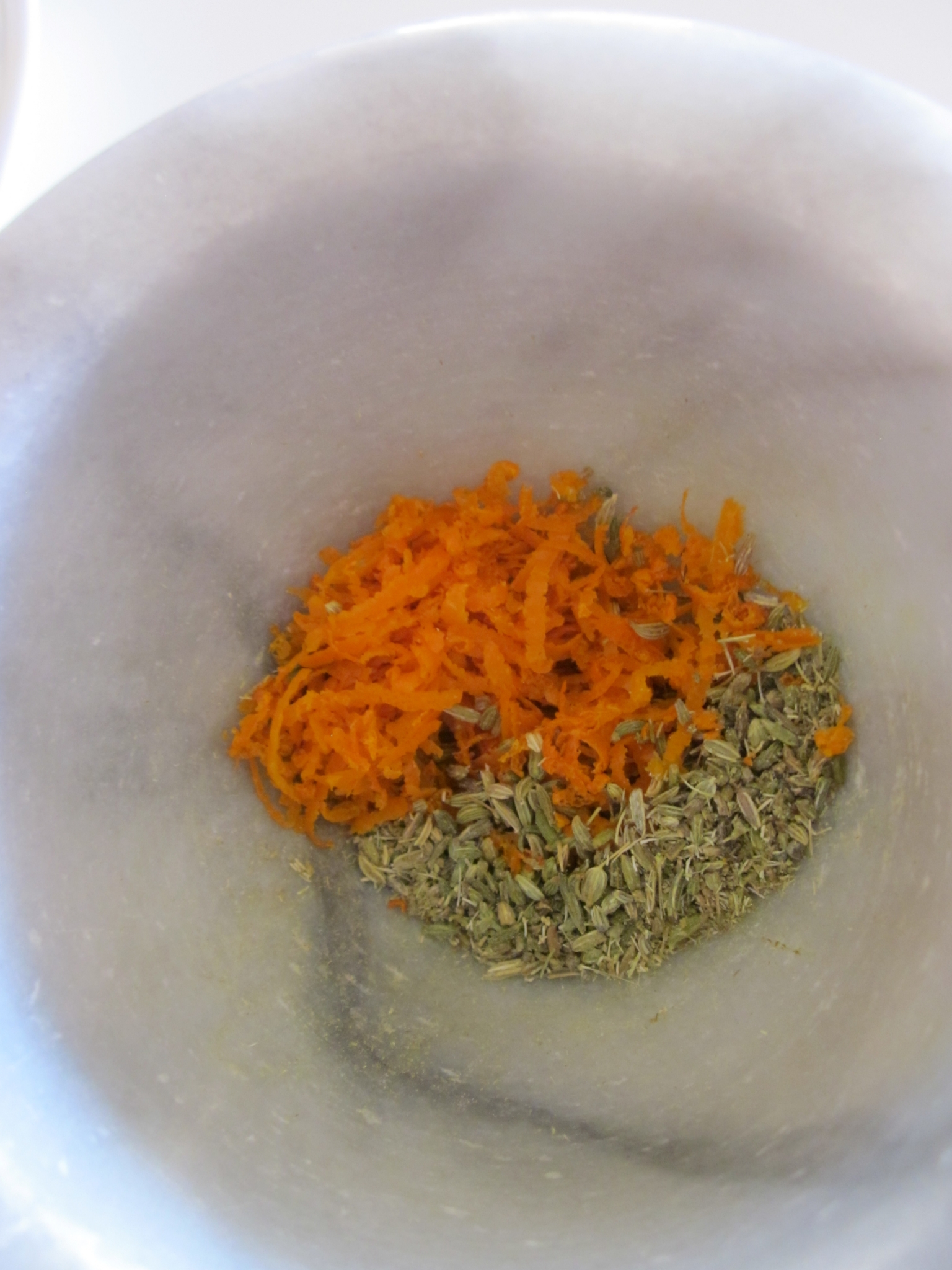
With half a dozen ideas in my mind about how to cook it, I settled for a simple recipe of roasting it and flavoring with some sweet and fragrant flavors like orange zest and toasted fennel seeds. I then combined the two with sweet paprika and sea salt to make a spice blend to toss into after roasting. Another wonderful spice blend with citrus! My new year started with spice blends.
After tossing the roasted squash, I finished it with a garnish of freshly ground cumin and parsley and a squeeze of lemon (optional). Simple and flavorful, this recipe takes very little time to make. If you have any left over, use it in your favorite grain or salad.
Herbs and spices are good for our health. Fennel seeds have wonderful healing qualities. They help digestion and have antioxidant properties. Fennel is also chewed as mouth freshener. I sometimes make fennel tea that is quite relaxing. Have it with a little honey. It’s delicious and calming.




|
|
Eating is really one of your indoor sports. You play three times a day, and it’s well worth while to make the game as pleasant as possible.– Dorothy Draper

Kathleen Finn pointed out this roundup of 2012’s Best Cookbooks: A Meta List of Listicles. It’s a nice, brief overview, so I thought I’d share it.
Kathleen Flinn (Photo credit: NCBrian)
|
|

From the archives
One should never think that everybody in Switzerland eats the same thing for Christmas dinner. With four languages and a multitude of “mini-cultures” tucked away its various mountain niches, and with a huge international population, Switzerland may well have more Christmas menus than any other country in the world.
In the French-speaking part of Switzerland, Geneva’s traditions are quite apart from the Vaud, for example, due to the late date Geneva finally decided to become part of Switzerland. Geneva traditions are often more influenced by their Savoyard and French neighbors, since they share about 100 km of border with them and only 5 km with canton Vaud.
Many Genevois eat a sausage specific to Geneva called longeole. Every region and many villages have their own sausage recipes, but the longeole is quite apart from the others for several reasons.
For one thing, it contains not only ground pork but also ground pork rind. This keeps it from drying out and gives it fuller flavor. The other, and quite major, difference is that that it is speckled with fennel seeds, probably a Savoyard influence.
Any good local butcher makes his own longeole. If not, it is advisable to find one who does. It’s Christmas, so you want to be certain it’s of good quality.
Longeole is easy to cook, but you must allow yourself enough time. It takes longer to cook than other cooking sausages because of the addition of the pork rind, which is harder than simple ground pork.
Use a soup pot tall enough to hold your sausage. Fill with water and bring water to boil. Add a touch of salt. Drop in sausage, lower heat, and let it simmer for 2 hours 45 minutes or 3 hours. The water should be just on the verge of boiling during the whole cooking time. It is then ready to slice and eat.
Some cooks prick the Longeole with a fork before cooking, but purist that I am, I think you risk losing some of the juices, which would take away from the flavor and make the sausage less succulent in the mouth. It is also important not to let it boil, because this too will dry it out.
Like everywhere, different families have different traditions, different favorites, but the most common accompaniments are potatoes cooked in white wine, lentil stew and cardoon gratin, all Geneva specialties as well.
|
|
 A Geneva Christmas: White Wine Potatoes Recipe
From the archives

In A Geneva Christmas: Longeole sausage, I think I got your mouth watering talking about longeole, or fennel seed sausage. But did you see the potatoes in the photo? That’s THE essential side dish: potatoes cooked in broth and white wine.
I translated and adapted this recipe from A la mode de chez nous, Plaisirs de la table romande, a book on cooking in French-speaking Switzerland, by M. Vidoudez and J. Grangier.


Fennel-flavored Longeole sausages for Christmas, made by Jacky Bula butcher in Geneva
Cooking notes: I use a Kuhn Rikon Durotherm to maintain the vitamins and decrease cooking time. This also allows you to use less liquid, which gives a more intense flavor. In this case, you would use just enough broth to cover the potatoes.
|
|
 Meet Jonell Galloway, a freelance writer and editor specialized in French cuisine.


