Bookings for Celebrate the Chartres Festival of Lights & Autumnal Equinox with a Food & Wine Tasting Masterclass

Published by Tuesday, July 23, 2013 Permalink 0

We are having technical difficulties with the booking system for the Chartres Festival of Lights & Autumnal Equinox with a Food & Wine Tasting Masterclass. If you want to reserve, simply click on the Paypal button at the top right of  the sidebar to pay by Paypal, or the  blue Contact Us button at the top right of the home page to pay by bank transfer. We’ll send you all the necessary details. Sorry for the inconvenience!


Chartres Cathedral Lighted, creative common license, photographer unknown


Never miss a post
Name: 
Your email address:*
Please enter all required fields
Correct invalid entries

Switzerland: Valais Apricots and 10 Things You Can Do with Them

Published by Friday, July 19, 2013 Permalink 0

Switzerland: Valais Apricots and 10 Things You Can Do with ThemJonell Galloway, Spontaneous Cuisine, Mindful Eating, Slow Food, Editor of The Rambling Epicure

by Jonell Galloway

Height of season for Valais apricots, considered best in Switzerland

It is the height of the Valais apricot season, I thought it timely to offer you a few ideas for using them while they’re ripe and ready.

Choosing your apricots

apricots_valais_tree_switzerland_suisse_geneva
Photo courtesy of Ellen Wallace.

The first and most important thing is to buy tree-ripened apricots. By definition, this means local ones, since ripe apricots are soft to the touch and do not travel well.

If you plan to eat them fresh, they should be soft, but not blemished or bruised. The riper they are, the more flavorful they are.

If you are using them for cooking, the riper the better, and you can even get by with blemishes as long as they are not rotten-looking. As a general rule, the softer the sweeter.

You will often see crates of extra-ripe apricots discounted in farmers markets. Look them over, and if there are not too many black or rotting ones, they are actually the best for cooking purposes, especially for jams, cakes and sauces.

Recipe ideas for apricots

Note: With all apricot recipes, the amount of sugar used depends on the acidity of the apricots. The acidity depends on the ripeness, origin and variety. With so many factors coming into play, taste tests are indispensable and the quantity of sugar should be determined by taste, using the quantities given here as a guideline.

Continue Reading…

Never miss a post
Name: 
Your email address:*
Please enter all required fields
Correct invalid entries

Balsamico, Balsamico: How to Choose a Good (and Authentic) Balsamic Vinegar

Published by Thursday, July 11, 2013 Permalink 0


//

Gareth Jones, food and travel writerBalsamico, Balsamico: How to Choose a Good (and authentic) Balsamic Vinegar

by Gareth Jones

“When we think that 100 kgs of grapes converts into just 2 litres of Balsamico after 25 years ageing, we appreciate what’s quite so special.”


Balsamio brusco 1985, aged Balsamic vinegar, photo by Gareth Jones

1985 aged Balsamic vinegar

Imagine a magical elixir which has a history charted back to 1785 – and probably earlier — that takes skills passed down through the generations of families, and is years in the making. Made traditionally, this elixir has the power to transport one to Heaven on a spoon, and just one word on the bottle tells us the real from the manufactured.

IMG_0894 (188x250)

That word is Tradizionale’ and to a cynic it could read like a word from the marketeer’s limited lexicon. This one word, however, divides the Heavenly stunning from the just special and Earthly – and sometimes not special at all for its added caramel and sugar. Time to become acquainted with the genuine Aceto Balsamico Tradizionale di Modena DOP.

Continue Reading…

Never miss a post
Name: 
Your email address:*
Please enter all required fields
Correct invalid entries

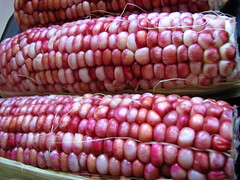
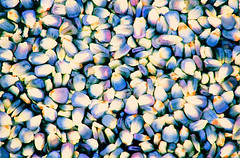
The Many Colors of Corn: A Photo Essay

Published by Friday, July 5, 2013 Permalink 0


//

English: Black corn Español: Maíz morado

English: Black corn Español: Maíz morado (Photo credit: Wikipedia)

English: Cobs of corn

English: Cobs of corn (Photo credit: Wikipedia)

English: Green Oaxaca corn Français : Maïs ver...

English: Green Oaxaca corn Français : Maïs vert d’Oaxaca (Photo credit: Wikipedia)

red corn on the cob

red corn on the cob (Photo credit: MelanieAnneMarie)

Red corn, blue corn and cucumber seeds for sal...

Red corn, blue corn and cucumber seeds for sale in Fresno, California… (Photo credit: Nate Gray: A Culinary (Photo) Journal)

Blue Corn

Blue Corn (Photo credit: Big Grey Mare)

English: From left to right, haba beans, haba ...

English: From left to right, haba beans, haba beans, blue corn and white corn for sale at a tianguis market in Metepec, Mexico State. (Photo credit: Wikipedia)

Boy in corn field, Woodbine, New Jersey

Boy in corn field, Woodbine, New Jersey (Photo credit: Center for Jewish History, NYC)

Public relations of high-fructose corn syrup

Public relations of high-fructose corn syrup (Photo credit: Wikipedia)

English: A display of six ears of field corn w...

English: A display of six ears of field corn with dented yellow kernels (Zea mays var. indentata) which won ribbons for “best of show” at the Steele County Fair in Owatonna, Minnesota (Photo credit: Wikipedia)


Never miss a post
Name: 
Your email address:*
Please enter all required fields
Correct invalid entries

Immortal Cheese with Eric LeMay: Cheese Making 101

Published by Friday, July 5, 2013 Permalink 0

Immortal Cheese with Eric LeMay: A pithy and picky video tour through everything worth knowing about cheese.

Never miss a post
Name: 
Your email address:*
Please enter all required fields
Correct invalid entries

Gareth Jones: Memories of Old Belgium & Malmedy’s Gooey Kisses

Published by Wednesday, July 3, 2013 Permalink 0


//

ID photo of Gareth Jones, food writer and consultantMemories of Old Belgium and Malmedy’s Gooey Kisses, including Recipe

by Gareth Jones

IMG_0047 (250x188)

When two chewy, gooey meringues come stuck together either side of a slather of butter cream or crême chantilly, the pâtissiers of Malmédy call this a ‘kiss’. Their description is obvious – it’s a fond embrace. Such is its fame, the Baiser had a place in the original Larousse Gastronomique compiled by Prosper Montagné in 1938.

The story goes that the Baiser de Malmédy started life in the late 19th century in this region of the Eastern Ardennes that many still prefer to call ‘Old Belgium’. The name appreciates that here, in the small towns like Malmédy, Stavelot, Bastogne, Spa and Francorchamps, the old ways continue and courtesy comes before all else – much as continues in Norfolk and Suffolk, Dorset and Somerset, where people living here still have time for each other.

OLYMPUS DIGITAL CAMERA

Continue Reading…

Never miss a post
Name: 
Your email address:*
Please enter all required fields
Correct invalid entries

Foraging and Post-Neolithic Cooking: Antonio’s Wild Spinach Salad Recipe, by Jane Le Besque

Published by Sunday, June 16, 2013 Permalink 0

Foraging and Post-Neolithic Cooking: Antonio’s Wild Spinach Salad Recipe, by Jane Le Besque

Antonio’s Wild Spinach Salad Recipe

Jane and Antonio’s recipe is based on foraging and what they imagine post-neolithic cooking to be, foraging and all, but with a modern twist, i.e. the olive oil.


Continue Reading…

Never miss a post
Name: 
Your email address:*
Please enter all required fields
Correct invalid entries

Switzerland: Swiss Food: Rhubarb Cream Recipe

Published by Monday, May 27, 2013 Permalink 0

by Jonell Galloway

Cherry-Rhubarb Fool

When you talk about rhubarb cream in Switzerland, you mean rhubarb cream, not pudding or custard. This naughty dessert is one of the easiest rhubarb desserts around, and is so thoroughly Swiss.

Recipe for Rhubarb Cream

Ingredients

Photo courtesy of Robin Stewart


1 lb. / 500 g rhubarb
3/4 cup / 200 g cane sugar
 2 egg yolks
 Cinnamon or lemon juice, according to which taste you prefer
3/4 cup / 0.2 l whipping cream

Directions

  1. Scrape or cut off any hard outer surface of rhubarb.
  2. Dice rhubarb and put into saucepan. Add sugar. Cover with water. Cook until tender but firm, 5 to 10 minutes.
  3. While rhubarb is cooking, beat the yolks until smooth.
  4. Run cooked rhubarb through food processor or chinois to purée.
  5. Add hot rhubarb purée to beaten egg yolks. Beat until thoroughly blended and eggs start to cool.
  6. Mix in cinnamon or lemon juice. Set aside to cool.
  7. Beat whipping cream. When it starts to form hard peaks, fold in cooled rhubarb and egg mixture.
  8. Cool in refrigerator, either in individual serving dishes or in a large bowl.
  9. Serve cool.


Never miss a post
Name: 
Your email address:*
Please enter all required fields
Correct invalid entries

Geneva and Lausanne: Sustainable Living Resources in Switzerland

Published by Tuesday, May 21, 2013 Permalink 0

Geneva and Lausanne: Sustainable Living Resources in Switzerland

This is a new list for sustainable living in Geneva and Lausanne and we’ll be adding to it and updating it on a regular basis. We will extend it to other French-speaking cities as we add to the list.

Free WiFi in Geneva and Lausanne


GENEVA

The city of Geneva is in the process of setting up free WiFi hotspots in and around Geneva, referred to as “GeSpots”. The project is a long-term project, but terminals are already available at the locations marked in green. Click here to see the map.

LAUSANNE

Free WiFi hotspots are available in the following locations in Lausanne: Saint-François, Riponne, Flon, Palud, Montbenon, Navigation, Port d’Ouchy and at the Service des Automobiles automobile registration and inspection office and the Blécherette aerodrome.

Farmers and Open-air Markets

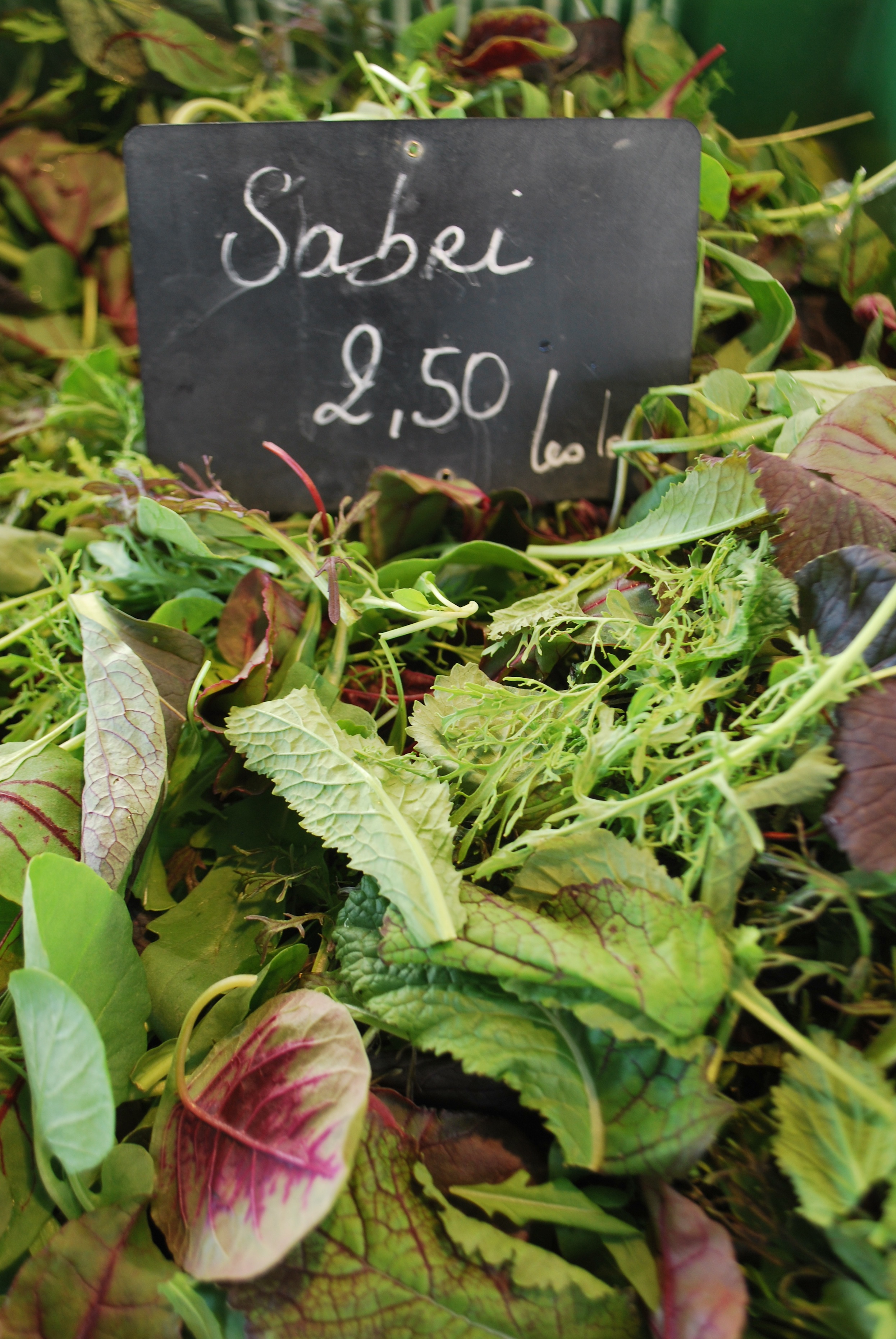
Sandrine Chapuis’ own mesclun, mixed greens from hills of Geneva


GENEVA

This site lists all the markets by day. A handy map is included with each listing so you can see where it is located in Geneva.

LAUSANNE

The Marchés Lausannois site lists the weekly markets:

Downtown/Center of Town Markets

Wednesday and Saturday, 8 a.m. to 2:30 a.m.
In downtown pedestrian streets: agricultural produce and products
On Place de la Riponne: bakery, butcher, fowl, mushrooms and non-food products

Nettles


Marché de Chauderon / Chauderon Market

Thursday, 9 a.m. to 7 p.m.
Flea market

Marché du boulevard de Grancy / Boulevard de Grancy Market

Monday and Thursday, 8 a.m. to 1 p.m.

Marché des Chômeurs

Thursday, 8 a.m. to 7 p.m.
Place de la Riponne: flea market and miscellaneous other goods

 

Never miss a post
Name: 
Your email address:*
Please enter all required fields
Correct invalid entries

Jonell Galloway: Mindful Eating: Farmers, the Land, and Local Economy

Published by Monday, April 1, 2013 Permalink 0

Mindful Eating: Farmers, the Land, and Local Economy

by Jonell Galloway

Many times, after I have finished a lecture on the decline of American farming and rural life, someone in the audience has asked, “What can city people do?” “Eat responsibly,” I have usually answered. Of course, I have tried to explain what I mean by that, but afterwards I have invariably felt there was more to be said than I had been able to say. Now I would like to attempt a better explanation.

 I begin with the proposition that eating is an agricultural act. Eating ends the annual drama of the food economy that begins with planting and birth. Most eaters, however, are no longer aware that this is true. They think of food as an agricultural product, perhaps, but they do not think of themselves as participants in agriculture. They think of themselves as “consumers.”

—Wendell Berry, The Pleasures of Eating, Center for Ecoliteracy

The Times They are a-Changin’: Move Towards a Local Economy

After a few very difficult years, we are now only starting  to talk about the importance, and even necessity, of maintaining and supporting a local economy. This is important not only to our health and taste buds, but also to our vital economic self-sufficiency. It is perfectly in line with the concept of Mindful Eating, and, by definition, involves local farmers as well as others who contribute to eating and drinking.

Continue Reading…

Never miss a post
Name: 
Your email address:*
Please enter all required fields
Correct invalid entries

UA-21892701-1