What to Eat in Switzerland: A Geneva Christmas: Cardoon Gratin Recipe

Published by Wednesday, December 19, 2012 Permalink 0

by Jonell Galloway

From the archives


Cardoon gratin is a classic Geneva Christmas dish, but only brave souls should try to prepare them because they are prickly, and the preparation can be long and tedious. Many farmers markets in Switzerland now sell them prepared sous vide, in plastic vacuum-packed packages, which is probably the best option for those who don’t get a thrill out of getting a few pricks. In any case, it is important to schedule it carefully into your meal preparations, because it is time-consuming any way you go about it.

Cardoon Gratin Recipe

Preparation of Cardoons for Gratin

  1. Throw out any hard stems and any that are wilted.
  2. Peel the cardoons by removing leaves, spines and stringy parts. The exterior will then be covered with a fuzzy layer. Use a cloth to rub stalks gently to remove fuzz.
  3. Cut stems into 8 cm (3 cm) slices. Rub with lemon, or if you intend to use them later, put slices into lemon water so they won’t turn dark.
  4. You now have two choices: you can either cook them in a white vegetable broth you’ve made ahead of time, or you can cook them in the lemon water you soaked them in.
  5. Bring to a boil and boil until tender. It should take about 30 minutes for them to become tender, but if they are larger in diameter it can take up to 2 hours, so allow plenty of time.

Recipe


All these steps can be carried out while the cardoons are cooking. There are actually several ways of doing this. You can either make a Béchamel (white) sauce and sprinkle cheese on the cardoons before you put them in the oven, or you can make a Mornay (cheese) sauce and pour it on the cooked cardoons before putting in the oven to brown. I think it’s tastier to make a Mornay sauce, and then sprinkle a bit of cheese on the top before putting it in the oven. Here’s my recipe.

Ingredients

Click here for British/American/metric recipe converter

Approximately 1 kg of cardoons
30 g of butter
1 tablespoon of flour
2.5 dl of whole milk
1 dl of cream
50 g of cheese, type Gruyère or Swiss (see photo below), grated
Lemon juice, freshly squeezed
Salt and pepper to taste
 

Emmentaler (also known as Swiss Cheese), while...


DIRECTIONS

  1. Make a Béchamel sauce, using the proportions of ingredients above.
  2. When finished and seasoned, add cream and cheese, setting aside a tablespoon of cheese. Set aside.
  3. Preheat oven to 250° C.
  4. Once cardoons are tender, drain, making sure all water is drained off.
  5. In a large bowl, mix cooked cardoons and Mornay sauce.
  6. Pour into a baking dish of the appropriate size, so that there is a layer of about 3 cm high.
  7. Sprinkle evenly with remaining grated cheese and a few knobs of butter.
  8. Put in hot oven for 15 to 20 minutes, or until golden brown.

Notes: It is important to use a hard, Swiss-type cheese. Cheddar cheese would have too strong of a taste. If you can’t find cardoons, the same recipe can be made with Swiss chard, thus eliminating the long, meticulous preparation. Simply cut them as for the cardoons and cook in chicken broth until tender, then follow the other steps in the recipe for making the gratin. Its texture is quite similar to that of cardoons.

Related articles


Never miss a post
Name: 
Your email address:*
Please enter all required fields
Correct invalid entries

My Favorite Hanukkah Foods: Grandma’s Latke Recipe

Published by Saturday, December 8, 2012 Permalink 0

by Warren Bobrow

From the archives

Hanukkah recipes are passed down from generation to generation. There are hundreds of recipes floating around on the Internet, but I thought it best to consult a friend with trained taste buds. Here is what Warren Bobrow has to say.–Jonell Galloway, Editor

My Favorite Hanukkah Foods

Of all the holiday foods I look forward to, there are two dishes that clearly connect my stomach to the past. The first is a rousing bowl of matzo ball soup. The other, specifically a Hanukkah dish, is a plate of crispy potato latkes, cooked in a heavy cast iron pan.

Ur-Bubby’s Latkes

I forewarn you. This is a Jewish story, so it is repetitive and sometimes fahklumpt (a confused story, for those who are not in the know), told by a kvetch (a complainer) who secretly loves life and food and words and work, and tells a story full of fond memories.

My great-grandmother Yetta made excellent latkes. During these eight days of Hanukkah (eight chances to get it right . . . to be exact), we celebrate the past by reliving these flavors and the stories that go with them each time we bite into a steaming morsel of grated potato, egg, onion and a bit of vegetable oil, made straight from her recipe.

Generations of cooks have grated potatoes for latkes in celebration of Hanukkah. You will not be the first or the last. And every family has their own special recipe, their own special stories.

Bubby Yetta was particularly interested in not scraping her knuckles. Even so, she used to say that if you don’t catch your knuckle on the potato grater, the latkes couldn’t possibly taste good. Something about the physical act of grating potatoes already connects me to the old days when Bubby made the latkes every evening during Hanukkah.

Onions also resonate in my memory:  the tears that ran down her cheeks as she grated the onions were not tears of joy. We heard the same kvetching every year, and carry on as we make our own history.

Every day of Hanukkah, Ur-Bubby Yetta would scrape and grate until the job was done. Much hushed conversation would follow. Were the latkes going to be good?  If not, what would we do, there was no place in those days to buy frozen latkes in the supermarket!

And with each potato and onion grated, each tear fallen, each latke fried, another memory was made. Years of latke conversation would follow . . . How about the ones we made twenty years ago? Did potatoes taste differently then, or was it a specific taste that stuck in our memories?

So careful with the grater, and accept that you’ll invariably catch your knuckle at least once, and that you may well have the battle scars to prove that you made them from scratch. And stories to tell.

Recipe

Continue Reading…

Never miss a post
Name: 
Your email address:*
Please enter all required fields
Correct invalid entries

Wild Woman on Feral Acres: Eating in Season? Pick a Pack of Parsnips!

Published by Thursday, December 6, 2012 Permalink 0

by Esmaa Self

From the archives

Consider the parsnip. Sweet. Nutty. recipe. From fritters (recipe) to soup (recipe), homemade gnocchi (recipe) to curry (recipe), the mighty parsnip delivers folate, vitamin C, fiber and flavor. Even if you’ve never before tasted parsnips, my bet is that if you try one of these recipes, you’ll not only want more parsnips, you’ll want to grow your own (tips on that below).

Photo courtesy of Sharon Mollerus

Speaking of yum, here’s a recipe from Simple Organic Kitchen & Garden that I’ve adapted to fit the items in my pantry, notably dried tomatoes and porcini mushrooms. The original recipe is known as Parsnips and Chickpeas in Garlic, Onion, Chili and Ginger Paste. I added ingredients, skipped a couple others and decided to shorten the title to the equally descriptive Parsnips Piquant.

Incredible flavor, marvelous nutrition

RECIPE

PARSNIPS PIQUANT

Ingredients


Click here for Imperial-metric recipe conversion

2 pounds parsnips, cut into ½ inch chunks
½ pound dried chickpeas, soaked overnight and drained (or 2 cans)
1 ½ cups dehydrated tomatoes, reconstituted and chopped
1 ½ cups dehydrated porcini mushrooms, reconstituted and chopped
2 ¼ cups vegetable broth (made from reconstituting mushrooms and tomatoes, see below)
½ cup chopped mixed salted nuts (set aside)
8 garlic cloves, minced
1 small onion, chopped
2 inch piece of fresh ginger, peeled and chopped
4 medium Serrano chilies, chopped
4 Tbsp porcini and sun-dried tomato infused olive oil (or plain olive, sesame, or peanut oil)
1 Tbsp sesame seeds
2 tsp coriander seeds
1 tsp turmeric
1 tsp chili powder
1 tsp ground cumin
Fresh ground pepper
Plain yogurt


Instructions


  1. Presoak chickpeas.
  2. Cover chickpeas with fresh water and boil for 10 minutes. Reduce heat, letting it boil gently. Let cook for 60 to 90 minutes, or until done. Drain and set aside. (If using canned chickpeas, simply drain and set aside.)
  3. Set tomatoes and mushrooms in a bowl; cover with boiling water. Let cool. Reserve broth.
  4. Set about a quarter of the minced garlic aside. Put remaining garlic in a blender with the ginger, onion and half of the chilies. Add enough vegetable broth to make a paste (about ¼ cup).
  5. Heat the oil in a frying pan; add coriander seeds, turmeric and chili powder. Add garlic-ginger-onion-chili paste. Stirring constantly, cook until broth begins to evaporate. Add tomatoes; stir. Cook another minute or two.

    Simmer until liquid is reduced

  6. Add the parsnips, chickpeas and remaining water; boil, stir then simmer, uncovered 15 minutes or until the parsnips are tender but not mushy and sauce has been reduced.
  7. Stir in Serranos, sesame seeds and reserved garlic.
  8. Plate Parsnips Piquant, add fresh ground pepper. Sprinkle with chopped nuts and a dollop of yogurt. Garnish with parsley. Serves 4.
  9. Chapatis, naan and kulcha make a lovely accompaniment, as does homemade sourdough or wheat berry bread.

Growing Parsnips


Photo courtesy of Matthew Folley


The parsnip’s full flavor emerges after the plant has been exposed to near freezing temperatures, thus this root crop is considered a winter vegetable. Here in Colorado where we redefine cool, if not winter, a person may scoff at the very idea of growing a slow maturing vegetable. But parsnips are the only root crop that can survive in the ground all winter. Indeed, it is one of the few crops with which high elevation gardeners might achieve success. (source)

According to Shane Smith, in his book, Greenhouse Gardener’s Companion, parsnips require bright light, cool temperatures and may go to seed if overwintered. So you might wonder if I’ve slipped a cog when I mention that I grew two small patches of parsnips last winter in our attached passive solar greenhouse and that both test plots were partly shaded and further  that one of the beds regularly reached air temperatures above 87 F.

However, if I mentioned that I fully intend to seed parsnips again for Colorado’s less industrious, though longer, growing season (AKA winter), you might want details regarding these attempts. You are in luck.

Two tries, two successes

I planted one batch in early August for inclusion in December’s root crop rich menus. This first sowing was in the raised bed nearest the southern greenhouse vent, which is the bed furthest from the main house’s southern wall and which is largely shaded in winter, thus the coldest spot in the greenhouse. The soil does not freeze, though air temps do occasionally reach the mid 30s. The parsnips we harvested from this test plot were every bit as large and straight and lovely (not to mention sweet) as those we’ve purchased in the store.

In addition, I grew a dozen parsnips in the west wing. This second test plot is within three feet of the main house’s west wall. The bed receives afternoon sun, which in the winter months, means that air temperatures reach the nineties, but soil temperature remains between 50-65 F. In addition, overnight air temps are generally a few degrees warmer than those in the first plot. We planted the second crop of parsnips in mid-October and harvested them in late January. They were two-thirds the size of the others, but possessed incredible flavor. Parsnips from this plot are featured in the images of Parsnips Piquant, above.

Companion plants include peas, potatoes, peppers, beans, radishes and garlic. Get more parsnip growing tips here.

Read more about Esmaa’s organic farming techniques on her site Middleground Farm.

Never miss a post
Name: 
Your email address:*
Please enter all required fields
Correct invalid entries

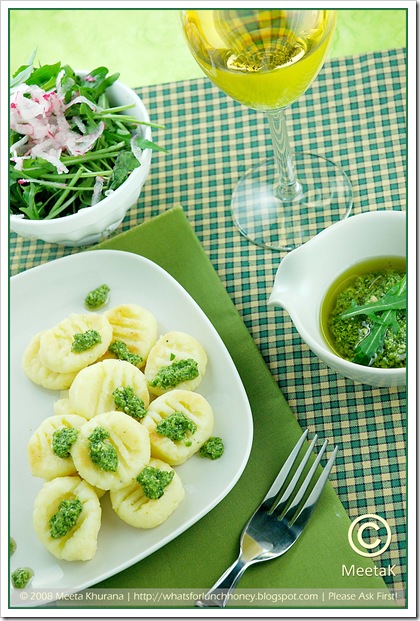
Recipe: Parsnip Gnocchi with Ruccola Cashew Pesto

Published by Thursday, November 29, 2012 Permalink 0

by Meeta Khurana Wolff

Recipe: Parsnip Gnocchi with Ruccola Cashew Pesto

From the archives

Parsnip Gnocchi (02) by MeetaK

Rock solid! That’s what the ice on my windscreen this morning was. It was so hard that here was no way my ice scraper was going to break any ice. At -5 degrees C my hands were freezing onto anything that had the slightest bit of moistness!

Winter has settled down comfortably in our parts. There was beautiful snow all through the Thanksgiving weekend and ever since, it’s been a bit dull, cold and icy.

Continue Reading…

Never miss a post
Name: 
Your email address:*
Please enter all required fields
Correct invalid entries

Our Word of Thanksgiving: Thanks to our readers for their loyalty

Published by Thursday, November 22, 2012 Permalink 0

We would above all like to thank our readers for supporting us in our efforts to build a site that joins the voices of people from around the planet who care about cooking, farming, health and everything related in a responsible, ethical manner. We think of our readers as part of our community, a sort of family that cares about the way food is grown, cooked, eaten; the mark it leaves on the planet; the health of our children.

So to all our readers (and contributors) around the globe:

Jonell Galloway, Editor


Never miss a post
Name: 
Your email address:*
Please enter all required fields
Correct invalid entries

In Europe, sometimes it has to be sweet potato pie instead of pumpkin for Thanksgiving

Published by Wednesday, November 21, 2012 Permalink 0

Tom and Maggie’s Thanksgiving Sweet Potato Pie

We’ve been making Thanksgiving dinner together for oh so many years — ever since we were in college in Paris. Since the pumpkin in France is always too watery, no matter what method of cooking we used and what type of pumpkin, we had difficulty getting it to set, so we decided to use sweet potatoes, which give a much more predictable and reliable result, which is absolutely necessary when preparing a Thanksgiving feast for a crowd of 20 or 30 convives. In addition, we’ve grown to like it better (perhaps because we know it will always set, unlike pumpkin?).

Continue Reading…

Never miss a post
Name: 
Your email address:*
Please enter all required fields
Correct invalid entries

Thanksgiving Turkey News: Tips on Choosing, Buying and Cooking

Published by Tuesday, November 20, 2012 Permalink 0

by Jonell Galloway

How to Choose, Buy and Bake a Turkey in the U.S. and Europe

The USDA gives useful facts about about turkey hygiene and cooking, all based on the assumption that you’re cooking frozen turkey. If you live in the U.S., you’ll most likely be cooking a frozen turkey, so this information is spot-on.

Julia Child’s The Way to Cook still rates top on my list for detailed, illustrated explanations of how to prepare and cook a turkey and lots of other tips.

If you live in Western Europe, there are plenty of free-range, grain-fed turkeys. I order mine months ahead from a farmer near me, since in Europe they only eat turkey at Christmas and they won’t be fattened otherwise.

In Paris, in the 7th and 16th arrondissements in particular, many butchers have fattened turkeys for Thanksgiving, and they are often free range and natural. One of the most prized origins in France is dinde de Bresse, which of course comes from Bresse and is free range. In Geneva, you can buy these, stuffed or unstuffed, at La Boucherie Molard across from the Globus during the Thanksgiving period.

If you live in other cities in Western Europe, you may not have a lot of choice. I’ve had a number of bad experiences ordering turkeys through the butchers in the provinces. They are never sure whether they’ll actually receive a fattened turkey or a scrawny thing which was intended to be fat for Christmas. If you live in the country, however, try and find a turkey farmer near you. They will invariably be cheaper and often better.

Free-range, organic turkeys will never weigh as much as the supermarket variety, but the ratio of meat to bone is greater. It’s amazing how much meat there is on a 9 or 10 lb. turkey.

I have never tasted Mary’s Turkey in California, but they sound appetizing. Mary certainly takes her poultry seriously. They are free-range, vegetarian-fed, gluten-free, and free of all antibiotics, preservatives and hormones. They are also USDA-certified organic. You can order them online, or find a store near you that sells them.

Click here to watch an entertaining but helpful video about the dangers of frying turkeys.

Chowhound has a great discussion board about whether free-range, heritage turkeys are worth the price. I would always vote for free-range and natural. They have more meat and less bone, probably due to the fact that they’ve not been gorged with antibiotics, steroids and we probably don’t want to know what else. In addition, they don’t taste like meal.

The wild turkey population is growing in much of the U.S., so I’m sure many are tempted to shoot a big one for Thanksgiving. That’s all fine, but keep in mind: cooking a wild turkey is an entirely different bag of worms. If they are large, they risk tasting gamy. Here is some good common-sense advice for preparing and cooking them.

Truth About Turkey” gives an excellent layman’s explanation about how the various kinds of turkey in the U.S. are raised.

Have a Slow Food Thanksgiving” gives a list and directories of where to buy heritage, organic and free-range turkeys in the U.S.

Whenever possible, buy directly from a local farmer. When buying fresh turkey, always ask about the “use by” date. It will depend on packaging as well as when the turkey has been slaughtered. If bought fresh and unpackaged, The New York Times and Seattle Times suggest you can keep it one or two days maximum in the refrigerator, so plan your pick-up time carefully.


Related articles
Never miss a post
Name: 
Your email address:*
Please enter all required fields
Correct invalid entries

What we’re reading: how food replaced art, history of coffee, heirloom apples and pie, 5 misconceptions about Port wine

Published by Friday, November 16, 2012 Permalink 0

by Jonell Galloway

Click here to keep up with the latest in world food and wine news.

Photo by Jonell Galloway ALL RIGHTS RESERVED (C)


Never miss a post
Name: 
Your email address:*
Please enter all required fields
Correct invalid entries

Sicilian Orange and Fennel Salad

Published by Thursday, November 15, 2012 Permalink 0


//

Sicilian Orange and Fennel Salad Recipe

by Diana Zahuranec

As fall slips into winter, the open air markets in Turin, Italy push nature’s seasonal fruits and vegetables to make early appearances in the crates and boxes stacked inside each bancarella, or stand. Oranges, grapefruits, and clementines from Calabria and Sicily showed their waxy globes in the middle of October; bitter turnip tops called cime di rapa were available by the end of September; spiky artichokes, still not technically in season, have been around for weeks.

The sweet, crispy finocchio, or fennel, one of my newly-discovered favorites, entered the scene two weeks ago at the beginning of November. Last year’s discovery that I’ve waited impatiently for since the end of September is the sweet, soft kaki vaniglia, the persimmon, which has a designated corner in my refrigerator. These bombs of juicy, fruity sugar are an after dinner treat that could almost replace autumn pies. Almost.

According to the illustrated and finely detailed wheel of seasonal fruits and vegetables that I bought at Eataly, citrus fruits have just begun their yearly cycle in November. I pat myself on the back, since I resisted buying these until a few days ago. There was one mysterious exception in the form of yellow-green skinned citrus fruits, easy to peel and sour-sweet inside. They came from Calabria, and the hulking, big man that sold them ensured me they were sweet and ripe, never mind their greenness. The man who sold them seemed to have been plucked from another time and place, where people can and still do pick oranges in the fields all day for decent wages, the weakening winter sun warm on their backs. His nails were dirty and his accent thick (presumably Calabrian).

Once at a food photographer’s studio in Emilia-Romagna, the chefs and food stylists there prepared a tangy, salty, sweet salad from the South. It had been inspired by the chef’s Sicilian roots. It’s now one of my favorite meals, and I have to wait for these seasonal fruits and vegetables before I can enjoy it. It evokes flavors from a land where the sun shines across fields with rows and rows of citrus trees, bright orbs decorating the branches in a warm Christmastime.

The traditional olives to pair with this are black ones, but I had green, which I might actually prefer. Being the salt queen that I am, a shot of capers hits the spot, but I don’t know how “traditional” that is. Also, blood oranges knock the pretty factor up a notch for this already aesthetically-pleasing plate.

Recipe

Sicilian Orange and Fennel Salad

For 2-4 people (depending on if using as a light lunch or as a side dish)


Ingredients

1 large fennel
1 medium orange
¼ red onion, sliced finely (or less)
¼ cup black or green olives, pitted and sliced thinly
Salt and pepper to taste
Extra virgin olive oil
Optional: 1-2 Tbsp capers, hot pepper
  1. Slice the fennel in half, and then core each half by cutting out the tough triangular sections at the bottom.
  2. Trim the ends, reserving green fennel leaves for garnish. Trim any bruised parts. Slice finely and set aside. Note: I also slice the very end green stems, because they’re strong in flavor and very crunchy. They may be too astringent for some tastes.
  3. Peel the orange. Setting it on its side, slice it very thinly so that each piece is divided into segments. Keep them as full round slices, or break them into halves or double segments.
  4. Layer the fennel, orange, and onion, then scatter the sliced olives over the top. Sprinkle with salt and pepper, drizzle with olive oil, and garnish with the fennel leaves. Add a dash of hot pepper and a sprinkling of capers if you so choose.
Never miss a post
Name: 
Your email address:*
Please enter all required fields
Correct invalid entries

What we’re reading: food sculptures, hugging carrots, revolting cakes, Salone del Gusto 2012, 100 best American cakes

Published by Thursday, November 1, 2012 Permalink 0

by Jonell Galloway

Click here to keep up with the latest in world food and wine news.


Never miss a post
Name: 
Your email address:*
Please enter all required fields
Correct invalid entries

UA-21892701-1