Swiss Supermarket Discoveries, Part III: Hike Switzerland

Published by Friday, June 21, 2013 Permalink 0


//

Swiss Supermarket Discoveries, Part III: Hike Switzerland

by Sonja Holverson

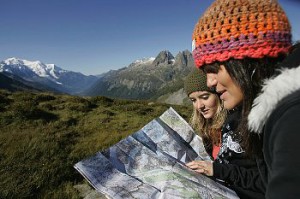
If you actually want to take a hike in Switzerland (and of course you do!), there are all levels from hikes for flatlanders to experts to alpinists. (See Swiss Alpine Wanderlust Packing List for Serious Hikers.)

So don’t let those enormous Alps intimidate you, because you can do a lot at lower altitudes. You might start by hiking around the Swiss vineyards, a common practice in Switzerland, or even in villages; you can hike down to the lake and the one of the relaxing and scenic cruises on Lake Geneva. Whatever the activity you will need a picnic lunch and the best place to find the ingredients is the Swiss supermarket.

Alpine picnic image courtesy of Olivier Bruchez

Continue Reading…

Never miss a post
Name: 
Your email address:*
Please enter all required fields
Correct invalid entries

Foraging and Post-Neolithic Cooking: Antonio’s Wild Spinach Salad Recipe, by Jane Le Besque

Published by Sunday, June 16, 2013 Permalink 0

Foraging and Post-Neolithic Cooking: Antonio’s Wild Spinach Salad Recipe, by Jane Le Besque

Antonio’s Wild Spinach Salad Recipe

Jane and Antonio’s recipe is based on foraging and what they imagine post-neolithic cooking to be, foraging and all, but with a modern twist, i.e. the olive oil.


Continue Reading…

Never miss a post
Name: 
Your email address:*
Please enter all required fields
Correct invalid entries

Top 13 Hotels in Geneva, Switzerland

Published by Friday, June 14, 2013 Permalink 0

 Top 13 Hotels in Geneva, Switzerland


English: Geneva


Grand Hotel Kempinski Geneva

Hôtel Président Wilson

Intercontinental

Mandarin Oriental Geneva

Four Seasons Hotel des Bergues Geneva

Beau-Rivage Geneva

Hotel de la Paix Geneva

La Reserve Geneva Hotel and Spa

Le Richemond

Mövenpick Hotel & Casino

D’Angleterre Geneva

Hotel Bristol Geneva

Tiffany Hotel Geneva

Warwick Geneva

Continue Reading…

Never miss a post
Name: 
Your email address:*
Please enter all required fields
Correct invalid entries

Switzerland: Swiss-style Knepfle Pasta

Published by Thursday, June 13, 2013 Permalink 0

by Jonell Galloway

Switzerland: Swiss-style Knepfle Pasta

Knepfle is originally from Alsace in France, but it is also eaten in Switzerland, in particular in the Jura region, which borders Alsace.

You can buy them at the supermarket, but they’re much better when you make them at  home.

Swiss-style Knepfle Recipe

Ingredients

3 1/3 to 4 1/10th cups unbleached white flour
3 eggs
2 cups milk
About 1/2 cup water
3 large pinches of salt
1 oz. butter
Large pan of water for boiling knepfles
Coarse sieve with large holes

Instructions

  1. Put eggs into a bowl. Add milk, water and a pinch of salt. Beat with wire whip.
  2. Little by little, use wire whip to add flour until a heavy dough is formed. The dough should fall naturally off the whip.
  3. Let dough rest for 30 to 60 min.
  4. When time is almost up, bring  large saucepan of water to boil. Add 2 pinches of salt.
  5. Heat an oven dish large enough to hold all the knepfles.
  6. NOTE: The hard part: Real pros push the dough through a coarse sieve, but this can be a bit tricky. If this is your first time making knepfles, I suggest that you drop the dough by teaspoons the first time, and try using a sieve the next time. Make sure you have a sieve with large holes before trying this.
  7. Leave water to boil gently and start dropping teaspoons of dough into water, in several goes.
  8. Let knepfles poach until they rise to the surface. This should take about 15 minutes.
  9. Use a slotted spoon to remove them. Do this carefully so they don’t fall apart. Drain well. Place in heated oven dish.
  10. Do this in steps, until all the dough is used up.
  11. To serve, over medium to medium high heat, melt butter in a frying pan (butter should be sizzling).
  12. When hot, add dry knepfles and brown, carefully turning them from time to time. Cook until browned, about 15 minutes.
  13. Serving: There are many ways to serve knepfles: plain, with cream or bacon bits, or with other sauces.


Never miss a post
Name: 
Your email address:*
Please enter all required fields
Correct invalid entries

Switzerland: Best Meat Restaurants and Steakhouses in Geneva

Published by Tuesday, June 11, 2013 Permalink 0

Switzerland: Best Meat Restaurants and Steakhouses in Geneva


Au Carnivore, French cuisine, 30 place du Bourg-de-Four, 1204 Geneva. Tel. (+41) 022 311 87 58, open 7 days a week.

L’Auberge au Renfort de Sézegnin, French cuisine, 19, route du Creux-du-Loup, 1285 Sézegnin (Athenaz). Tel. (+41) 022 756 12 36.

Bistrot du Boucher, French cuisine, 15, avenue Pictet-de-Rochement, 1207 Geneva. Tel. (+41) 022 736 56 36. Closed Wednesday lunch, Saturday lunch and Sunday.

La Broche, French cuisine, 36, rue du Stand, 1204 Geneva. Tel. (+41) 022 321 22 60. Closed Saturday lunch and Sunday dinner.

Restaurant Café de Paris, French cuisine, 26 rue du Mont-Blanc, 1201 Geneva. Tel. (+41) 022 732 84 50. Open 7 days a week, non-stop from 11 a.m. to 11 p.m.

Restaurant/Café de l’Ecu, French cuisine, 65, route de Rougemont, 1286 Soral. Tel. (+41) 022 756 33 50. Open 7 days a week, non-stop from  8 a.m. to 12 a.m.

L’Entrecôte Couronnée, 5, rue des Pâquis, 1201 Geneva. Tel. (+41) 022 732 84 45.

L’Entrecôte Saint-Jean, French cuisine, 79 boulevard Carl-Vogt, 1205 Geneva. Tel. (+41) 022 321 99 41, Closed Saturday lunch,, Sunday, and Monday.


Never miss a post
Name: 
Your email address:*
Please enter all required fields
Correct invalid entries

Outdoor Activities in English in Switzerland

Published by Monday, June 10, 2013 Permalink 0

Outdoor Activities in English in Switzerland

lavaux vineyards, bike outing with Fraiche Air, photo by Know It All at http://www.knowitall.ch/index.php?option=com_content&view=article&id=1072&catid=293&Itemid=398, Switerzland in English

Yvette Evers grew up camping, hiking and skiing in the Swiss Alps. A Canadian with Dutch roots, her career in international development allowed her to explore mountain areas around the world. Since moving to the Geneva area in 2009 with her husband and two teenage daughters, she also works as a sustainability consultant specializing in tourism. She refers to her work as “slow tourism,” says Know It All.

Yvette is the founder of fraiche air, an outdoor club that fills a gap in the market for global locals who are looking for information about outdoor recreation and tourism in English. The outings in small groups provide a wonderful opportunity to discover new outdoor activities and join an active community of like-minded athletic friends – power walks, hiking, snowshoeing, ski-touring, and family days.

Here’s a recent outing: Slow tourism along the Lavaux vineyard terraces. The first vines in Lavaux were planted in the 12th century, according to Know It All. The area between Lausanne and Vevey is now a UNESCO World Heritage site with stunning views of the Alps and Lac Léman, referred to as Lake Geneva in English.

FraicheAir is located in Geneva. For more information, look on their website at http://www.fraicheair.ch/ or call them at  (+41) 79 904 46 22. Visit their Facebook page at http://www.facebook.com/FraicheAir.


Never miss a post
Name: 
Your email address:*
Please enter all required fields
Correct invalid entries

The Top 10 Restaurants in French-Speaking Switzerland

Published by Wednesday, June 5, 2013 Permalink 0

I compiled this list of the top 10 restaurants in French-speaking Switzerland from the March 28, 2013, issue of the French-language magazine L’Hebdo.

  1. Hôtel de Ville – Benoît, Crissier
  2. Domaine de Châteauvieux, Satigny
  3. Hôtel Terminus – Didier de Courten, Sierre
  4. L’Ermitage de Bernard Ravet, Vufflens-Le-Château
  5. Le Pont de Brent, Brent
  6. Le Cerf, Cossonax
  7. Hôtel Beau-Rivage, Le Chat Botté, Geneva
  8. Hôtel Beau-Rivage, Anne-Sophie Pic, Lausanne
  9. Georges Wenger, Le Noirmont
  10. Denis Martin, Vevey

English: Logo of the Swiss magazine L'Hebdo Fr...

Never miss a post
Name: 
Your email address:*
Please enter all required fields
Correct invalid entries

A Mesolithic Dinner: Food, Wine and Art by Jane Le Besque

Published by Tuesday, June 4, 2013 Permalink 0

by Jonell Galloway

A Mesolithic Dinner: Food, Wine and Art by Jane Le Besque
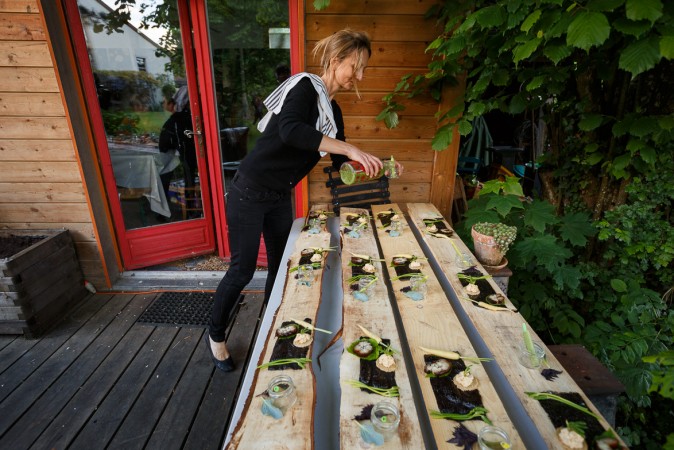
 

Jane Le Besque hosted a “mesolithic dinner” on June 30, 2013, in her home in the Pays de Gex just over the border in France, an event sponsored by Slow Food Geneva. The dinner was cooked using ancient flavor combinations and techniques, and served on split logs onto which slate plates were placed and used as plates.

What Food Did Jane Le Besque Serve at Her Mesolithic Dinner?

Although Jane’s dinner was labeled “Mesolithic”, it was indeed much more than that. She covered the evolution of food from the post-glacial hunter-gather periods, through the Mesolithic and Neolithic, and going on to the Ancient Greeks and Romans, centering on Europe.

It started with the Mesolithic era, with an assortment of coastal and lake fish, eel, root vegetables and wild greens. The meal then slipped in to the Neolithic era with galettes made from ground lentils, peas and barley, served with spit-roasted boar. The menu ended with an Iron-Age “travelers pack” of dried fruits and dried-porridge slices fried in cumin and butter. The Bronze Age brought blue cheese and butter.

Drinks consisted of mead, more often referred to as “honey wine,” more in the style of the ancient Greeks and Romans than of more ancient peoples, and beer.

What is the Mesolithic?

As a reminder, the Mesolithic Age refers to the pre-agricultural period between 10,000 and 5,000 BCE in Europe, and variations of this period in other parts of the world. The term “pre-agricultural” is key in understanding what ingredients were available. The three terms paleolithic, mesolithic and mesolithic refer to what is generally called the “Stone Age,” i.e. the post-glacial hunter-gatherer period, when humans started to use stone tools and food was gathered rather than farmed.


During the early Stone Ages or paleolithic (2.6 million years ago to around 10,000 BP), humans used some stone tools and utensils, but many tools were made from organic matter such as bone, fibers, and wood. Hunting and gathering were the chief ways of providing food. During the neolithic, starting around 10,200 BCE and ending between 4,500 to 2,000 BCE, depending on the location, we saw the beginning of farming. The mesolithic overlapped the other two ages, once again, at different times in different places. Metal tools brought these three Stone Ages to an end.
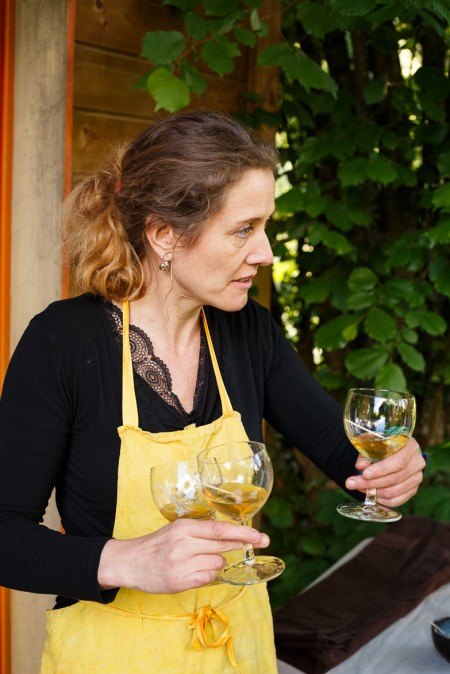
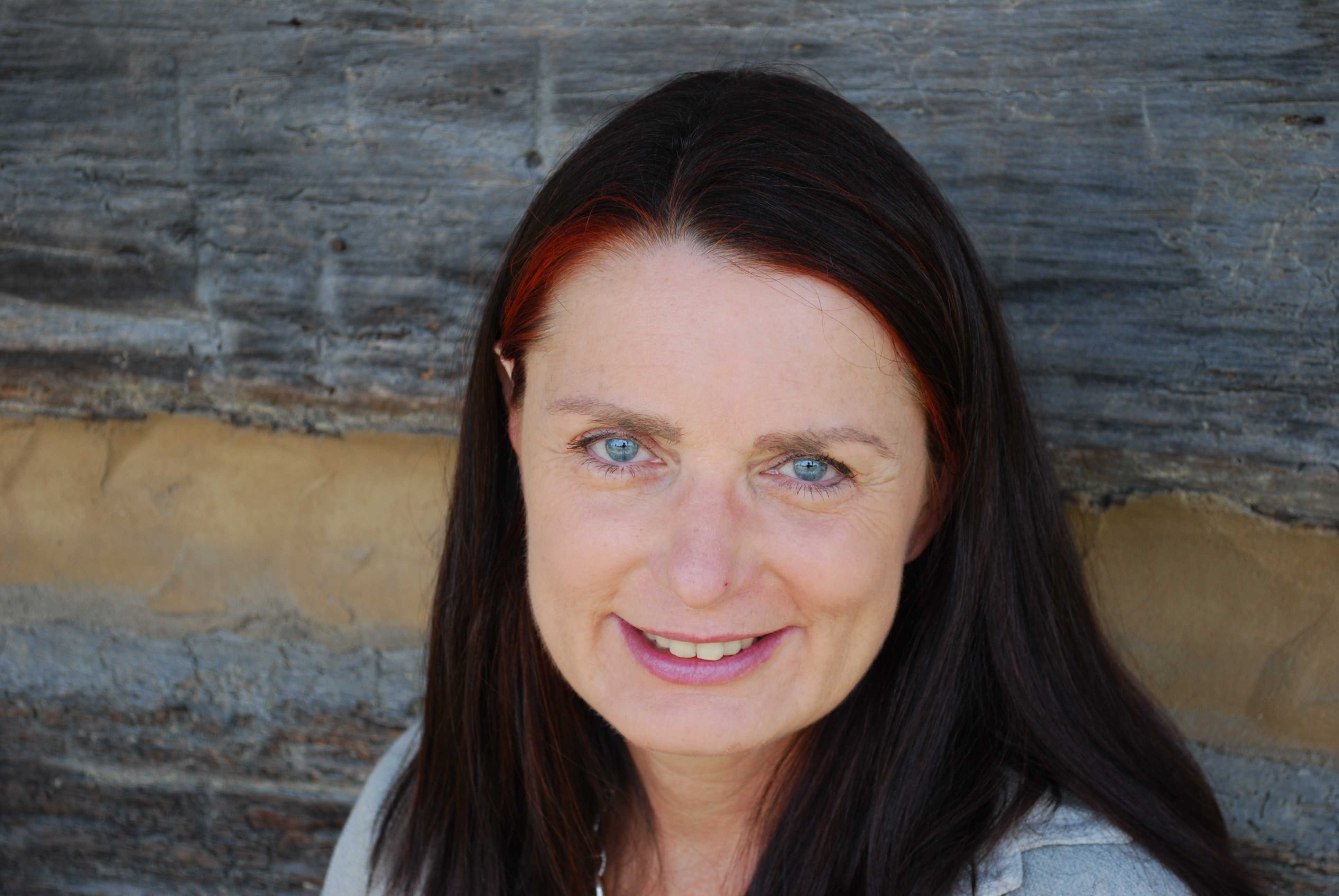
Jane Le Besque, artist and Mesolithic chef, serving mead


Early Stone Age cooking was generally on leaves or directly over the embers, although clay cookware has recently been found in China dating from 19,2000–20,000 years ago, during the ice age. Stone Age plates usually consisted of a rock or other flattish surface found in nature, such as the flattened split logs Jane used in the same manner as we use wooden tables today. Earthenware did not appear on the dinner table until much later.

What Did You Usually Eat at Mesolithic Dinners?

What did they eat? Pretty much whatever they found and killed that was edible: meat, fish, wild plants. The specifics of this depended on the location, climate and season. Meals included the day’s finds. This might consist of berries, wild greens and other wild vegetables and plants.

Meat and later fish were not an everyday affair. They were difficult to come by and difficult to preserve, depending on the location (salt was found in Romania as early as 10,000 years ago). Stone  Age people ate very little grain, since agriculture didn’t exist yet. Hazelnuts and other nuts were often roasted, and stored for winter. Wild boar was common; dairy products and cheese were on the menu, although a limited variety.

About Jane Le Besque

Jane Le Besque lives and works with her family at the foot of the French Jura, a few minutes from Geneva, in the foothills of the Jura mountains.

She was born in England and has a Breton grandfather, hence the name. Since graduating from Birmingham Art College in 1986, she continued her studies at l’Ecole des Beaux Arts in Paris. She afterwards lived and worked in Toulouse, London, and now outside Geneva.
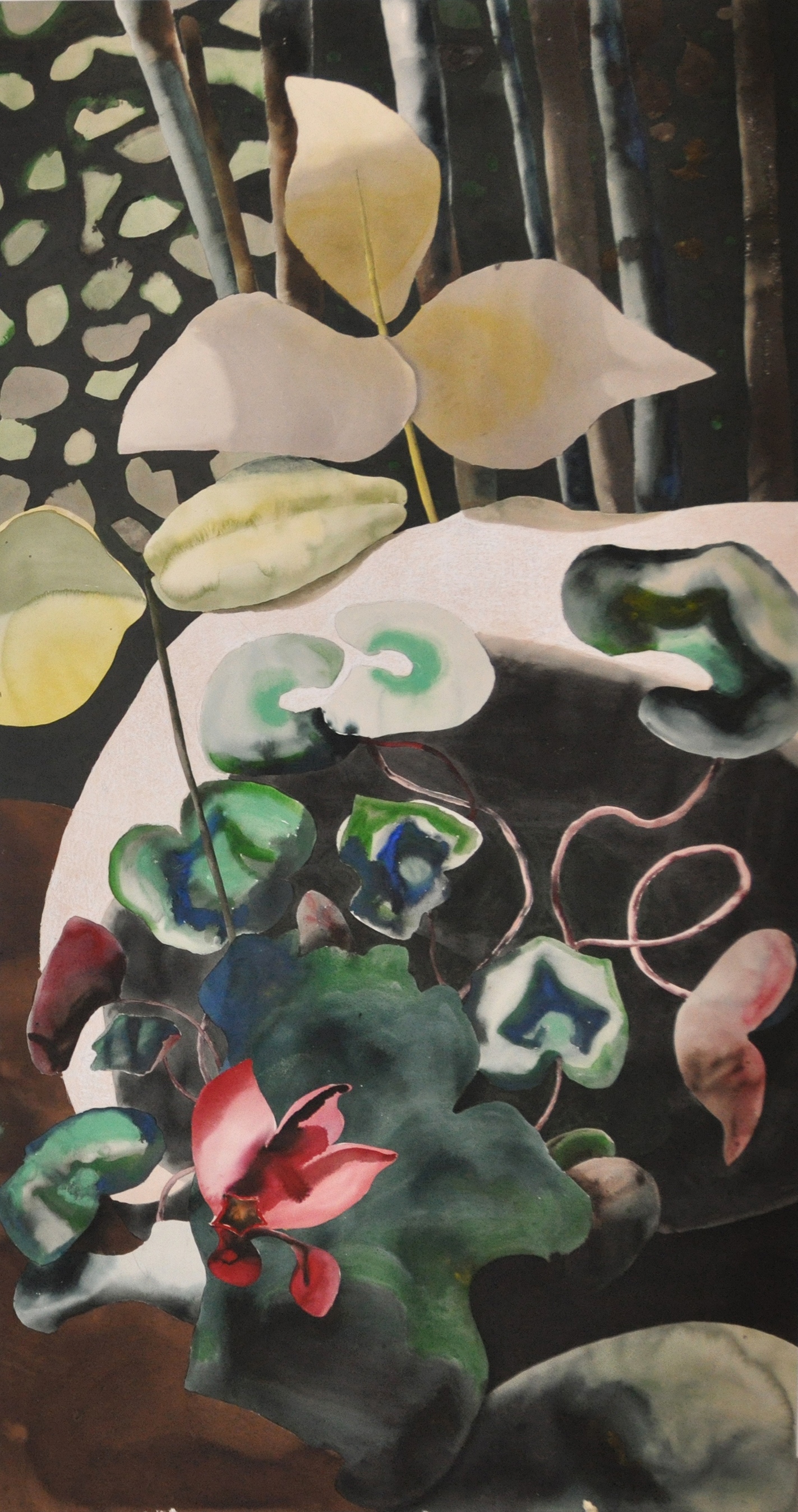


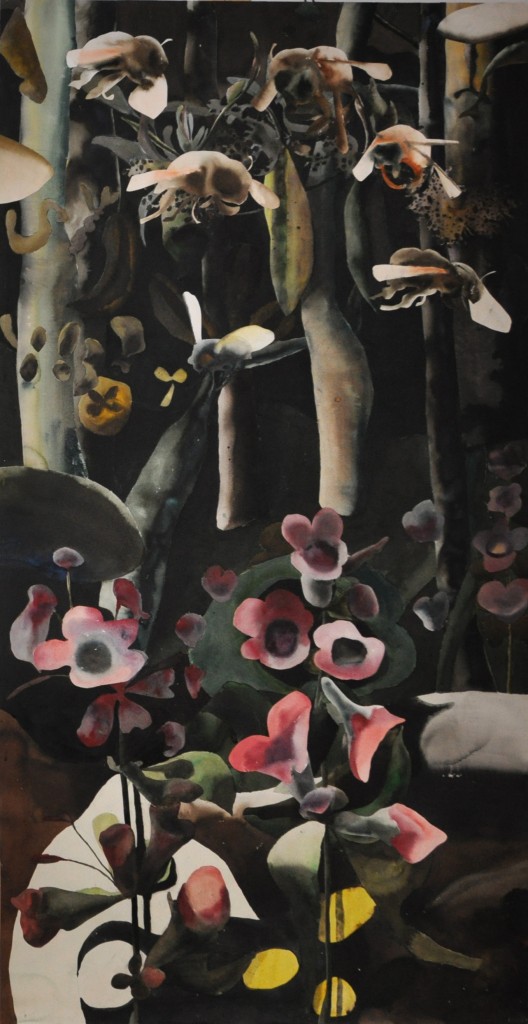
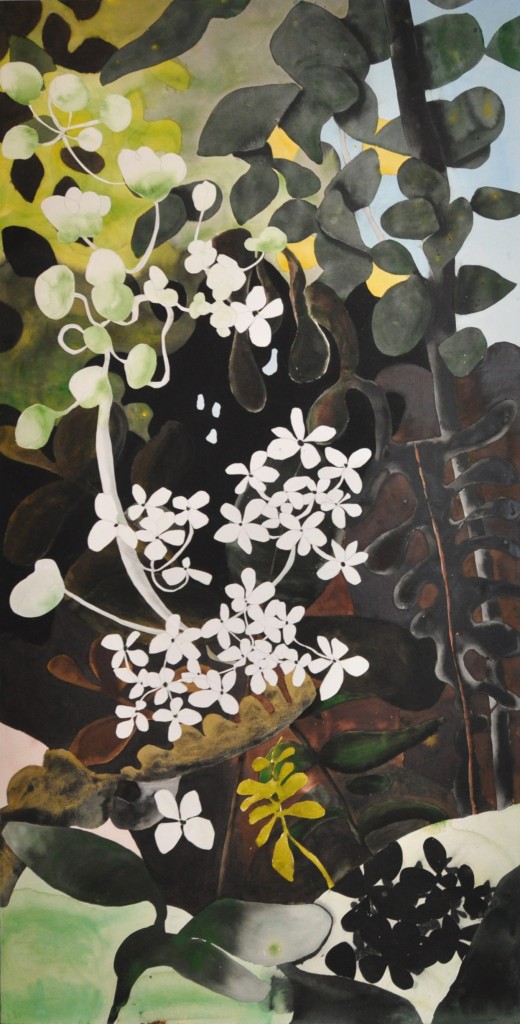
Jane has always painted. She is her happiest walking through the woods and gathering berries, mushrooms, acorns, flowers and leaves to use in her cooking and painting.

One might say Jane has been interested in mesolithic cooking even before she learned the word. As a child, she spent her time gathering the wild things she now uses in her paintings,  making dresses out of them.

Her paintings are an intense reflection of her “gatherer” spirit. The Mesolithic dinner was held in her studio, lined with her paintings of flora of all types.



Never miss a post
Name: 
Your email address:*
Please enter all required fields
Correct invalid entries

Switzerland: Geneva Restaurant Suggestions

Published by Sunday, June 2, 2013 Permalink 0


//


by

Jardins de Brunswick (in front of Le Richemond), rue Adémar-Fabri 7, 1201 Geneva. +41 022 731 60 16. Open 07H15 to 22H00 Mon. thru Wed, 07H15 to 24H00 Thurs. and Fri., and 10H00 to 24h00 on Saturday. Closed Sundays. info@cottagecafe.ch, www.cottagecafe.ch

When you have to meet someone near the quai du Mont-Blanc or in the Pâquis neighborhood, this is a great stopoff if you don’t have the pocketbook for the more upscale Richemond and Beau-Rivage venues right behind it. Plus, it is in a beautiful setting, right smack in the middle of the Brunswick gardens.

It’s nice in both summer and winter. The terrace is spectacular, of course, and you even get glimpses of jet d’eau from time time. Inside, it’s cozy and funky.

Breakfast includes birchermuësli, homemade jams and freshly squeezed juices. They have a daily lunch menu, serve pastries in the afternoon, and tapas starting at 18h00.

There is a selection of good quality local wines by the glass or bottle, along with some wines from other places.

Quirinale

Rue de la Rôtisserie 6, 1204 Geneva. +41 022 748 48 48

I’ve only had the truffle pizza, which is the house specialty, but I have been dreaming of it ever since.

Emmanuel de Savoie is part owner I hear.

Great central location, chic and full of jetsetters, and a little pricey if you eat a 3-course meal with wine. They do have lunch specials however, and that truffle pizza . . .

La Terrazza

Route de Florissant 51, 1206 Geneva. +41 022 345 56 00. Open for lunch and dinner. Closed Saturday and Sunday.

I discovered this almost hidden Swiss-style café-restaurant many years ago on my treks back and forth to the Beaulieu clinique.

Mr. Borella started as waiter at the Lion d’Or during its golden age. He later set out on his own and has been in this same location for about 25 years. Mrs. Borella cooks and Mr. Borella serves. They are from the Dolomites, so they cook hardy, traditional dishes, as well as some well turned-out Swiss classics.

The price is about as right as you can get, and they buy all their ingredients from local producers. The tomatoes taste like tomatoes and the salads, well they come straight from Chapuis.

Nologo Restaurant

Rue de Fribourg 11, 1201 Geneva. +41 022 901 03 33. Open Mon. thru Fri. lunch and dinner, Sat. dinner only. Closed Sundays. resto@nologo.ch, www.nologo.ch

This is Japanese food like you eat in Japan, not adapted for Western tastes. Wonderful mixtures of unusual flavors and ingredients like you’d never find in your regular, standardized-menu sushi bars.

Don’t count on them being friendly, just think about what’s on your plate. Tiny space so reserve well ahead.

Never miss a post
Name: 
Your email address:*
Please enter all required fields
Correct invalid entries

Switzerland: Swiss Food: Rhubarb Cream Recipe

Published by Monday, May 27, 2013 Permalink 0

by Jonell Galloway

Cherry-Rhubarb Fool

When you talk about rhubarb cream in Switzerland, you mean rhubarb cream, not pudding or custard. This naughty dessert is one of the easiest rhubarb desserts around, and is so thoroughly Swiss.

Recipe for Rhubarb Cream

Ingredients

Photo courtesy of Robin Stewart


1 lb. / 500 g rhubarb
3/4 cup / 200 g cane sugar
 2 egg yolks
 Cinnamon or lemon juice, according to which taste you prefer
3/4 cup / 0.2 l whipping cream

Directions

  1. Scrape or cut off any hard outer surface of rhubarb.
  2. Dice rhubarb and put into saucepan. Add sugar. Cover with water. Cook until tender but firm, 5 to 10 minutes.
  3. While rhubarb is cooking, beat the yolks until smooth.
  4. Run cooked rhubarb through food processor or chinois to purée.
  5. Add hot rhubarb purée to beaten egg yolks. Beat until thoroughly blended and eggs start to cool.
  6. Mix in cinnamon or lemon juice. Set aside to cool.
  7. Beat whipping cream. When it starts to form hard peaks, fold in cooled rhubarb and egg mixture.
  8. Cool in refrigerator, either in individual serving dishes or in a large bowl.
  9. Serve cool.


Never miss a post
Name: 
Your email address:*
Please enter all required fields
Correct invalid entries

UA-21892701-1