Book Review: Jean-Philippe de Tonnac’s “Dictionnaire Universel du Pain” or Universal Dictionary of Bread

Published by Wednesday, April 13, 2011 Permalink 0

by Jonell Galloway

Jean-Philippe de Tonnac, contributor to The Rambling Epicure, has written more than 20 books on subjects as varied as Umberto Eco, anorexia and, in October 2010, his masterpiece, the Dictionnaire Universel du Pain, or “Universal Dictionary of  Bread,” a veritable encyclopedia about every facet of  bread from all corners of the earth. The dictionary — not yet translated into English — covers the history of bread, as well as anthropological, symbolic, emotional, sexual, agricultural, botanical aspects . . . well, absolutely everything you might want to know about bread, literally from crop to crust (to borrow Dan Lepard‘s term), with every technical step in the process of bread baking covered in minute detail.

Continue Reading…

Never miss a post
Name: 
Your email address:*
Please enter all required fields
Correct invalid entries

Listen to Jean-Philippe de Tonnac talk about bread on France Inter radio

Published by Wednesday, April 13, 2011 Permalink 0

by Jonell Galloway

Click here to listen to the show.

Continue Reading…

Never miss a post
Name: 
Your email address:*
Please enter all required fields
Correct invalid entries

Looking for a restaurant for this weekend? Here’s your restaurant finder

Published by Friday, April 8, 2011 Permalink 0

by Jonell Galloway

Click here to go to iTaste in English.

http://www.itaste.com/?partner=138

The restaurant social network iTaste is the perfect place to look for a restaurant that suits your budget, taste, mood, etc. It allows you to choose your criteria and then generates a list that meets them. Over time, you can form a network of friends who have the same taste in food as you.

The network started by covering Switzerland, France, Belgium, Germany and Italy, but is swiftly spreading around the world.

According to founder Paul de la Rochefoucauld, it functions more or less like Wikipedia, allowing users to correct or add to existing information, or even add restaurants that are not yet listed. For the moment, it includes about 70,000 restaurants and has 40,000 network members.

Never miss a post
Name: 
Your email address:*
Please enter all required fields
Correct invalid entries

Switzerland: Does it matter what you drink with your Swiss fondue?

Published by Thursday, April 7, 2011 Permalink 0

by Jonell Galloway

Wine, water or tea? Tradition Prevails

There is much discussion in Switzerland about the perfect drink for fondue.

Glass of Fendant de Valais, photo courtesy of Steve Lupton/Corbis

The Swiss have clear ideas about what you should and shouldn’t drink with your cheese fondue. Not water, because it will congeal and make a huge, heavy, fat-filled ball of cheese in your belly that can lock up your digestive tract and make you uncomfortable for days. Many say not to drink anything cold. Others say if you really can’t drink alcohol,  drink plain black tea — though I confess I’ve never seen anyone do that — without adding sugar or milk.

The traditional drink is definitely Fendant, a slightly sparkling white wine, served almost at room temperature. Fendant is made in the canton of Valais, using Chasselas grapes. When made in the canton of Vaud, it is referred to simply as “Chasselas”.

Scientific Study vs. Tradition

A study carried out in Switzerland and Germany on 20 healthy adults (14 men) aged 23-58 — partially funded by Coop Foods supermarket chain and Etter Kirsch —was published in the BMJ medical journal in December 2010. Scientists fed them cheese fondue with either Fendant de Valais white wine and kirsch or with black tea.

Swiss cheese fondue, photo courtesy of Leser/SoFood/Corbis.

Participants who drank tea digested the fondue in about six hours; those who drank wine and kirsch (cherry schnapps) digested it in nine hours. No gastric symptoms were associated with either test group. The MRI of one of the fondue eaters in the experiment showed a massive lump of cheese, referred to as a “cheese baby,” because it looks like a fetus!

The head of the study, gastroenterologist Mark Fox, from Queen’s Medical Centre in Nottingham in the U.K., said the findings apply to any high-calorie, high-fat meal, such as traditional Christmas or Thanksgiving feasts. Adding alcohol to fat makes it more difficult to break down fat, and Fox added that there is so much fat in fondue that alcohol couldn’t even make a dent.

What’s the Verdict?

In my worthy opinion, tradition will prevail. The study was carried out on an extremely small group, and even if it were larger, the conclusions will almost certainly not convince the Swiss to change their ways after hundreds if not thousands of years of drinking Fendant and cherry schnapps with their fondue!

Never miss a post
Name: 
Your email address:*
Please enter all required fields
Correct invalid entries

Switzerland: MarketDay, April 6, 2011

Published by Wednesday, April 6, 2011 Permalink 0
Never miss a post
Name: 
Your email address:*
Please enter all required fields
Correct invalid entries

Kids in the Kitchen: Teach Your Kids How to Shop for Food

Published by Wednesday, April 6, 2011 Permalink 0
by Jonell Galloway

Spring and summertime are the perfect time to start!

Farmers market

Going to the farmers market can be made into an exciting, weekly event. Summer offers lots of fresh fruit that they can choose to make their smoothies, to put on their breakfast cereal, or to make fruit salads. Vegetables are tastier in summer than in winter, and there is a larger selection, so it is also an occasion to encourage them to try more vegetables. If they choose fruit and vegetables themselves, they will feel more part of the process, and are more likely to eat them.

Continue Reading…

Never miss a post
Name: 
Your email address:*
Please enter all required fields
Correct invalid entries

A Thought for Food: One Woman’s Journey into the World of Slow Food

Published by Tuesday, April 5, 2011 Permalink 0

by Meeta Khurana Wolff

A Thought for Food – Slow Food

Eating poorly or inadequately in our fast food culture is easy. Overworked and stressed, we rush out to find a quick bite and often find solace in a burger or a hot dog. The temptation of sugar, salt and fat feel good while we are eating it, but it really does little to satisfy us. It is convenient at the time and stills our hunger. Dinner might be a quick microwave meal, frozen pizza ready in minutes in the oven, or even take out. Looking at the long-term effects, it will make our family and us fat, lazy and sick!
Continue Reading…

Never miss a post
Name: 
Your email address:*
Please enter all required fields
Correct invalid entries

Erratum: David Downie and Alison Harris On Book Tour from April 20 to May 20 in NYC and SF Bay Area

Published by Monday, April 4, 2011 Permalink 0

The following San Francisco Bay area dates published in David Downie and Alison Harris On Book Tour from April 20 to May 20 in NYC and SF Bay Area last week:

Continue Reading…

Never miss a post
Name: 
Your email address:*
Please enter all required fields
Correct invalid entries

Un boulanger ne fait pas le printemps, mais y contribue (1)

Published by Friday, April 1, 2011 Permalink 0

Un boulanger ne fait pas le printemps, mais y contribue

par Jean-Philippe de Tonnac

Click here for English version.

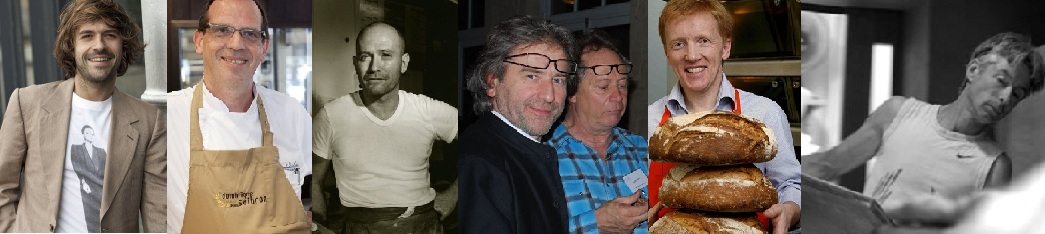
Les artistes boulangers français sont à l’honneur. Marie-Odile Briet rend hommage à leur créativité débridée par le décret pain (1993) et bien d’autres facteurs encore. Les plus illustres représentants de cet art boulanger réinventé ont pour nom Gontran Cherrier (Paris), Dominique Saibron (Paris), Christophe Vasseur (Paris), Jean-Luc Poujauran (Paris), Basile Kamir (Paris), Eric Kayser (Paris), Benoît Fradette (Aix-en-Provence).

Ceux-là sont à citer à l’ordre du mérite boulanger, assurément. Mais il faudrait ajouter aussitôt ces autres valeureux artisans, plus discrets, sans doute, mais pas moins bons maîtres boulangers. Sinon on aurait quelques difficultés à faire croire que le renouveau est autre chose qu’un feu de Bengale, égayant quelques arrondissements parisiens. Non, le phénomène est d’une ampleur plus vaste et laisse entendre qu’un nouveau chapitre de la longue histoire du pain est en train de s’écrire. Dans celui-ci, le pain ne s’excuse plus d’être mauvais ou insipide ou trop cher ou trop ceci. Il s’affirme tranquillement, fort d’une histoire millénaire et auréolé de ces performances nutritionnelles établies. Mieux : il participe désormais d’une définition de la gastronomie française. Il n’est donc plus le pain avec lequel on se bourre, ou on pousse. Il est le pain étoilé.

Voici quelques noms que vous devez connaître si vous vous intéressez à ce renouveau du pain français, lequel concerne des boulangers à Paris, en province et quelques ambassadeurs à l’étranger : Michel Izard (Lannilis, Finistère), Alex Croquet (Wattignies, Nord), Jacques Mahou (Tours, Indre-et-Loire), Nabil Sbaï (Reims, Marne), David Bedu (Pistoia, Toscane, Italie), Pierre Nury (Loubeyrat, Puy-de-Dôme).

Continue Reading…

Never miss a post
Name: 
Your email address:*
Please enter all required fields
Correct invalid entries

On the Chocolate Trail: Easter Dead? Say It Isn’t So!

Published by Friday, April 1, 2011 Permalink 0

by Christina Daub

According to the Huffington Post, Easter is about to “be killed” and Passover “injured” due to the continuing political unrest in the Ivory Coast influencing the rising costs of cocoa.

Yes, forty percent of the world’s supply is still being held up in the ports of Abidjan and San Pedro, and the costs to chocolatiers and consumers continue to rise, but enough to leave all the chocolate Easter Bunnies sitting on the store shelves, certainly not.

In fact I have seen more chocolate Easter products on the shelves of DC area stores than ever before. The Harris Teeter chain seems to be loaded with “sale” Lindt chocolate rabbits, carrots and eggs. World Market is a cornucopia of Easter treats and the CVS stores were giving out dollar coupons one could use to buy Dove chocolate eggs recently.

The chocolate world may be suffering a major setback, but please let’s remember the real victims in the chocolate war are the Ivorian growers and pickers, their livelihoods threatened by the two men vying for government control.

Never miss a post
Name: 
Your email address:*
Please enter all required fields
Correct invalid entries

UA-21892701-1