Book Review: A Hastiness of Cooks, by Cynthia Bertelsen

Published by Monday, August 12, 2019 Permalink 0

Book Review: A Hastiness of Cooks

by Margie Gibson

I’ve flirted with historic cooking for years, but somehow, the relationship never took off. I would get frustrated by arcane language and ingredients and turn to something more familiar and easier to cook. Cynthia Bertelsen’s new book, A Hastiness of Cooks, has provided the catalyst that just may spark a beautiful relationship.

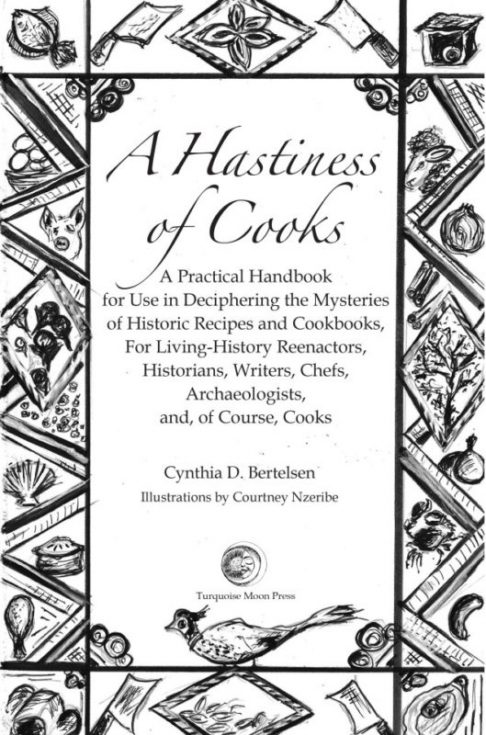
This slim volume’s subtitle, A Practical Handbook for Use in Deciphering the Mysteries of Historic Recipes and Cookbooks, For Living-History Reenactors, Historians, Writers, Chefs, Archaeologists, and, of Course, Cooks, precisely summarizes the book’s aims and audience. Courtney Nzeribe’s many illustrations remind the reader that the book’s ultimate subject is food and its preparation.

Bertelsen has provided the organizational structure and clarity that will help the reader analyze recipes from earlier centuries. This volume concentrates on the food on European tables from the Middle Ages to the 1700s. Spanish and English recipes get prime attention—after all, the territories that Spain and England conquered were huge and were the source for a steady stream of new foods entering the European repertoire. Interestingly enough, England, whose early cooks were influenced by France, Italy, Persia, the Iberian peninsula, and Turkey, led the way in the production of manuscripts on cooking—which suggests to me that British cooking may have gotten a bad rap in the years since World War I.

Continue Reading…

Never miss a post
Name: 
Your email address:*
Please enter all required fields
Correct invalid entries

The History of Roquefort French Dressing

Published by Friday, September 14, 2018 Permalink 1

by Gary Allen

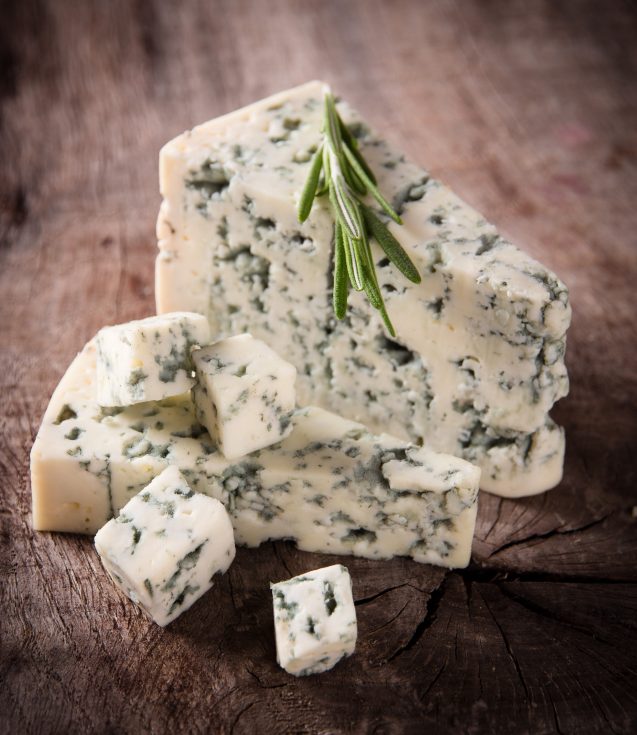
Roquefort cheese has been made in the caves of Combalou, Roquefort-sur-Soulzon, at least since Gaul was occupied by the Romans — Pliny the Elder spoke highly of it, and he was not the sort who normally gushed gourmet superlatives. By 1411, Les Causses had been granted the exclusive right to the name “Roquefort,” and all other blue-veined cheeses had to make their own reputations. Salads, of course, go back much further — they were known to the ancient Greeks — but didn’t have an entire book devoted to them until 1699, when Robert Evelyn published his Acetaria: A Discourse on Sallets.

When salad and Roquefort cheese first got together is somewhat more mysterious. Usually, recipes just “happen,” they evolve — often in several places at the same time — in response to new tastes, the availability of new ingredients, etc. Recipes, or “receipts,” have only found their way into print after a sufficient number of people found them useful. Only rarely can we provide, with any certainty, the “who, what, where, when and how” of a recipe’s creation.

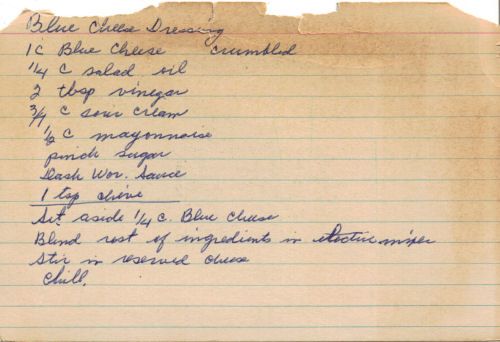
Handwritten recipe for blue cheese/Roquefort dressing

Continue Reading…

Never miss a post
Name: 
Your email address:*
Please enter all required fields
Correct invalid entries

Relaunching of The Rambling Epicure E-zine

Published by Wednesday, April 25, 2018 Permalink 0

I launched The Rambling Epicure e-zine, this website, nearly ten years ago as a literary culinary electronic magazine with a host of well-known food writers and photographers, all of whom are still active members of the related Facebook groups Culinary Travel and Mastering the Art of Food Writing. Editing and publishing this on my own required an incredible amount of gratifying work and because I was busy with my personal projects, I have left it semi-dormant for the last year or two. Today, I would like to relaunch it in a different form as part of an effort to encourage conversation about food, cooking, and writing.

My primary goal is for The Rambling Epicure to become a wellspring of enlightening epicurean essays and culinary fiction. We all have captivating personal and family tales about what we cooked and what we ate through many generations, during good times and bad. These memories are part of our food culture—and our food heritage—and should be an effective way to transmit our experiences and values beyond our front doors.

But my ambitions are greater than just memoir: I’m also interested in publishing articles and essays related to historical research in the field of gastronomy and in reviews of food books.

I would like to make this a cooperative effort that opens the door for us to share our potential as cooks, diners, and writers. Together, we will create a literary culinary site unlike any other, with information and stories that can be passed down to future generations.

Continue Reading…

Never miss a post
Name: 
Your email address:*
Please enter all required fields
Correct invalid entries

The Rambling Epicure Book-a-Month Club

Published by Monday, September 11, 2017 Permalink 0

THE WINNER IS “WHAT SHE ATE” and we’ll start discussing it from September 15 to 30, 2017.

Click here to join.

In The Rambling Epicure threads, it’s become clear that many of us like reading about food as well as cooking it, eating it, talking about it. With that in mind, it seemed like a sort of “foodies’ book club” (with apologies to those who hate the word “foodie”) might be an interesting thing to try. Jonell has a ton on her plate right now, and I’m always looking for an excuse to avoid work, so I’ll start off by moderating, but that’s just for convenience and for the moment.

As a beginning, we thought we would suggest four books. Pick the one you’d most like to read and discuss, vote for it in the comments, and on Friday, September 1, we’ll announce a winner. We’ll give everybody time to acquire and read the book, and we’ll open things up to chat and argument on Friday, September 15 and continue until September 30. 

If there are other books you’d like to suggest, that would be great. Please note them in the comments and I’ll keep a list, then we’ll run the most popular suggestions for the next cycle.

For this opening cycle, please vote for ONE of the following:

Since this is our first attempt, please feel free to add any suggestions about dates, timing, books, and how might generally build this reading group together.

All these books are available as ebooks.

Click here to join.

Maggie Topkis

P.S. We are now taking suggestions for books for the next The Rambling Epicure Book-a-Month club in October.


Never miss a post
Name: 
Your email address:*
Please enter all required fields
Correct invalid entries

What to Eat in France: Turkey Stuffed with Chestnuts

Published by Friday, December 18, 2015 Permalink 0

What to Eat in France: Dinde Farcie aux Marrons, Turkey Stuffed with Chestnuts

by Jonell Galloway

Etre le dindon de la farce. / To fall victim to dupery.

Une dinde. / A stupid, pretentious woman.

Anthelme Brillat-Savarin, perhaps France’s best-known gastronomic writer, said that the turkey was certainly one of the most beautiful gifts the New World had given to the Old. “…the fattest, and if not the most delicate, at least, the tastiest of all domesticated birds.” It’s not often that the New World gets such compliments from discerning French epicures.

Turkeys were originally called poules d’Inde, “Indian hens,” in France, because they were thought to have come from India, which they later learned was Mexico. The French were not the only ones to get the name wrong. In Hebrew a turkey is a tarnagol hodu, meaning literally  “Indian chicken;”  in Russian indiuk, Polish indyk and Yiddish indik.

There is some controversy over who brought turkeys to Europe. Columbus probably brought  brought them back in the early sixteenth century, since records show that King Ferdinand had ordered that every ship to bring back ten turkeys before the Spanish explorer Cortés set out in 1519. In any case, by 1548, they were the rage in France. In 1549, Catherine de Medicis served 70 “Indian hens” and 7 “Indian roosters” at a banquet held in honor of the Bishop of Paris.

French aristocrats were accustomed to eating all sorts of feathered creatures, including chewy storks, herons, peacocks, swans, cranes and cormorants, so it wasn’t surprising that they fell in love with the less-chewy turkeys, and that in 1570, Charles IX and Elizabeth of Austria thought turkey noble enough to serve at their wedding feast.

By the seventeenth century, the French were raising turkeys as if they were their own and most cookbooks included turkey recipes. French chefs weren’t lacking in ideas: they made stews and ragouts; they larded, roasted and glazed it; they stuffed it and made it into soups and pâtés.

Marie-Antonin Carême preferred the wings, which he deboned, then stuffed with chicken and truffles. Alexander Dumas, in his Dictionary of Cuisine, included 27 recipes. Turkeys were well established in the Hexagon.

Christmas dinners usually meant lots of mouths to feed, so turkey, being the largest of the winged creatures available, eventually became the dish of choice for Christmas feasts. By the nineteenth century, it became customary to stuff the Christmas turkey with chestnuts, and the tradition continues today.

Continue Reading…

Never miss a post
Name: 
Your email address:*
Please enter all required fields
Correct invalid entries

Lists of Food Writers

Published by Saturday, August 9, 2014 Permalink 0

Top Food Writers over the Ages

Historical Food Writers

Archestratus

Apicius

J.A. Brillat-Savarin

Grimod de La Reyniere

Carême

Artusi

Escoffier

Historians of Food and Foodways

Rachel Laudan

Lizzie Collingham

Alan Davidson

Claudia Roden

Margaret Visser

Carolin C. Young

Michael J. Twitty

Waverley Root

Heroes

M.F.K. Fisher

Elizabeth David

Julia Child

Richard Olney

Marcella Hazan

Madhur Jaffrey

Edna Lewis

Harold McGee

Alice Waters

Paula Wolfert

Harold McGee

Irma Rombauer

Notable Writers of Our Time

Tamar Adler – food studies

Anna Mendelson – food studies and biographer

Jacob Epstein – publisher and memoirist

Judith Jones – cookbook editor and memoirist

Michael J. Twitty – food studies

Gabrielle Hamilton — memoirs

Fuchsia Dunlop – food studies and memoirs

David Leite – food journalism

Molly O’Neill  – food journalism

Marcus Samuelson — cookbooks

Anita Mannur – food studies

Kim Sunee

Andrea Nguyen — cookbooks

Raghavan Iyer – cooking and food journalim

Mei Chin — memoirs

Gary Paul Nabhan – food studies

Calvin Trillin — foodways

Nigel Slater — cookbooks

Ottolenghi — cookbooks

Joan Nathan — cookbooks

John Thorne – food journalism and cooking

Ed Behr – food studies

Zarela Martinez

Aglaia Kremezi

Laurie Colwin — foodways

Roy Andries de Groot – travel, food and locavorism

Waverley Root – food journalism and food history

Samuel Chamberlain – travel and food

Nora Ephron — memoirs

Craig Claiborne – Cookbooks and Journalism

Anthony Bourdain – memoirs and travel

Jamie Oliver — cooking

Joseph Wechsberg – travel and foodways

James Beard – cookbooks and food studies

Clementine Paddleford — foodways

Ludwig Bemelmans — memoirs

Nancy Singleton Hachisu — cookbooks

Elizabeth Andoh — cookbooks

Emerging Writers of our Time

Literary Writers Concerned with Food

Proust

Dickens

Virginia Woolf

Balzac

Emily Dickinson

Alice B. Toklas and Gertrude Stein

Writers Who Write to Change Foodways

Wendell Berry

Michael Pollan

Barry Estabrook

Wenonah Hauter

Frances Moore Lappe

Dan Barber

Never miss a post
Name: 
Your email address:*
Please enter all required fields
Correct invalid entries

The Many Names for Tamales

Published by Friday, February 28, 2014 Permalink 0


The Many Names for Tamales

by Lenny Karpman

Now that Christmas and the New Year have passed, my neighbors here in Costa Rica are putting away lights, ornaments, Styrofoam snowmen, straw reindeer and faux pine trees. For the family Sunday mid-day meal many are dining on tamales.


MasaHarine


Tamales are stuffed cakes of corn dough, masa harina, wrapped and steamed. In Costa Rica, they are an art form as well as a common food. Tamale making is a seasonal family affair. Multiple generations of family cooks assemble pork or chicken, vegetables – mostly carrots and peas, and herb fillings artistically in rectangular packets of freshly made cornmeal, wrap them in folded plantain leaves and tie them decoratively with reeds or twine. They are traditionally given to neighbors at Christmas. It is an economical and egalitarian way for friends to exchange similar thoughtful gifts without the adversarial “can you top this” attitude that pervades gift giving in some other cultures.

Homemade tamales


In Colombia and Venezuela, they are called hallacas and may contain raisins or olive pieces. In Mexico, they are wrapped in dry corn- husks. Cuban tamales are fluffier and spicy. When the same ingredients are layered and baked without a wrapper, the result is tamale pie. Tex-Mex tamale pie usually is laced with red and green chili peppers.

Hallaca Leaves Drying (CC)

Hallaca leaves drying to make Venezuelan version of tamales


Tico (Costa Rican) tamales freeze well. They are most often tied together in groups of four. Tamales are steamed or simmered before eating, but they can go from freezer to table via the microwave in about two minutes and rekindle holiday warm fuzzy feelings and a delicious sense of community. Buen provecho and a happy and healthy 2014.


Never miss a post
Name: 
Your email address:*
Please enter all required fields
Correct invalid entries

Elatia Harris’s Top 10 Food Books 2013

Published by Wednesday, January 15, 2014 Permalink 0

Elatia Harris’s Top 10 Books 2013, on Cooking, Food History & Food Politics

by Elatia Harris

For this list to be coherent, I have to have actually read and truly admired the books on it. Check! If they are cookbooks, I have to have cooked from them with great results. Check! I want to hear what your entries would be – it was a great year for books about food and cooking, and I’ve had to leave many good ones out.

ElatiaBooks ElatiaBooks

1. Cuisine and Empire, by Rachel Laudan

20,000 years of the great movements of history, written with the kitchen at the center. If you want to take a very long view, and think hard about power – getting it, keeping it, getting it back – then the intimate and often surprising relationship between food and power, in Laudan’s telling, will astonish you. The historical counterpart to Harold McGee’s On Food and Cooking, this is a supremely important book that is a great pleasure to read. Don’t be afraid of its bigness, for it’s a truly manageable length. Read it fast, think about it forever.

2. Three Squares, by Abigail Carroll

How did the American Diet evolve? We’re not eating like they did at Plimouth Plantation, or like Thomas Jefferson ate – what ARE we eating like? For a fresh view of what’s uniquely American about our foodways, this book is a treasure.

3. Foodopoly, by Wenonah Hauter

The activist Wenonah Hauter has written Foodopoly to take on, and urge readers to take on, the dark side of our food systems, and it’s a very dark side indeed. Can there be reclamation? Can the trend towards domination by fewer and bigger companies ever be reversed? “Yes, but…” Hauter tells us, and then she tells us what that would take.

4. Behind the Kitchen Door, by Saru Jayaraman

The author is a labor organizer who believes that the maltreatment of food service workers need not be the ugly secret of the US restaurant industry. But right now, it is. What would have to happen, for food service workers to be paid a living wage and given paid sick days? One in every twelve people in the USA works in food service – how should they be treated? In its way, this is a companion volume to Foodopoly, asking all the right questions, answering not a few.

5. Raising Dough, by Elizabeth U

A guide to using other people’s money to finance your socially responsible food business, this is a hard-headed book for mostly young idealists. Brilliantly thorough, if you are on a mission but lack for practical knowledge of the business world. Especially valuable are the ideas for working around a financier’s natural unwillingness to lend money to anyone hoping to do good.

6. Arribes: Everything Else is Noise, by Zev Robinson

Film maker and painter Zev Robinson could turn Arribes, a DVD, into a commanding book, so I’m counting it in. Arribes is a rural area in northwestern Spain where people are 80% self-sufficient. One of those places where life is both simple and difficult – and movingly sustainable. Robinson’s eye for Spanish classical painting serves beautifully here. If by magic Zurbaran and Murillo could see Arribes, they would recognize their own lineages instantly and with pleasure.

7. Mushroom, by Cynthia D. Bertelsen

Confused about the world history of mushrooms? Wondering about foraging for them or choosing them or storing them? And what about a few recipes? Culinary historian Cynthia D. Bertelsen has solved all your problems in this tiny, indispensible book, a delight from beginning to end. You will read it in a snowy evening, you will consult it forever after. And if you’re still not satisfied with the mushrooms in your life, you’ll have instructions for growing your own.

8. Celebraciones Mexicanas, by Andrea Lawson Gray and Adriana Almazan Lahl

Andrea Gray and Adriana Lahl have a winner in this charmingly beautiful cookbook that focuses on the food of Mexico’s festivals. As well as recipes, there is abundant material about history and folklore, much of it highly visual and appealing to children – it’s a perfect family gift. Professional cooks as well as writers, Gray and Lahl know their way around the Mexican kitchen. It’s a labor-intensive cuisine, and the streamlining here is as intelligent as any I have ever seen – no false notes, some truly helpful simplifications. If you want the best ever recipe for Nogada Sauce, one of the signature paradisal items in Like Water for Chocolate, buy the book and turn to page 257.

9. Spice and Kosher, by Dr. Essie Sassoon, Bala Menon, and Kenny Salem

The Jewish community in Cochin, in the South Indian state of Kerala, was intensely lively for 2000 years. It has dwindled now to a few souls, but its culinary traditions belong to the world, many having partaken of, and been absorbed into, mainstream Indian cooking. Knowing that, soon, the cuisine will have outlived its people, the three authors, all originally Jews of Cochin, wrote this excellent cookbook — full of fascinating history, good recipes and directions for good practice — as a testament.

10. Paris to the Pyrenees, by David Downie, with photos by Alison Harris

Travel and food writer nonpareil, David Downie, mounts an interior and a physical struggle against middle age and fading health by walking 750 miles across France – the famous Way of St. James. Well, it’s no saunter. Even the companionship of his wife, the wonderful photographer Alison Harris, whose photos here are a revelation, cannot inure him to the hardships of the pilgrimage route. Readers will ponder how much in this volume is deeply spiritual – to my reading, seeking something you cannot define, yet seeking it body and soul, is a spiritual journey. One that is intermitted, David Downie being David Downie, by some of the most gorgeous repasts I’ve heard tell of.

 

Never miss a post
Name: 
Your email address:*
Please enter all required fields
Correct invalid entries

Simon Says: Daily Food Quote, July 29, 2013

Published by Monday, July 29, 2013 Permalink 0


//

Simon de Swaan, Simon Says, The Rambling Epicure, Switzerlandby Simón de Swaan

However humble it may be, a meal has a definite plot, the intention of which is to intrigue, stimulate and satisfy.–Margaret Visser


Margaret Visser writes on the history, anthropology, and mythology of everyday life. She lives between Toronto, Paris and Southwest France.

Her most recent book is The Gift of Thanks. “Her previous books, Much Depends on Dinner, The Rituals of Dinner, The Way We Are, and The Geometry of Love, have all been best sellers and have won major international awards, including the Glenfiddich Award for Foodbook of the Year in Britain in 1989, the International Association of Culinary Professionals’ Literary Food Writing Award, and the Jane Grigson Award,” she says on her site.

_________________

Simon de Swaan is Food and Beverage Director at the Four Seasons hotel in New York City. He studied at the Culinary Institute of America and has an incredible collection of antique cookbooks and books about food and eating, from which he often posts interesting and unusual quotes. In his column Simon Says, he gives us daily food quotes from his tomes.

Never miss a post
Name: 
Your email address:*
Please enter all required fields
Correct invalid entries

Itsy Bitsy History of Candy Corn and other Halloween News

Published by Sunday, October 28, 2012 Permalink 0

by Jonell Galloway

Don’t miss Gourmet Live’s history of how candy corn was invented in a time when corn was seen as low-brow, and how it later came to be associated with autumn.

Click here to read more.

For lots of fun and novel uses for candy corn (and for a few good laughs), you might want to read this article on Jezebel.

Laughing Squid has produced an series of sculptures made from candy corn.

Craftberry Bush shows a step-by-step photographic explanation of how to make candy corn party favors. These are some of the most original Halloween treats I’ve seen.


Never miss a post
Name: 
Your email address:*
Please enter all required fields
Correct invalid entries

UA-21892701-1