Food Play: cómo hacer mantequilla en casa

Published by Monday, August 15, 2011 Permalink 0

por SandeeA
Click here to read English version

Hoy en día hemos olvidado el proceso de elaboración de los alimentos. Aunque no lo creáis, las aceitunas nacen con hueso y sin lata, y la leche no sale del tetrabrik. ¿Qué tal si nos divertimos haciendo magia en la cocina, y les enseñamos a nuestros hijos el proceso de convertir nata en mantequilla? Vamos a conseguir una mantequilla casera deliciosa, con un sabor increíble, y con un contenido de materia grasa en torno al 65%, a diferencia de las mantequillas comerciales que tienen al menos un 80%… y ningún sabor. Así que poned vuestra música favorita y a tocar las maracas! No sé quién dijo que con la comida no se juega…

Mantequilla casera 4

Receta de mantequilla casera

Tiempo de preparación: 4-5 min
Tiempo de cocción: 0 min
Total: 4-5 min
Cantidad: 40 gr de mantequilla (2 raciones, aproximadamente)

Dificultad: mi hijo de 3 años sabe hacerla

Ingredientes

100 ml de nata para montar, muy fría (mínimo 35 % MG, mejor si tiene 35,1% MG como Pascual por ejemplo)
un bote pequeño y que cierre herméticamente, por ejemplo un frasco de mermelada de 250 ml de capacidad


Preparación:

1. Introducimos 100 ml de nata en el bote y cerramos bien
Mantequilla casera 1

2. Ponemos la música.

Mantequilla casera 2

3. Agitamos de arriba a abajo. Puedes descansar un poco (pero acuérdate de apuntarte a un gimnasio) Notaremos como cada vez la mezcla se hace más ligera, llegará un momento en que parecerá que no se mueve nada dentro del bote. Hemos montado la nata (lleva unos 2 minutos)

4. Seguimos agitando el bote enérgicamente. De repente la nata se dividirá en una parte líquida y otra sólida. (tardará otros dos minutos). Ya tenemos la mantequilla por un lado, y el suero de leche (suero de mantequilla o buttermilk) por otro. Pasamos la mantequilla por agua fría, apretándola bien y amasándola para eliminar el exceso de suero, y ya está lista para consumir. El suero lo podemos usar en numerosas recetas de panes y repostería.

Mantequilla casera 3

Nota 1: Se puede hacer el mismo proceso mucho más rápido con una batidora de varillas para fabricar una cantidad mayor de mantequilla. Eso sí, será mucho menos divertido! Aquí tenéis un vídeo donde se muestra cómo hacerlo Cómo hacer mantequilla casera

Nota 2: La botella que se ve en las imágenes no es el recipiente más adecuado para fabricar la mantequilla, dado que cuando se solidifica resulta bastante complicado sacar la mantequilla. Mejor un envase de boca ancha como un bote de mermelada pequeño, tal y como comentaba anteriormente.

Nota 3: Los tiempos indicados en la receta son para un adulto. Si la elaboran niños, que tienen menos fuerza y son menos constantes en sus movimientos, les llevará más tiempo.

Visto en Ohdeedoh


Never miss a post
Name: 
Your email address:*
Please enter all required fields
Correct invalid entries

Food Art: Puff Pastry Salad, food photography by SandeeA

Published by Monday, August 15, 2011 Permalink 0

These photos are by SandeeA, author of the column Food Play, and who runs a site called . SandeeA is never lacking ideas when it comes to playful, fun recipes. Click here to find the recipe for this salad in a puff pastry. It would be a great recipe to get your kids in the kitchen!


Never miss a post
Name: 
Your email address:*
Please enter all required fields
Correct invalid entries

Food Art: Chocolate Popcorn, food photography by SandeeA

Published by Tuesday, August 9, 2011 Permalink 0

These photos are by SandeeA, author of the column Food Play, and who runs a site called La Receta de la Felicidad. SandeeA is never lacking ideas when it comes to playful, fun recipes. Click Scrumptious Jelly-Filled Fruits – Sandee A.’s Strawberry Bananas are a Fruity Way to Feed Friends
to find the recipe for this chocolate popcorn. It would be a great recipe to get your kids in the kitchen!

Never miss a post
Name: 
Your email address:*
Please enter all required fields
Correct invalid entries

Food Art: Soba Noodles, A Zen Perspective

Published by Monday, August 8, 2011 Permalink 0

 “Preparing food is not about yourself and others. It is about everything!”
– Shunryu Suzuki


Click here for more pictures and a recipe for “Cold Soba Noodle Salad“.

Never miss a post
Name: 
Your email address:*
Please enter all required fields
Correct invalid entries

Switzerland: Pan-fried Sérac Cheese & Potato Salad Recipe

Published by Friday, August 5, 2011 Permalink 0

Spontaneous Cuisine, by Jonell Galloway

Swiss Sérac cheese, a fresh cow’s milk cheese made with whey

Whey cheese is produced when the curds are separated from the whey to make cheese. Ricotta is also a whey cheese, but unlike Sérac, it is often made with sheep’s milk. As a result, you can use your local cheesemonger’s Sérac in most recipes that call for ricotta.

Photo courtesy of FribourgRegion tourist office.

Photo courtesy of Fribourg Region tourist office.


Sérac is made in most regions of Switzerland, and each region has its own version. Some regions smoke it; others flavor it with herbs, spices or pepper.

Sérac cheese is soft and creamy in texture, so it is easy to spread it on bread to make a healthy sandwich or snack, but Sérac is not only a snack cheese. It can also be used to make healthy, quick meals, such as the recipe below. In the summertime, I often use it like mozzarella, with tomatoes and basil or other Italian-inspired recipes.

It is a great way of teaching your children to eat healthy snacks. Top it with fresh fruit to make a healthy, low-fat dessert, or use it for between-meal snacks on chunky whole-grain bread.

Since it is a fresh milk cheese, it does not keep, and should be eaten shortly after purchasing. Because it is made from fresh milk whey, it is also naturally low in fat. In Switzerland, it would have about a 3.8% fat content, the same as milk.

Continue Reading…

Never miss a post
Name: 
Your email address:*
Please enter all required fields
Correct invalid entries

Switzerland: Spontaneous Cuisine: Fresh fruit croûte

Published by Friday, August 5, 2011 Permalink 0

by Jonell Galloway

Cheese Croûtes, a Perfect Winter Snack

Anyone who’s every traveled or skied in Switzerland knows we love croûte. Every ski station restaurant offers a wide range of croûtes. But what exactly is a croûte, you might ask.

A classic cheese croûte from the Refuge de Chesery

Literally, the word means “crust,” but in practice the dish is usually made with day-old bread, onto which a wide array of foodstuff can be placed. The classic croûtes are layers of toasted bread in a shallow baking dish, covered with any combination of ham, bacon, egg, cheese, tomatoes, etc., but never leaving out the cheese.

For these savory dishes, the bread is cut into slices about 1 cm thick and placed in a buttered shallow baking dish. The bread is browned on both sides in the oven, and then slightly dampened with a little white wine or water. Thin slices of a fatty, hard cheese, such as Gruyère or Emmental, are then distributed evenly over the toast, pepper is added (and other ingredients if desired), and the composition is popped back into the oven until the cheese melts and turns brown.

Because of the oven and the hot cheese, winter croûtes are certainly not appropriate for getting your kids in the kitchen, so I’ve come up with this summer version.

Continue Reading…

Never miss a post
Name: 
Your email address:*
Please enter all required fields
Correct invalid entries

Cross-Continental Cuisine / Cocina Transcontinental: Paté al cava y sangría de jengibre

Published by Tuesday, July 26, 2011 Permalink 0

por SandeeA y Tricia Martin

Click here to read English version

Pate al cava / Giger sangria
Me pasé toda la infancia soñando con probar la comida de la que hablaban en los libros… me parecía tan exótica y apetecible! Los emparedados, los pasteles de carne y manzana, la cerveza de jengibre de los libros de Enyd Blyton, … y quién no ha soñado con comerse uno (o dos) jabalíes con Astérix y Obélix… y ya puestos darles unos mamporros a esos “malditos romanos” y decirle al pescadero del pueblo galo que su pescado no está fresco para que se organice una buena :P?

Este mes el ingrediente elegido para nuestro Cross-Continental Cooking project fue el cava… y gracias a este proyecto conjunto que tengo con Tricia de Eating is Art voy a poder preparar mi propia cerveza de jengibre, simplemente mezclando sirope de jengibre con agua con gas… De los sueños gastronómicos infantiles ya solo me queda pendiente la pelea a besugazos (o pangazos, según como esté la economía :P) No dejéis de visitar la receta de Tricia: sangría de cava que, como todas las anteriores, está traducida al español. Además Tricia se ha embarcado en un nuevo proyecto: su propio estudio fotográfico Studio Tricia Martin. No dejéis de visitarlo, os dejará sin palabras… En cuanto a mi receta, tenéis que probarla, de verdad, y no volveréis a comprar uno de esos “blocs de foie” con ingredientes dudosos por los que te piden un riñón

Pate al cava / Ginger sangria

Continue Reading…

Never miss a post
Name: 
Your email address:*
Please enter all required fields
Correct invalid entries

Gluten-Free Cooking: Buttered Apricots and Goat Cheese

Published by Tuesday, July 19, 2011 Permalink 0


by Jenn Oliver

Incorporating fruit into your starters and main courses: an untraditional approach

Fruit deserves to have a place outside of dessert. Dessert is often shunned for fear of ingesting too many sugar-filled calories and a myriad other reasons, and sadly fruit is often under-appreciated, being associated only with a guilty, and even naughty, indulgence.

How often do we associate certain fruits solely with pies, tarts, scones, cakes and other sweet delights? Such a view not only limits our appreciation for fruit, but forces upon us a paradigm that fruit should be “improved upon” by making it even sweeter than it already is. Maybe for some acidic fruits, such as certain berries or citrus fruit, this is true, but many are already pleasurably sweet and unfortunately get overlooked as a valid component in other parts of a meal.

What if fruit were the star of other dishes too? Maybe a first course, served with meat, etc.?  Some of my favorite dishes involve fruits, and it’s not just for the sweetness – many fruits pair really well with savory items and I think provide a balance to other strong elements. One of my most frequented pairings this summer has been to add herbs and the tang of locally-made goat cheeses to baked or roasted seasonal fruits. The markets are absolutely brimming with succulent produce, and every two weeks it becomes a “new” mad rush to enjoy as many ways as possible: first strawberries, then cherries, then apricots & peaches, and soon  plums and other berries will arrive en masse.

And you know what? Sometimes I think the taste of fresh fruit is even more enjoyable when it is not a part of le dessert.

Click here for the recipe.

Never miss a post
Name: 
Your email address:*
Please enter all required fields
Correct invalid entries

Destination Dessert: Sweet Focaccia with Strawberries and Dark Chocolate Ganache

Published by Monday, July 18, 2011 Permalink 0

by Jamie Schler

STARTING OVER – Step 1

Like the beat beat beat of the tom-tom
When the jungle shadows fall
Like the tick tick tock of the stately clock
As it stands against the wall
Like the drip drip drip of the raindrops
When the summer shower is through
So a voice within me keeps repeating you, you, you

Night and day, you are the one
Only you beneath the moon or under the sun
Whether near to me, or far
Its no matter darling where you are
I think of you
–Cole Porter


“Life is an adventure,” she said, no trace of cliché on her lips. He scooted down a little lower, snuggling deeper into his corner of the sofa. His eyes searched out her own, slightly pleading, slightly mocking, filled with the desire to believe her once again. She had just returned from Germany and stepped off of the airplane into a new life, one of risk and a daring adventure, one of complete togetherness. They were tossing caution to the wind in their great desire to grab at happiness and contentment, something so rare these days. And from here on out they would be together each and every day, all day and into the night.

Continue Reading…

Never miss a post
Name: 
Your email address:*
Please enter all required fields
Correct invalid entries

Do you know this painting? Well, here’s the recipe

Published by Friday, July 1, 2011 Permalink 0

by Miriam Garcia

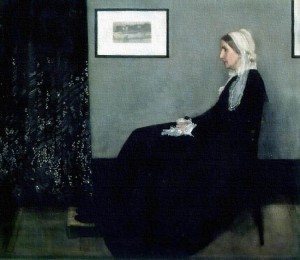
Do you know this painting?

Photography by courtesy of Wikimedia Commons

Its formal name is Arrangement in Grey and Black: The Artist’s Mother, but it is commonly known as Whistler’s Mother. Its creator, American artist James McNeill Whistler, happens to be one of my (many) favorite painters. In August 1995, while on vacation in London, I stumbled upon a little book with this painting grazing its front cover. It was Whistler’s mother’s cookbook, with the recipes collected by Anna McNeill Whistler (1804-1881) through the years. The recipes are recreated and annotated for the modern cook, but included the endearing original writing of Mrs. Whistler, with all its own spelling and punctuation errors. Go figure, a book that coupled two of my most serious addictions, cooking and painting. I had to buy it.

Whistler’s mother’s recipes were among a collection of books and letters that were bequeathed by Whistler’s sister-in-law to the University of Glasgow after his death. Whistler lived in Europe most of his working life. Mrs. Whistler led quite a remarkable life herself for a 19th-century housewife; she went from the United States, via Russia and sudden widowhood at a young age, to London with her son, where she recorded in her diaries visits to the Whistler household from such artists as Algernon Swinburne and Dante Gabriel Rossetti. The book’s fascinating account of the Whistler household in America, Russia and Britain offers a unique and delightful glimpse into 19th-century family life and cooking. The recipes are simple and transmit the flavors and aromas of good home cooking.

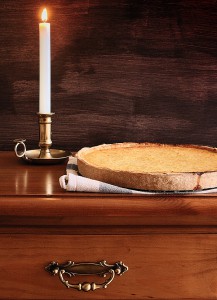
As a token of that age and to bring to the pressed 21st century some 19th century calm and simplicity, I have chosen to replicate a recipe of her apple pudding, called Marlborough pudding.

RECIPE

Apple Marlborough Pudding

Ingredients:

1 sheet of store-bought or homemade puff pastry or shortcrust
5 medium-sized cooking apples
1 lemon, juice and peel

200g (1 cup) sugar
5 medium eggs

200ml (4/5 cup) whipping cream
50ml (1/5 cup) whole milk

Click here for metric recipe converter

Method:

  1. Preheat the oven to 180°C if convection type, to 160°C if radiation.
  2. Prepare the pudding base: butter and flour a 30-cm (12inch) pie mold. Roll the crust, transfer to the mold and press to set. Trim the excess off the edges. Bake the crust blind for 10-15 minutes. Then take out of the oven and let cool a bit. Lower the oven temperature 20°C.
  3. Prepare the filling. Peel and core the apples, sprinkle them with lemon juice to prevent them from browning. Put them in a bowl, cover and microwave them 3-4 minutes, until tender.
  4. Transfer the apples to a food processor, add the rest of the ingredients: lemon juice and peel, sugar, cream, milk and eggs. Process to the desired “chunkiness”.
  5. Pour the mixture on the pie crust (this amount yields a large pie and a small cup of filling left) to the brim, then bake 1 hour. Watch it during the last stages to prevent it from excessive browning; lower the temperature if needed. After that baking time, take the pudding out and let cool completely.


I personally loved this Marlborough pudding. I love any dessert with apple though (well, except roast apples). It is lemony, creamy, light and only slightly crunchy. And as rustic and homely as I expected. Accompany it with a strong tea and open a snuff box for you to feel exactly like Whistler. And the next time you see this painting I’m sure you will remember that this lady baked delicious pies for her family.

Sources:
“Whistler’s mother and the West Coast”, BBC website
Whistler’s Mother Cook Book, Margaret McDonald

The Scottish Roots site says:

This unconventional portrait of a grey-garbed matron, commonly known as “Whistler’s Mother,” patiently sitting for her artistic son became an American icon and an emblem of motherhood. The subject of the painting, Anna Matilda McNeill Whistler, was born in North Carolina in 1804 to a middle class family of Scots descent.

Anna led a remarkable life for a 19th-century housewife; moving from the United States, via Tsarist Russia and sudden widowhood at a young age, to London with her son “Jemsie,” where she recorded in her diaries visits to the Whistler household from such literary and artistic luminaries as Algernon Swinburne and Dante Gabriel Rossetti. A traditional woman with a strong sense of morality, Anna Whistler upheld the conventional family values of the time, turning a blind eye to her artistic son’s bohemian amorous involvements in favour of encouraging his genius.

Widowed in 1849, she wore mourning for the rest of her life.

The book’s fascinating account of the Whistler household in America, Russia and Britain offers a rare and delightful glimpse into 19th-century family life and cooking. The recipes are simple and transmit the flavors and aromas of good home cooking.

Never miss a post
Name: 
Your email address:*
Please enter all required fields
Correct invalid entries

UA-21892701-1