Apples and cream are a quintessentially Norman flavor combination. This is a festive dish made on Sundays and holidays.
In Normandy, they would traditionally drink it with dry cider or Pommeau, but a fruity white wine such as a Riesling goes well, or even dry white Burgundies. If you prefer red, try a light one, such as Saint-Nicolas-de-Bourgueil or another Loire red.
Matafans are a specialty of the rugged region of Franche-Comté in eastern France; the word is Franco-Provençal. They are sometimes called mata fame, meaning in Spanish “to kill hunger.” It’s not surprising that the word originally comes from Spanish, since they controlled this region in the sixteenth and seventeenth centuries.
Matafans are also found in the Savoy and Lyon under the francisized name matefaim.
They are fairly ancient, and Rabelais mentioned them in his third book in 1546.
Matafans were originally eaten by peasants for breakfast. Today, they are often eaten as a starter, accompanied by a green salad.
They are essentially very thick pancakes, and in the old days were made with leftover mashed potatoes, but can also be made with apples and eaten as a dessert. Lucy Vanel gives a recipe for the historical potato recipe on her website. Today, most people make them from wheat flour.
They are eaten at Candlemas, washed down with Génépi, an absinthe liqueur. The dessert version is accompanied by a sparkling rosé or a fortified wine.
Bourride is the specialty of Sète, a town on the coast of the Languedoc in Provence. Sète is one of the largest fishing ports in the region. Native poet Paul Valéry called it l’île singulaire, the singular island, because it is nestled in between two salt water lakes and the sea.
Bourride is said to date back to the Phocaeans, the ancient inhabitants of Marseilles, then called Massilia.
In Provençal, it is called boulido, meaning “boiled.” It is not unlike bouillabaisse, a specialty of nearby Marseilles, the difference being that bourride is made with only white fish — monkfish tails in particular, and that it is accompanied by aioli instead of the traditional rouille served with bouillabaisse. Shellfish are never added.
My recipe is very traditional. There are many variants, but the aim of this series of articles “What to Eat in France” is to seek original or traditional recipes for traditional, regional dishes.
This dish is a sure pleaser for parties and is easy enough to cook ahead, doing everything but poaching the fish, which should be done before serving.
In the region, many locals drink rosé wine such as Coteaux-d’Aix-en-Provence with bourride, but one might just as easily pair it with a perfumed Languedoc white. There are a world of them to be discovered, but since they are not, for the most part. A.O.C., it’s difficult to recommend one in particular. It’s a matter of producer as much as place.
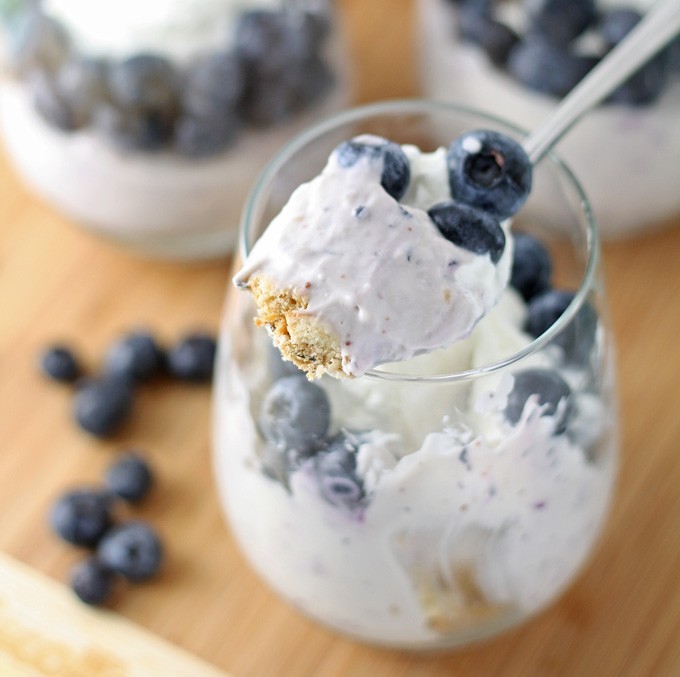
11 x 7 x 2 in. (28 x 18 x 5 cm) baking dish or deep pie tin 1 box Speculoos ginger cookies Mixed summer fruit, washed and chopped into fat chunks such as apricots and blueberries + banana Cinnamon to taste 1 1/2T – 2 T. dark brown cane sugar 1 1/2 – 2 T. maple syrup, depending on sweetness of fruit Dried chili pepper flakes 500 g Quark* or Séré cheese
Line baking dish with Speculoos to form a crust, covering sides as well as bottom of pan.
Chop apricots, blueberries and banana into large bite-size pieces. Place in a bowl. Sprinkle generously with cinnamon. Add 1 1/2 – 2 T. of dark brown sugar, 1 1/2 – 2 T. of maple syrup and a sprinkle of dried chili peppers. Mix well. Marinate for 30 minutes, stirring from time to time.
Mix fruit with one large yogurt-size tub Quark (500 g). Leave to marinate for 30 minutes, stirring from time to time.
Pour quark and fruit mixture into pie pan. Refrigerate for at least 2 hours before serving.
*Quark is a fresh cheese made in the Germanic countries. It is not the same as cottage cheese or cream cheese, since it is made by warming soured milk fermented with mesophile bacteria until it coagulates. It can be replaced by labneh, ricotta, mascarpone, thick fromage blanc or strained yogurt, although the flavor and texture will not be exactly the same.
A charlotte is traditionally fruit sautéed in butter which is then placed in a mold lined with bread. In our day, the bread is usually ladyfingers, but I’ve used financier, a dense almond flour cake made with beurre noisette, giving it a distinctive flavor.
Insteading of sautéing the strawberries, I’ve marinated them in rum and used the marinade to “wet” the cake, similar to the way the British make trifle.
600 g strawberries 2 T. brown sugar
1 tsp. cinnamon 4 T. rum 3/4 c. water 4 financier cakes, individual size (or other type of soft, but dense, almond cakes) 200 g thick cream 1/2 vanilla bean 2 T. brown sugar
4 parfait dishes
Top strawberries and cut in half. Place in mixing bowl.
Mix in 2 T. brown sugar and cinnamon.
Add rum and water. Mix gently.
Leave for 30 minutes, mixing gently from time to time. A natural sauce should form. If it doesn’t, add a little more water and rum.
Meanwhile, mix cream with vanilla from vanilla bean and brown sugar.
Break up 1/3 of each financier into each parfait cup. Spoon in 1/9th of strawberries into each cup, pouring some juice onto the cake to moisten it.
Cover with 1/9 of cream.
Add two more layers of financier, strawberries and cream, in the same proportions, ending with cream.
Decorate top with bits of strawberry, mint, or dark chocolate.
Chartres-style Blanquette de Veau Recipe / Apple, onion, carrot and veal stew in apple juice and white sauce recipe
This dish hails from Normandy, where cream, butter, apples and calves are abundant. Chartres is not officially in Normandy, but its cuisine is similar.
1 kilogram or 2 pounds veal shoulder, cut into 2″ x 2″ pieces 12 pearl onions, or the white of 12 small spring onions, peeled and whole 1 apple, chopped 4 carrots, cut into large chunks crosswise Apple juice Veal or chicken broth 6 small new potatoes in jacket 4-5 tablespoons flour 2-3tablespoons butter 1/2 liter or 1 quart milk Italian or flat parsley, chopped Salt Pepper
Dutch oven or similar large pan
Put the veal pieces in Dutch oven.
Add the onions, apple and carrots.
Cover with half apple juice and half veal broth. Salt and pepper.
Simmer gently for 1 hour, then add the whole potatoes.
Simmer for 30 to 45 minutes, or until the potatoes are cooked.
Drain broth from meat and reserve it to make white sauce.
Melt butter in a large, deep frying pan or saucepan. When melted, gradually whisk in 3-4 tablespoons of flour, stirring constantly until the roux starts to gently brown.
Gradually whip in the milk until sauce starts to thicken. Continue whipping until all the milk is absorbed. It should be extra thick. If not, put one more tablespoon of flour into a ladle and add white sauce to ladle. Mix well to form a smooth paste, then whip this into white sauce.
Gradually whip the broth from the stew into the white sauce. When smooth and thick, pour this back into the stew.
Gently mix, turning the meat and vegetables over in white sauce.
Simmer very gently for 5 minutes, stirring carefully so that meat and vegetables don’t fall apart.
Serve, sprinkling with chopped parsley.
Note: This is often served with rice. If you prefer rice, leave out the potatoes. Small turnips can also be added at the beginning, as well as other vegetables, according to taste.
ESCOFFIER’S RECIPE FOR POT-AU-FEU OR PETITE MARMITE
Pot-au-feu and petite marmite in today’s vocabulary are the same thing. Until the nineteenth century, the term pot-au-feu simply referred to a family soup to which was added different ingredients every day, usually with beef and chicken added on Sunday. The regional variations were endless, depending on availability and season and depending on the cook.
In 1829, the French etymology dictionary defined pot-pourri as “the name our fathers gave to the pot-au-feu.” In the nineteenth century, the recipe started to take on its modern ingredients of beef, root vegetables and a veal bone, but it still included chicken, which many people, including my French butcher’s wife, leave out these days.
Escoffier, who codified French cuisine in the late nineteenth century and early twentieth century, set down the recipe in Le Guide Culinaire in 1902, still calling it petite marmite. The regional variations started to disappear, and the recipe has now been simplified by most home cooks to contain only beef, no chicken. Escoffier insisted on the importance of the chicken, but today, one rarely finds a pot-au-feu with mutton, veal, pork, chicken, duck or turkey. The other name, petite marmite, has pretty much gone out of usage.
The French might claim pot-au-feu as their invention, but my guess is wherever there has been a pan or a pot, humans have made variations of it. Classical pot-au-feu, also known as petite marmite, is nothing more than beef and/or chicken and vegetables cooked in consommé with a marrow bone, with the chicken giblets thrown in at the end. There are regional variations, of course, some with veal or pork, and occasionally even mutton. Traditionally, carrots, turnips, leeks, pearl onions, celery and cabbage are used. These are added to the consommé along with the marrow bone and brought to a boil, then simmered gently for four hours.
The soup, vegetables and meat are then served in a bowl with toasted bread, the meat sometimes eaten on the side and sometimes in the bowl. Traditional garnishes include mustard, pickles and coarse salt. It is normally paired with red wine.
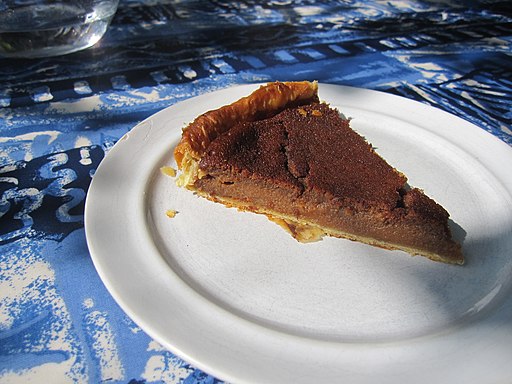
Swiss Food: Tarte à la Raisinée – Apple and Pear Molasses Pie
What is Swiss Raisinée?
The French-Vaudois word raisinée refers to a syrup or molasses made of the must of apples and pears. It was originally cooked in grape juice, thus the name — raisin means grape in French. Often called vin cuit, or “cooked wine,” it is in the form of a dark brown, viscous liquid. In still other parts of Switzerland, another concoction similar in consistency to jam and using the same ingredients is called cougnarde and probably dates back to at least the Middle Ages. Raisinée was used as a sweetener in many regions in Europe, and the tradition has lingered in Switzerland, especially in the cantons of Vaud, Fribourg and Neuchâtel. Today, it is mainly used for cakes and pies, and is not fermented, so it not technically a wine.
The tart itself has numerous names — raisinée, vin cuit (literally cooked wine), cougnarde and Biresaassa, depending on the location.
This recipe is inspired by Concert des Casseroles and translated with their authorization
Use a pie ring or pie tin 24 cm in diameter
Sweet Pie Crust
200 g of flour
100 g butter
3 g of fine salt
15 g walnut or hazelnut nillon* (here a mixture in equal parts)
1 small egg (less than 60 g)
60 g white sugar
Filling
3 eggs
2 egg yolks
200 g double cream
150 g pear raisinée (click on link to see our recipe for making raisinée)
Dough: Combine the butter and sugar. Add the beaten egg and walnut/hazelnut nillon, then flour, mix and form into a ball, then roll out or pat down to flatten. Wrap in plastic and chill for 30 minutes.
Spread the dough on a sheet of baking paper and place it along with the sheet in a pie ring or pie pan. Shape the edges by pinching the dough between your thumb and forefinger. Prick the bottom and edges with a fork. Cool for 30 minutes to firm up and avoid sagging when cooking.
Preheat oven to 180° C. Place baking paper and beans or ceramic beads on the dough to prevent it from swelling. Bake for 20 minutes: the dough should barely brown.
Meanwhile, prepare the filling by mixing the eggs and yolks, the double cream and the raisinée.
Remove dough from oven. Remove weights and parchment paper. Lower thermostat to 150°C.
Pour the filling into the dough and cook for about 30 to 40 minutes. The filling must be taken when it is not too firm and must have a slightly caramelized smell. It will probably still appear liquid when it comes out of the oven, but do not prolong the cooking, as it gets much firmer while it is cooling.
*Nillon: Nillon (or nion), is a local product used in French-speaking Switzerland. It is the residue from pressing of nuts. It is found in sheets, grated or powdered form. There are walnut and hazelnut nillons packaged in small 160-gram bags. In the canton of Vaud (Switzerland), nillon is used to make a walnut cake and apple pie. In France, it is known as walnut flour or walnut meal.