Swiss Food: How to Make Raisinée

Published by Thursday, January 16, 2014 Permalink 0

Swiss Food: Raisinée: The History and the Recipe

by Jonell Galloway

The French Vaudois word raisinée refers to a syrup made of the must of apples and pears. It was originally cooked in grape juice, thus the name — raisin means grape in French. Often called vin cuit, or “cooked wine”, it is in the form of a dark brown, viscous liquid. In still other parts of Switzerland, another concoction similar in consistency to jam and using the same ingredients is called cougnarde and probably dates back to at least the Middle Ages. Raisinée was used as a sweetener in many regions in Europe, and the tradition has lingered in Switzerland, especially in the cantons of Vaud, Fribourg and Neuchâtel. Today, it is mainly used for cakes and pies, and is not fermented, so it not technically a wine.

History

In the 17th century, raisinée meant a thick fruit jam, generally made of apples and pears, and slow-cooked in concentrated grape juice. According to the Encyclopédie d’Yverdon, published in the 1770s, raisinée was made from the must of very ripe green grapes cooked until reduced by two thirds, then kept in barrels. Drinking it was said to give energy to people of a frail nature.

Raisinée is no longer drunk as a cooked or fortified wine, although in the 18th century one finds recipes for fruit must syrup made from apples and pears (dropping the use of grape juice) and used to replace sugar. Like today, the apple and pear juice was cooked until thick, until a drop on a plate didn’t run anymore. During periods of scarcity and hardship — for example, during and after World War II when sugar was low or not available — it was and still is used as a sweetener.

Cantons like Fribourg and the Vaud have kept up the tradition more than elsewhere, partially because they have a history of orchards. Recipes had been maintained and they were brought back to life in the 1980s.

Traditions similar to this were to be found in Mesopotamia and Ancient Rome.

Recipe

Use apples and pears not suitable for eating. The fruit shouldn’t be overly ripe. You should be able to crush it and press it, but it mustn’t turn into a purée. The juice is filtered to get rid of hard bits. It is then decanted overnight (no more).

Unlike industrial fruit concentrates, the juice is not clarified. It is simply brought to a boil in a large copper kettle over a wood fire. Try to use up any bits of wood not suitable for a regular fire. A coil-type steam burner can be used to prevent risk of overheating, especially when making large quantities.


Never miss a post
Name: 
Your email address:*
Please enter all required fields
Correct invalid entries

Food Art: Apple in a Cage, food photography by SandeeA

Published by Tuesday, January 14, 2014 Permalink 0

SandeeA is a top-notch food photographer and she runs the popular blog La Receta de la Felicidad, where you can find many of the recipes appearing in these photos.

Never miss a post
Name: 
Your email address:*
Please enter all required fields
Correct invalid entries

Rosa’s Musings: There is more to a sandwich than two slices of bread, a brief history of the sandwich

Published by Sunday, September 22, 2013 Permalink 0

by Rosa Mayland

A Brief History of the Sandwich


In this brief history of the sandwich, you’ll learn that a sandwich is an extremely versatile and universal food item consisting of two slices of bread in the middle of which is encased a filling, or of a single slice of bread garnished with a topping (tartines/bruschetta, smørrebrød, canapés, etc.). In both cases they come in an infinite number of varieties that differ in flavour, style, texture and size.

The origin of the term dates back to 1762 and saw the light of day in East Kent, England. According to legend, John Montagu aka the Fourth Earl of Sandwich was so busy gambling that he did not want to stop his activities in order to dine, so he ordered the waiter to bring him slices of roast beef enclosed in two wedges of bread. In this way, he could continue playing while eating and would in no manner dirty his fingers. That is how this quick and improvised snack became known as “sandwich”.

Even if the Earl gave his name to this popular “speciality,” it is to be said that bread has been served with meat and/or vegetables for centuries before this “invention” and that its forefather probably already existed in Neolithic times with the advent of the domestication of wheat. The first form of sandwich is attributed to the ancient Jewish wise man Hillel the Elder (~1st century B.C.) from Babylon who apparently put meat from the lamb sacrificed for Passover and bitter herbs (horseradish, chicory, sow thistle, eryngo, and lettuce) between pieces of matzo (kosher cracker-like, unleavened bread). Another genre of sandwich was common during the Middle Ages: thick slabs of stale bread called “trenchers” were used as plates and can be regarded as the precursors to the open-faced sandwich.

At the beginning, sandwiches represented a humble and simple lower-class meal, but by the middle of the 18th century, the aristocracy started serving them as a late-night collation, and they were considered very chic. Then with the breakthrough of the Industrial Revolution in the 19th century and its hordes of restless workers slaving away in factories, sandwiches became a working-class luncheon, since they were practical, easily accessible, nourishing (calorific), inexpensive, portable and could be eaten in a rush.

After having first appeared in England as well as Spain, the sandwich rapidly spread through the rest of Europe and the United States, where it was first promoted as an elaborate main dish. The 20th century saw the rise of the sandwich in the U.S. and the Mediterranean when bread became an indispensable component of people’s diet and started being consumed in much larger quantities than in the past.

Continue Reading…

Never miss a post
Name: 
Your email address:*
Please enter all required fields
Correct invalid entries

Israel-India: Food Wanderings: Jewish-Indian Fusion?

Published by Tuesday, September 17, 2013 Permalink 0

by Shulie Madnick

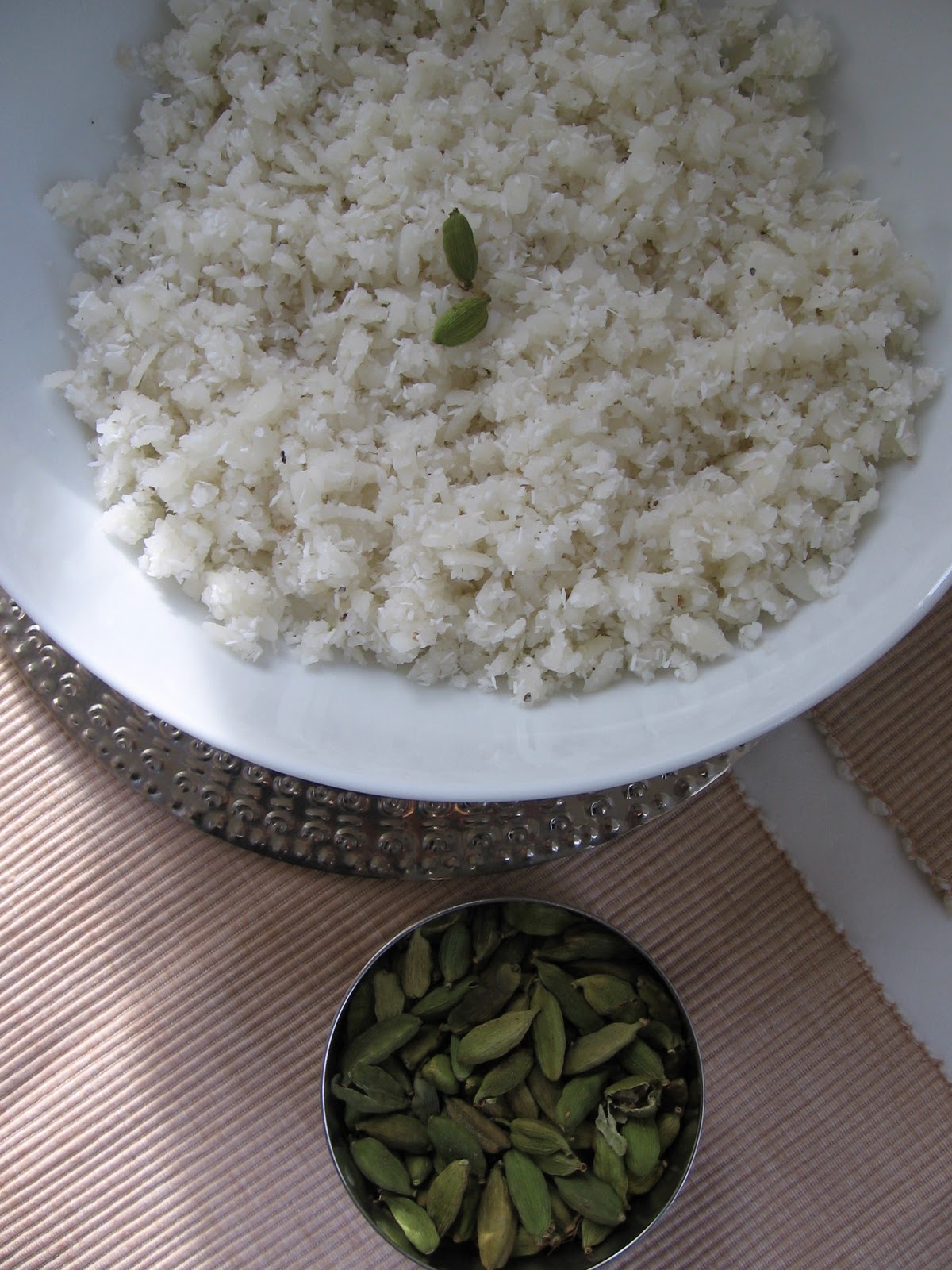
Malida, Sweetened Poha: Breakfast Cereal or Ceremonial Offering?

Introductions, please

Shulie: I am so pleased to be featured on The Rambling Epicure, this international, thought-provoking culinary site based in Switzerland. I love the multicultural content, which explores the world of food in depth and in all its facets, and brings us together as a community so that we better understand each other. Thank you, Jonell, I am honored to be a part of this wonderful journey. This post gives you a glimpse into my very mixed background.

Jonell: It’s unusual to find someone with such a rich and varied background as Shulie, yet still so close to her roots, who creatively weaves it all together to produce her very own Jewish-Indian fusion cuisine. This article is like an introductory culinary tour of the world, with a big dose of little-known Jewish history and culture thrown in. Got your bags packed? Here we go!

I was agonizing over what my first post should be. I could have written about how I’d won the battle of the great macaron, which was in fact a double challenge, as I had to replace the almonds with another pantry ingredient. Or about the elusive, and as I once thought glorified, meringue. The sheer challenge is fascinating, but macarons are French, or better yet Italian, and meringue is Swiss, and my ancestral roots are deep in the East. So I will start from home, so to speak.

Continue Reading…

Never miss a post
Name: 
Your email address:*
Please enter all required fields
Correct invalid entries

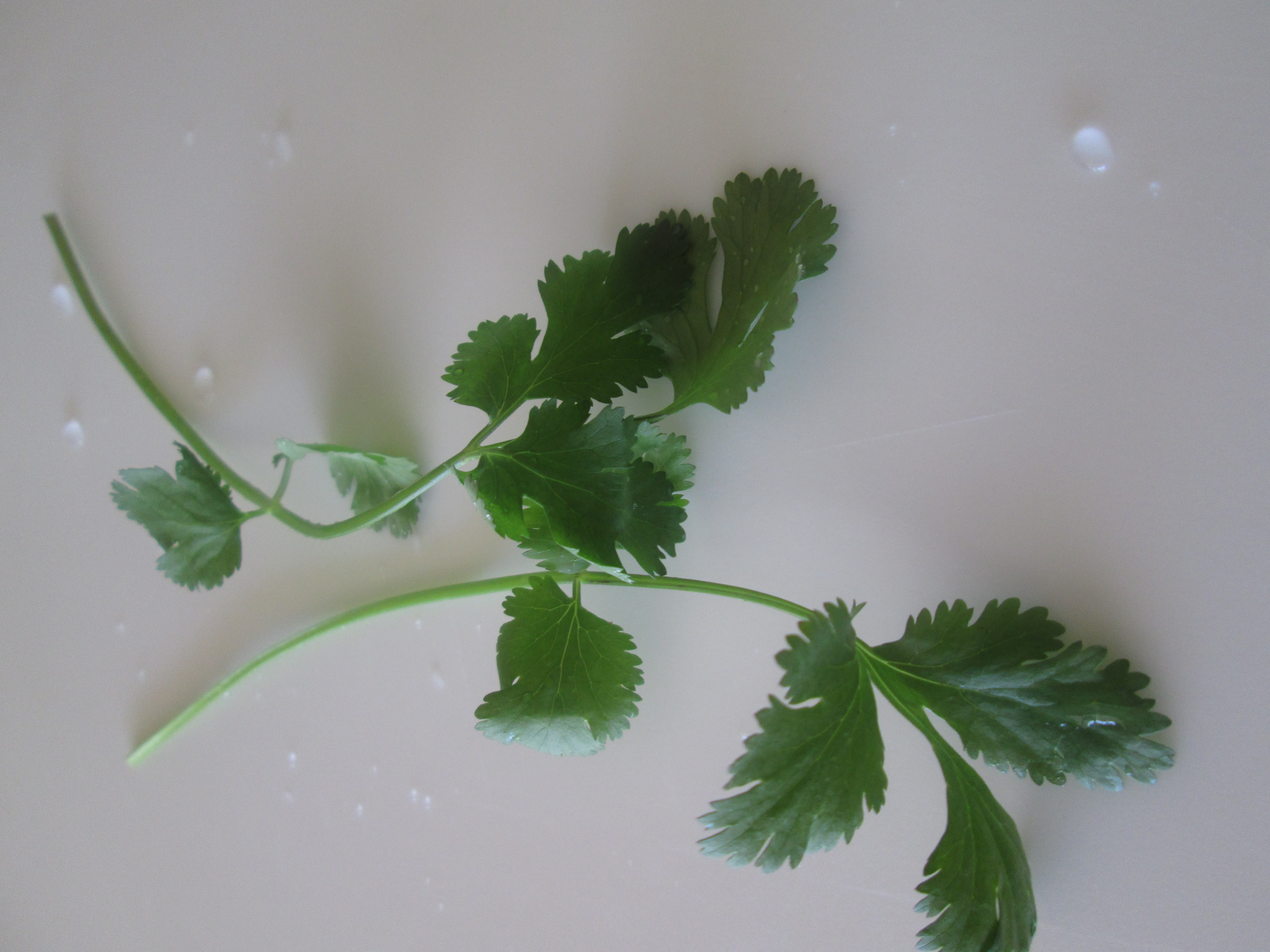
Simple Sustenance: Herb Magic — Creamy Cilantro-Lime and Cannellini Bean Spread
Published by Monday, September 16, 2013 Permalink 0

Simple Sustenance: Herb Magic — Creamy Cilantro-Lime and Cannellini Bean Spread

by Renu Chhabra

The more you eat, the less flavor; the less you eat, the more flavor.–Chinese Proverb

It is amazing how herbs can completely transform a recipe, giving it a whole new personality. Pureed with beans to make flavorful spread, processed with nuts for hearty pesto, or blended with oil or herb oil are just a few ways to taste the magic of herbs. Other blander dishes such as salads, grains, soups, stews, and breads also get fresh and delicious makeovers when they are in the company of herbs. And we can’t forget lavender cookies or basil ice cream, which add a few stars to the dessert category. It doesn’t take a lot to infuse their flavors to any recipe — sweet or savory. They always play their magic.

Continue Reading…

Never miss a post
Name: 
Your email address:*
Please enter all required fields
Correct invalid entries

Easy Late Summer Seville-style Gazpacho

Published by Thursday, September 12, 2013 Permalink 0

Spontaneous Cuisine: Easy late summer Seville-style gazpacho

by Jonell Galloway

Take 4 thick dry or toasted  slices of hearty whole grain bread and tear it into bite-size pieces. Drizzle olive oil over it and add 2 to 4 cloves of crushed garlic, depending on how much you like garlic.

Mix and let it sit for a few minutes.

Take 8 large, extra-ripe red tomatoes. Cut into large chunks, and save all the juice. Mix into the bread and garlic.

Put into blender, with salt and pepper. Refrigerate and let it sit for a half hour or so, or several hours or overnight if possible.

Before serving, taste and then season with more salt, pepper and olive oil if necessary. Add ice cubes if you want it to be colder or thinner.

If you want to give the dish a bit of color or enhance it, add fresh coriander or basil, or a dollop of cream.

This batch will easily feed 4 or 5, and is better the second day, once it has marinated in the refrigerator.

This recipe is my version of a friend’s recipe for Seville-style gazpacho. The friend has chosen to remain incognito for reasons unknown to this writer.


This article was originally published on Geneva Lunch.

 
Never miss a post
Name: 
Your email address:*
Please enter all required fields
Correct invalid entries

Olive, Parmesan, & Speck Breadsticks

Published by Thursday, September 5, 2013 Permalink 0


Jamie Schler, Profile Photo, http://lifesafeast.blogspot.ch/Destination Dessert: Not a dessert, but delicious nonetheless: olive, Parmesan, & speck breadsticks

by Jamie Schler

I am terrified of heights. Put me on the top floor of a building looking down through glass panes or, worse yet, from the edge of a balcony, and my knees buckle as I grasp for a handhold. My heart pounds at the idea of funiculars or Ferris wheels and their anticipatory crawl up into the clouds. That glance down comes with the fear of knowing that when I finally reach the summit I will be staring into emptiness, a deep void, an near-endless drop only broken by the tiny ant-like beings down on safe, sturdy ground staring up at me, ogling, daring me to make the leap so they can break my fall.


Roller Coasters slowly, painfully inching their way up until a mere thread is holding me over a dizzying descent make my head spin as my breath comes out, barely, in short, quick gasps. Airplanes, those silver boxes offering me quick passage to my loved ones, have me in a panic when I think of the nothingness holding them up. My very pragmatic, scientific husband refers to this seemingly (or so he says) irrational fear of heights as Cosmic Vertigo, these images in my overactive imagination of climbing up and standing on the edge of a precipice only to be pushed off of solid ground and plunging into emptiness, the unknown. So I never climb onto a Ferris wheel, it is impossible to convince me to climb aboard a roller coaster; as we spin our way up the glass elevator in the Mole Antonelliana in Torino or wander around the top balcony of the Eiffel Tower my eyes stay firmly squeezed shut and I can’t even look through the eyepiece of a telescope, nor am I comfortable wearing 3-D glasses or watching the world spin on Google maps. Yes, I am terrified of heights.

Continue Reading…

Never miss a post
Name: 
Your email address:*
Please enter all required fields
Correct invalid entries

Switzerland: Bénichon Mustard, A Fribourg Specialty to Welcome the Cows Coming Home

Published by Tuesday, September 3, 2013 Permalink 0


Switzerland: Bénichon Mustard, A Fribourg Specialty to Welcome the Descent of the Cows

by Jonell Galloway


Bénichon mustard is quintessentially Swiss. It is a specialty of the canton of Fribourg.

It is more like a spicy jam than a mustard, in the traditional sense of the word. Its ingredients give it a sweet and sour taste.

It is traditionally eaten with another Fribourg specialty, cuchaule, a light brioche-like sweet saffron bread, during an annual village fair to celebrate and “bless” the autumn harvest and bringing down the herds of cattle from the mountains. This is now held the second week in September.

There are numerous recipes, but they traditionally include mustard flour (or powder), extra-white flour, white wine, fortified wine, rock candy and water, to which cinnamon, star anise and whole cloves are added.

It’s really quite easy to make. I’ve translated the Bénichon recipe and adapted it.

Suggestion: Do this on a day when you’ll be at home all day, or soak the mustard powder over night and finish off the recipe the next day.

Continue Reading…

Never miss a post
Name: 
Your email address:*
Please enter all required fields
Correct invalid entries

Food Play: Piruletas de gazpacho / Gazpacho lollipops

Published by Monday, August 26, 2013 Permalink 0


Food Play: Piruletas de gazpacho / Gazpacho lollipops, in English y Español

por SandeeA / by SandeeA

Quieres impresionar a tus invitados con un plato diferente? Típicamente español, el gazpacho es una sopa fría con múltiples variantes dentro de la geografía española, que suele incluir tomate, pepino, cebolla, ajo, vinagre, y en ocasiones pan para espesar, y que se suele tomar en los meses calurosos de verano.

Want to impress your guests? Gazpacho is a typical Spanish dish, a cold soup with many variations within Spanish geography, but which usually includes tomatoes, cucumber, onion, garlic, vinegar, and occasionally bread to thicken. It is usually served in hot summer months.

Continue Reading…

Never miss a post
Name: 
Your email address:*
Please enter all required fields
Correct invalid entries

Spontaneous Cuisine: Easy Corn Flan

Published by Wednesday, August 21, 2013 Permalink 0


From the archives

Recipe: Easy Corn Flan (Corn Pudding)

Ingredients

© Copyright 2008 Corbis Corporation, no rights photo


 500 g / 1 lb. of fresh corn, cut off cob, or canned corn, drained
2 eggs
1 T. of fresh chives
2 dl / 1 cup crème fraîche
Optional: 1/4 cup fresh chives, chopped (optional)
Small baking dish
Another baking dish that is a little larger to make a bain-marie

Corn_Pudding-202x131-custom

Instructions

  1. Preheat oven to 180°C / Mark 7 / 350° F.
  2. Put 8/10 of corn in a food processor. Blend until smooth.
  3. In a large mixing bowl, beat eggs. Add cream and corn from food processor. Beat gently until smooth.
  4. Fold in remaining corn kernels and chives. Salt and pepper to taste.
  5. Pour mixture into smaller baking dish. Put smaller baking dish into larger one. Pour hot water in bottom dish, about half-way up.
  6. Bake for 30 minutes or until flan sets.


Continue Reading…

Never miss a post
Name: 
Your email address:*
Please enter all required fields
Correct invalid entries

UA-21892701-1