Switzerland: Fresh-fruit Marmalade and Meringue Recipe

Published by Sunday, August 18, 2013 Permalink 0

Switzerland: Fresh-fruit Marmalade and Meringue Recipe

Spontaneous Cuisine, by Jonell Galloway

From the archives

We often think of traditional Swiss meringue as winter food, but it can also be great with summer fruit, such as plums, berries, apricots, etc., either mixed or on their own.

This recipe can also be appropriate to make with children. They will especially love using the pastry sleeve to decorate the marmalade.

Recipe

Click here for metric recipe converter

Marmalade

1 kg fruit
Approx. 1 dl water
Sugar to taste
  1. Wash fruit. If it has stones, cut in half and remove stones.
  2. Place fruit in a saucepan, preferably copper or stainless steel.
  3. Add water. Cover.
  4. Cook on medium until the fruit starts to “melt” and lose its shape.
  5. Add sugar and mix well.
  6. Set aside to cool.

Note: If you want it to be smooth like a coulis, run it through a chinois or fine colander or sieve.

Meringues

3 egg whites (large free-range or organic eggs give a lot better taste and result)
100 g white castor sugar
  1. Put egg whites in a large mixing bowl. Beat until they form stiff peaks.
  2. Little by little, fold in sugar until the mixtures forms a very stiff paste.

Assembly

  1. Preheat oven to 175° C.
  2. Butter an oblong baking dish.
  3. Evenly spread marmalade in baking dish.
  4. Use a rubber spatula to spread egg white mixture evenly over marmalade or use a pastry bag to spread it in a decorative manner.
  5. Lightly sprinkle with sugar.
  6. Bake in oven for about 10 minutes or until lightly golden.


Never miss a post
Name: 
Your email address:*
Please enter all required fields
Correct invalid entries

Switzerland: Mountaintop Rösti with Ham, Tomatoes and Fried Egg

Published by Saturday, August 10, 2013 Permalink 0

Switzerland: Mountaintop Rösti with Ham, Tomatoes and Fried Egg

by Jenn Oliver

A photo essay with recipe

Sometimes we need to let go of the world around us, our daily cares, issues that cause stress, and get away for a few days – relax, recollect, and come back ready to face the world with new resolve and vigor.  This Summer my husband and I have been doing just that, in a series of short little trips. Last weekend, we went to the top of the world (well, it felt like it to us) to slip away for three beautifully brisk and sunny days in Zermatt. It was majestic, incredible, awe-inspiring, and magical.  It was pure escapism as we explored the fantasy-like region around Zermatt and the Matterhorn, and all of our day to day cares floated with the clouds that sailed on past the mountaintops. No worries, no stresses, nothing but pure meditative existence, scenery, and a sense of childlike exploration. What more can one want in a holiday?

Continue Reading…

Never miss a post
Name: 
Your email address:*
Please enter all required fields
Correct invalid entries

What to do with the last apricots of the season: jam, coulis, baked, purée

Published by Friday, August 9, 2013 Permalink 0

Jonell Galloway, Spontaneous Cuisine, Mindful Eating, Slow Food, Editor of The Rambling EpicureWhat to do with the last apricots of the season: jam, coulis, baked, purée

by Jonell Galloway

From the archives

How to Choose Apricots

apricots_valais_tree_switzerland_suisse_geneva

Photo courtesy of Ellen Wallace.


The first and most important thing is to buy tree-ripened apricots. By definition, this means local ones, since ripe apricots are soft to the touch and do not travel well.

If you plan to eat them fresh, they should be soft, but not blemished or bruised. The riper they are, the more flavorful they are.

If you are using them for cooking, the riper the better, and you can even get by with blemishes as long as they are not rotten-looking. As a general rule, the softer the sweeter.

You will often see crates of extra-ripe apricots discounted in farmers markets. Look them over, and if there are not too many black or rotting ones, they are actually the best for cooking purposes, especially for jams, cakes and sauces.

Recipe Ideas for Apricots

Note: With all apricot recipes, the amount of sugar used depends on the acidity of the apricots. The acidity depends on the ripeness, origin and variety. With so many factors coming into play, taste tests are indispensable and the quantity of sugar should be determined by taste, using the quantities given here as a guideline.

Apricot Jam Recipe

The basic formula is 900 grams/2 lbs of sugar for every 2 kilograms/4 1/2 lbs of fruit used. This holds true for apricots, apples, cherries, nectarines and plums. If you like your jam really sweet, you can put equal weights of fruit and sugar.

Use cane sugar for more taste. I often halve the quantity of sugar in dessert recipes, but with jams this can be tricky, since sugar is what makes the jam set. It also serves as a preservative. If your fruit is extra-sweet, you might try cutting the quantity of sugar a tad.

apricot_raspberry_jam_valais-switzerland_suisse_recipe_geneva
Photo courtesy of Ellen Wallace.


Wash and rub apricots until perfectly clean. Remove any rotten spots with a paring knife. Dry well. Cut in half and remove stones. Save about half of the stones for later use.

Place apricots in a copper confiturier or a large stock pot. Add sugar. Let it sit overnight.

If the apricots are not ripe enough, they will not render any natural juices. If there are no juices, add 500 ml/1 pint of water to the pan.

Slowly bring to a boil on low heat, stirring constantly with a wooden spoon. This can take anywhere from 1 hour to 2 1/2 hours, depending on the water content of the apricots and the type of pan and stove or cooker you are using. Scrape the sides of the pan from time to time so that the mixture doesn’t crystallize.

The jam is set when you can dip a wooden spoon in it and it completely coats the spoon. Let jam settle for about 15 minutes before putting it into jars.

Pour jam into sterilized glass jars. Leave to cool. If you see the jam hasn’t set properly, you can put it back into the pan and boil it again, adding a little lemon juice.

Add two stones to each jar. Cool. Seal jars.

Apricot Purée or Coulis

Once again, the amount of sugar you use depends on whether you want it to have a tart flavor or a sweet flavor. If you’re going to pour it onto a very sweet cake or pie, opt for a more acidic taste. If you’re eating with something that is itself a little acidic, you might want to make your sauce sweeter. And once again, the sweetness will always depend on the ripeness of your apricots, so you’ll have to do a taste test in any case.

Wash apricots. Remove stones.

Put 300 grams/10 ounces of cane sugar (labeled sucre de canne roux or cassonade in Swiss and French supermarkets) and a vanilla bean (cut open in the lengthwise direction) into a saucepan. Slowly bring to a boil over medium heat until it begins to thicken and sugar has completely dissolved, i.e. until it forms a syrup.

Put 500 grams/18 ounces of apricots into a food processor, or run them through a food mill or chinois. Add apricots to the liquid sugar mixture and mix with a wooden spoon. Heat mixture until it is thick enough to completely coat a wooden spoon.

This apricot sauce can be eaten warm or cold, depending on what you are using it with. It keeps for several days in the refrigerator.

Apricot coulis is a perfect accompaniment to a dark chocolate cake, but can be used to make ice cream sundaes or parfaits just as easily.

It can also be used in savory dishes, for example with cold chicken breasts or cold pork roast. In this case, you would of course considerably reduce the amount of sugar.

Roasted Apricots

Preheat oven to 250° C or French mark 8. Wash apricots. Cut in half. Remove stone.

Lay apricot halves out on a roasting tin or broiler pan, or in a large casserole dish. Sprinkle lightly with brown cane sugar and just a tad of butter, distributed evenly in small bits, so that it will form a natural sauce.  (This can also be done on a barbecue grill, but you’d lose the juices.) Put in oven, and immediately turn temperature down to 220° C or French mark 7. Turn when top side is browned. If butter starts to burn, add a few drops of water.

When soft and slightly browned and caramelized, remove from oven or grill.

Distribute on individual plates. Serve with a scoop of salt caramel, coffee or walnut ice cream. Lightly sprinkle with vanilla powder (labeled poudre vanille or vanille en poudre in supermarket; easy to find in France, but difficult to find in Switzerland), cinnamon and a high-quality chocolate or cocoa powder. Drizzle a little maple syrup over it. It is now ready to serve.

Sugar-free Apricot Purée or Coulis

The great French chef Michel Guérard, who started the Cuisine Minceur movement in 1974, has a recipe for a sugar-free version of a coulis. This is adapted from the 1976 edition of Michel Guérard’s Cuisine Minceur, now out of print:

Wash, halve and pit 12 ripe fresh apricots. In a saucepan, add apricots, 1/2 cup of water, 1 vanilla bean (cut open in the lengthwise direction, down the middle) and artificial sweetener to taste, the equivalent of about 3 tablespoons of granulated sugar. Simmer for 10 or 15 minutes, until mixture is reduced by about one third.

Remove vanilla bean. Put mixture in a food processor to make a purée.

This sugar-free sauce can be served in the same manner as the traditional apricot purée or coulis recipe above.

 

Related articles

This article was originally published on GenevaLunch.

Never miss a post
Name: 
Your email address:*
Please enter all required fields
Correct invalid entries

Food Art: Orange Jelly, food photography by SandeeA

Published by Sunday, August 4, 2013 Permalink 0


SandeeA is our latest food photography discovery. A woman of many talents, she is also author of the Food Play column. She writes in both English and Spanish. SandeeA runs a popular food blog in Spain, La Receta de la Felicidad.

Click here for recipe.


Never miss a post
Name: 
Your email address:*
Please enter all required fields
Correct invalid entries

Mediterranean Food Connection: Frita, or Sweet Pepper & Tomato Compote

Published by Wednesday, July 31, 2013 Permalink 0

Mediterranean Food Connection: Frita, or Sweet Pepper & Tomato Compote

Recipe translated from the French and adapted by Jonell Galloway (from the archives)

Original recipe by Christophe Certain

Cliquez ici pour la version française


Mediterranean countries each have their own version of sweet pepper and tomato compote. In France, they call it piperade. The Pieds-Noirs — French colonials born in Algeria — call their version of this Mediterranean classic “frita”. Unlike piperade, frita contains no garlic.

Frita is a wonderful thing to have in the fridge, because it can be used in many ways. You can eat it warm as a starter, or cold as a starter. It’s a perfect dish to make ahead for those dinner parties where you’re short on time.

You can also use frita to make bruschetta, or use it as a pizza topping or to make empanadas. If it’s still warm in the pan, you can put eggs on it, cover it and cook over low heat until the eggs are poached.

Algerians often eat frita as a side dish with merguez sausage or grilled meat and fish, such as grilled meat on a skewer or tuna à la plancha.

To make a pizza: Put a layer of frita on a pizza crust. Sprinkle with grated cheese, anchovies in oil and black olives. Bake at 450° to 500° F / 250° C until crust is cooked and well browned.

Recipe

Click here for metric-Imperial recipe conversions.

Ingredients

400 g crushed tomatoes (fresh or canned)
3 red and green bell peppers
3 onions
1 lump of sugar
2 to 3 tablespoons olive oil
Salt and pepper to taste

Instructions

  1. Cut onions and peppers into think slices.
  2. Heat olive oil in heavy frying pan. Add onions and peppers.
  3. Cook over low heat until onions start to brown.
  4. Add tomatoes and sugar. Salt and pepper to taste.
  5. Simmer over low heat for about 30 minutes, or until all the vegetables are soft and form a jam-like substance.
  6. Taste. Adjust seasoning if necessary.
Never miss a post
Name: 
Your email address:*
Please enter all required fields
Correct invalid entries

Spontaneous Cuisine: Swiss Easy Fennel and Raclette Potato Salad Recipe

Published by Saturday, July 27, 2013 Permalink 0

Spontaneous Cuisine: Swiss Easy Fennel and Raclette Potato Salad Recipe

by Jonell Galloway


Photo courtesy of Five Prime.

Ingredients

1 large fennel
3 medium-size raclette or new potatoes

Juice of one blood orange or regular orange, if not available
Olive oil
Salt and pepper to taste
1 1/2 to 2 teaspoons Country Potato spice* OR aniseed/fennel seeds
  1. Preheat grill or broiler.
  2. Cut stalk end of fennel out, then slice thinly in the lengthwise direction.
  3. Scrub potatoes, but do not skin. Slice thinly.
  4. Spread fennel and potatoes onto a heavy roasting tin, in a single layer. Brush both sides with olive oil.
  5. Grill under broiler until nice and brown. Remove tin from oven, and use a metal spatula to turn them, taking care to still have a single layer.
  6. Put back under broiler. When cooked but not yet brown, add spices. Stir well and put back under broiler. When golden brown, remove from oven.
  7. Put mixture into a mixing bowl. Pour juice of one blood orange over mixture. Mix gently but thoroughly, so that the vegetables absorb the juice.
  8. Set aside for 5 minutes so that all the flavors blend together.
  9. Serve warm, either as a salad or side dish. It is a perfect accompaniment to grilled cod or  salmon, and why not chicken?
*Country Potato spice is readily available in Switzerland, but if you don’t have access to it, you can make your own. It’s great on oven fries, chicken breast, and all sorts of other bland dishes you just want to liven up. It is a mixture of curcuma, cumin, coriander, ground manioc, fenugreek, garlic, salt, fennel seeds, chili powder, pepper, paprika, marjoram, ginger, garlic and a touch of sugar.

Continue Reading…

Never miss a post
Name: 
Your email address:*
Please enter all required fields
Correct invalid entries

Switzerland: Valais Apricots and 10 Things You Can Do with Them

Published by Friday, July 19, 2013 Permalink 0

Switzerland: Valais Apricots and 10 Things You Can Do with ThemJonell Galloway, Spontaneous Cuisine, Mindful Eating, Slow Food, Editor of The Rambling Epicure

by Jonell Galloway

Height of season for Valais apricots, considered best in Switzerland

It is the height of the Valais apricot season, I thought it timely to offer you a few ideas for using them while they’re ripe and ready.

Choosing your apricots

apricots_valais_tree_switzerland_suisse_geneva
Photo courtesy of Ellen Wallace.

The first and most important thing is to buy tree-ripened apricots. By definition, this means local ones, since ripe apricots are soft to the touch and do not travel well.

If you plan to eat them fresh, they should be soft, but not blemished or bruised. The riper they are, the more flavorful they are.

If you are using them for cooking, the riper the better, and you can even get by with blemishes as long as they are not rotten-looking. As a general rule, the softer the sweeter.

You will often see crates of extra-ripe apricots discounted in farmers markets. Look them over, and if there are not too many black or rotting ones, they are actually the best for cooking purposes, especially for jams, cakes and sauces.

Recipe ideas for apricots

Note: With all apricot recipes, the amount of sugar used depends on the acidity of the apricots. The acidity depends on the ripeness, origin and variety. With so many factors coming into play, taste tests are indispensable and the quantity of sugar should be determined by taste, using the quantities given here as a guideline.

Continue Reading…

Never miss a post
Name: 
Your email address:*
Please enter all required fields
Correct invalid entries

Spontaneous Cuisine: Lebanese Zucchini Salad Recipe

Published by Tuesday, July 16, 2013 Permalink 0

Spontaneous Cuisine: Lebanese Zucchini Salad Recipe

by Jonell Galloway

Mezze: summer vegetables with a new twist for your picnics

What are summer vegetables for us are year-long vegetables for the Lebanese and Syrians.

Choosing your courgettes or zucchini

Zucchini should be dark green and firm to the touch. Avoid wrinkly-looking courgettes, which are not fresh.

Choose young, small ones. The taste is more delicate and sweeter. Larger older courgettes often have large seeds, and tend to be bitter.

Recipe for mezze-style courgette (zucchini) salad

This is a kid-friendly recipe.

Continue Reading…

Never miss a post
Name: 
Your email address:*
Please enter all required fields
Correct invalid entries

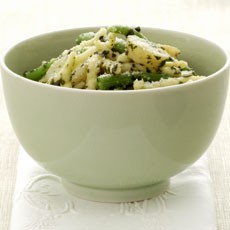
Recipe: Trofie alle Castagne: Chestnut Pasta with Pesto, Potatoes and Green Beans

Published by Monday, July 15, 2013 Permalink 0

by Rosario Indelicato

Recipe: Trofie alle Castagne: Chestnut Pasta with Pesto, Potatoes and Green Beans

Serves 4 people

Ingredients

2 jars of Genoese pesto for 500 g of chestnut Trofie pasta
3 potatoes, peeled and cut into thin Julienne strips
75 g of French-style green beans, ends cut off and cut in half
Fresh Parmesan cheese to taste

Continue Reading…

Never miss a post
Name: 
Your email address:*
Please enter all required fields
Correct invalid entries

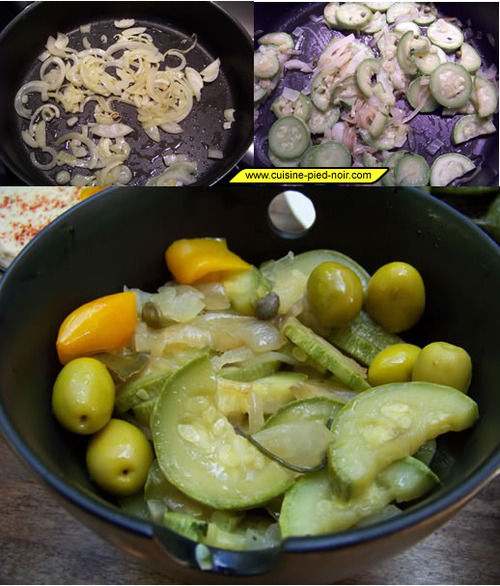
Mediterranean Food Connection: Zucchini and preserved lemon salad, a recipe by Christophe Certain

Published by Tuesday, July 9, 2013 Permalink 0


Mediterranean Food Connection: Zucchini and preserved lemon salad, a recipe by Christophe Certain

Recipe translated from the French and adapted by Jonell Galloway

This recipe is perfect for Ramadan.

Recipe

Ingredients

2 onions, chopped
4 zucchini / courgettes
1 tablespoon of capers in vinegar
1 preserved lemon (see note I posted here a month or so ago about how to make them), chopped into 3 mm / 1/8” cubes
Salt
Pepper
Olive oil or butter

Equipment

Large, deep frying pan

Instructions

  1. Heat olive oil or butter. Sautée onions.
  2. While onions are cooking, wash zucchini / courgettes. Start by cutting off ends, then cut then slice them into medium-thick slices, leaving the skin on.
  3. When onion is translucent, add zucchini / courgettes. Mix well, but gently.
  4. Let this mixture cook over low heat for about 15 minutes, until the water from zucchini / courgette has evaporated. They should remain crunchy, but if you prefer them soft, just cook them a little longer.
  5. Add capers and chopped lemon.
  6. Leave on burner for a few minutes, gently stirring, so that the zucchini / courgette will absorb the lemon flavor.
  7. This dish can be eaten warm with chicken or fish, for example, or cold, as a salad.

You can view the original recipe in French on Christophe’s website Cuisine Pied Noir.


Never miss a post
Name: 
Your email address:*
Please enter all required fields
Correct invalid entries

UA-21892701-1