Food Art: Red, White and Food, by Meeta Khurana Wolff
See more food photo compositions by Meeta at Meeta K. Wolff.
Meeta K. Wolff’s Bio
Meeta Khurana Wolff is a freelance food photographer, stylist and writer, currently living in the culturally rich city of Weimar in Germany with her German husband and their 8-year-old son, where she enjoys preparing multicultural, home-cooked meals using fresh organic ingredients. When she is not styling, photographing or writing about food, Meeta loves to travel the world, exploring new cultures and capturing it all on camera. The unique mood that Meeta creates in her food photography is also found in her travel, still life and landscape photography.
Mutter paneer is an all-time favorite of mine. This popular North Indian dish is often found in Indian restaurants around the world, but nothing compares to the way my mother would make it.
Mutter paneer is basically a flavorful vegetarian dish made of soft homemade Indian cheese called “paneer”, which is lightly pan-fried, then added to a spiced gravy with peas and tomatoes.
I’ve adapted my mother’s recipe over the years and instead of a thin gravy, I have created a creamier version, with an intense, fruity-flavored tomato sauce which coats the soft homemade paneer.
The ‘finish’ of a wine is also known as its ‘length’. It refers to how we perceive the wine once we have swallowed it. Much of our sense of taste is actually due to olfactory senses in our nose picking up volatile aroma chemicals from inside the nasal cavity (called ‘retronasal stimulation’). Thus, we can continue to ‘taste’ the wine after it has left our tongues.
Senses of smell and taste.
I think about the finish of a wine in a number of ways. Firstly, I consider the length: how long does the sensation of the wine’s flavours last after swallowing? Simple wines will disappear from the palate almost immediately after swallowing, whereas the flavours of the finest wines continue to be experienced after many minutes. Indeed, there have been occasions where I’ve woken up the next morning (even after brushing my teeth) and am still able to recall the flavours and aromas of a particularly fine wine the night before!
The finest wines in the world have finishes that can last for hours.
Secondly, I think about the quality of the finish. Inasmuch as the wine on the palate needs to be balanced, so too should the finish be harmonious. A final sensation of too much acidity without any fruit flavours present, or too much alcohol leaving an unpleasant burn on the back of the throat is not the sign of a fine wine – no matter how long these sensations last. Likewise a bitter tannic finish, or a cloying sweet finish, are signs that the wine is not well balanced structurally. Some wines can leave unpleasant flavours in the mouth that you would rather disappeared quickly! An ideal finish is one that combines length with elegance and has the perfect balance of flavour, alcohol, acidity and sugar.
Dr James Flewellen is The Rambling Epicure wine columnist. James is a biophysicist at the University of Oxford. Originally from New Zealand, James learned his trade in taste through the Oxford Blind Wine Tasting Society, of which he was the President from 2010-2012. During his term, he represented Oxford at many international blind tasting competitions – twice winning the prestigious ‘Top Taster’ Award in the annual Varsity blind tasting match against Cambridge University and captaining winning teams in competitions throughout Europe.
This recipe is currently being translated into English.
Les cocas à la frita recette facile en images, chaussons de pâte brisée fourrés d’oignons, tomates et poivrons revenus
Voila ma recette de cocas, testée à de nombreuses reprises, elle est infaillible, même si elle n’est pas traditionnelle.
Ne pas mettre trop de farce (2 C.A.S.) sinon les cocas risquent d’exploser à la cuisson.
Si vous utilisez de la frita, veillez à ce qu’elle ne soit pas trop liquide pour les mêmes raisons. Otez le jus s’il y en a. Le blanc d’oeuf permet de bien stabiliser la fermeture de la pâte à la cuisson, le jaune d’avoir une belle couleur dorée.
La recette traditionnelle de la pâte à coca se compose de 50% farine, 50% saindoux, avec un peu de sel. Comme ça vous pourrez comparer !
Descending the hillside,
After days of drizzle
The weeds trampled down in preparation
Drying out between the bramble
I arrive to gather the bounty
Blackberries, true gems of deep purple
And shining red in promise of another raid
Tomorrow, for now the sun is gentled in July
By the soft wind and departed rain,
Woven into new clouds above me
As I weave along the hillside, remembering
My mother’s nimble fingers
Filling a metal bucket so quickly on other hillsides.
For this task alone she donned men’s work pants,
Which fitted her awkwardly around her belly
That had carried six of us into the world
While she gathered in the fruit she would sometimes remember
Beaux from long ago and an early marriage ended by untimely death.
“He treated me like a woman.,” she would always say
And I would sigh in regret because I knew it meant
My own father just took her long toil and good heart for granted.
And perhaps so did I as a child, but now remembering
Her blackberry dumplings, I feel that she was even more than a woman
Nearly a goddess I was lucky enough to have been granted the privilege to call mother.
Blackberries which ripen in July, her birth month always will be her token to me.
And I pluck them and eat them and sometimes make jam for cake at Christmas
All in memory of her immeasurable bounty that continues though she left all toil behind long years ago.
And the little toil I expend gathering the fruit is simply a little line to her great work ended yet unending forever.
Food Art: Still Life with Pears, Apricots and Grapes III, a Painting by Mia Brownell
Still Life with Pears, Apricots
and Grapes III, by Mia Brownell.
Mia Brownell, Still Life with Pears, Apricots and Grapes III, 2006, Giclée print, courtesy of the artist, New Rochelle, New York. See more at Art State.
E por falar em subjetividade, a partir da minha escrita sobre a obra de M.F.K. Fisher, “The Gastronomical Me”…Você já pensou na cozinha como metáfora? Pois a reflexão de hoje é sobre o ato culinário e seus horizontes, sua subjetividade… Deste universo, nasceu minha escrita de cozinha, em começo de 2012, pelo meu desejo de compartilhar as epopeias criativas de forno-e- fogão. Não apenas as receitas, mas toda a riqueza que a culinária pode produzir em nosso mundo interno, do autoconhecimento à percepção de aptidões, anseios, sensibilidade e tantas outras riquezas. Assim, surgiram meu blog Serendipity in Cucina, em março, e meu livro, nove meses depois. No entanto, esta história tem início há trinta anos atrás, lá na minha infância.
Explico.
Para mim, a cozinha sempre foi um território mágico, um espaço de descobertas, de experiências, de sabores, de liberdade. Quando éramos crianças, meu irmão e eu fazíamos o ‘bolo inventado’, onde tudo era possível na elaboração da massa do bolo, estimulados e supervisionados pela mãe. Aprendíamos a sentir o efeito dos ingredientes na textura da preparação, a conhecer os aromas e cores que cada etapa assumia, a viver nossa criatividade de modo lúdico, livre e, sem dúvida, cauteloso nas tarefas que só os adultos poderiam executar. Espiávamos o bolo crescendo no forno, sentíamos o cheiro inundando a cozinha, e entendíamos que o resultado era produto de nossas ideias, possibilitado pela expertise da mãe. Preparar receitas, conhecer elementos e reações químicas aplicados, vivenciar a diversão ímpar de mexer a massa e de vê-la crescer no forno, tudo isso era viver a culinária como objeto de nossa primeira autoria. E, além de tudo, saboreávamos o bolo no lanche da tarde!
Com sete ou oito anos, disse para a Vó Léia que desejava fazer um bolo de Natal, de maçã com castanha-do-pará, recheado e coberto com doce de leite e castanhas raladas. Nem imagino de onde tirei esta ideia, e nem mesmo porque escolhi esses ingredientes. Cozinheira de mão cheia, ela me deu um dos maiores presentes que eu poderia ganhar naquele Natal: a confiança na minha ideia e os ensinamentos práticos de como realizá-la – explicou-me tudo, tim-tim por tim-tim, deixando que eu mesma fizesse cada passo, exceto quando a atividade envolvesse cortar alimentos ou mexer no forno. Ali, pude descobrir que poderia inventar uma receita, mas isso envolvia uma nova etapa: descobrir que as medidas devem ser seguidas à risca, que há uma metodologia para o desenvolvimento da criação, que certos cuidados são essenciais, e tantas outras coisas que sei hoje sobre as receitas culinárias. Inventar ganhava um método.
Entretanto, o mais importante que aquela ocasião me proporcionou foi saber que eu poderia, a partir de um desejo, elaborar sua realização através de passos definidos, prestando atenção em cada detalhe de cada etapa. Então, a autora daquela torta seria eu mesma, da teoria à prática, com supervisão cuidadosa dos adultos. Claro que minha compreensão, na época, estava muito longe desta complexidade toda, mas me lembro de ter sentido alegria, muita alegria, e um orgulho por ter criado a receita. Era como o prazer de abrir um presente de Natal. Aquela experiência ficou profundamente marcada em mim, assim como a prática do bolo inventado. Criatividade e método eram atributos que começavam a me despertar encanto. Repeti o ‘como-se-faz’ da torta de maçã com castanha-do-pará nos outros Natais, seguindo os registros da primeira experiência. Com isto, verifiquei que o método, seguido à risca e com atenção aos passos do processo, resultava muito semelhante entre uma e outra vez. Acredito mesmo que tenha nascido ali meu prazer em inventar receitas e repeti-las.
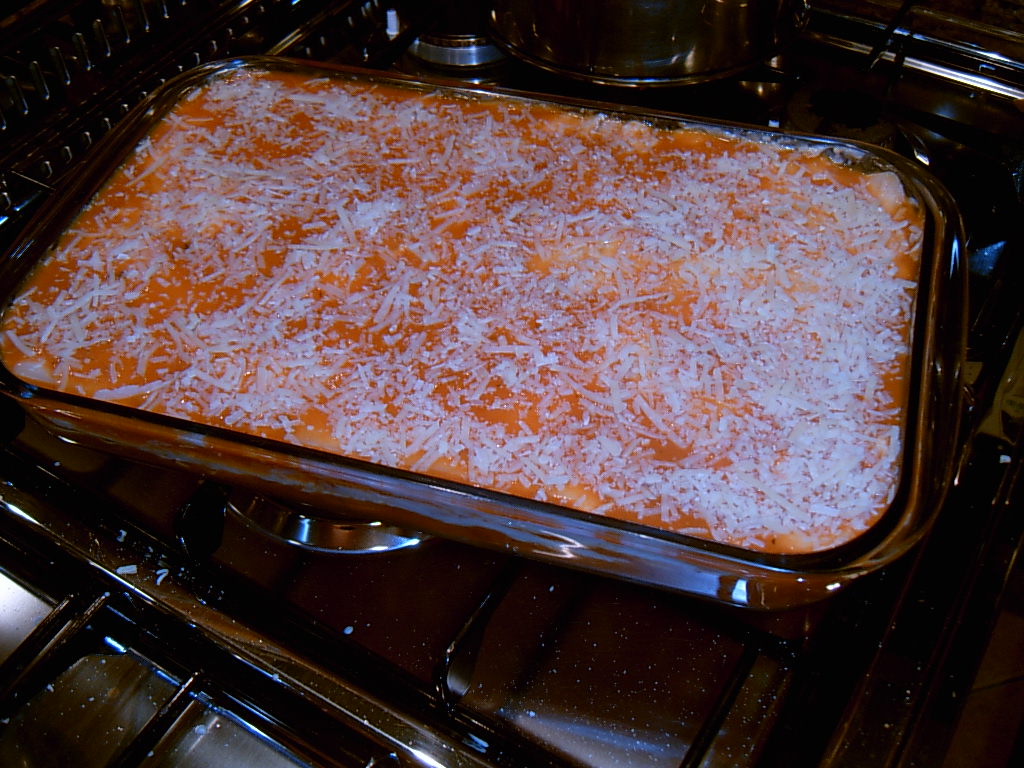
A lasanha feita por minha mãe, desde nossa infância…
Seguiu-se então o aprendizado de preparar receitas já conhecidas, como a da Nega Maluca, sempre sob supervisão. E, como toda a família era adepta da prática culinária, as oportunidades de observação e de treinamento eram múltiplas, e o encanto era crescente. Via minha mãe fazendo a lasanha anotada em seu caderno de receitas – feito à mão por uma tia –, camada por camada da lasanha, tudo passo a passo. E fui gostando cada vez mais de ler cadernos de receita: dos ingredientes ao modo de fazer, da leitura das receitas escritas à mão ao exercício mágico do preparo dos quitutes. Além disso, via o entusiasmo coletivo da mesa da cozinha nas vésperas de festas, principalmente nos Natais, em que a mãe, as avós e as tias picavam oleaginosas, preparavam sabores e compartilhavam a alegria festiva de produzir os cardápios de nossa história. Aquelas reuniões de cozinha pareciam ser a coisa mais divertida do mundo, um lugar em que se reuniam o prazer e a prática de todas as gerações, em uma vivência contagiante. Ajudando nos preparativos, observando a força de cada uma das criações próprias da mãe, da Vó Léia, da Vó Alda – cuja ambrosia ensolarava qualquer mesa de doces – e das minhas tias, descobri que cada uma tinha suas especialidades, suas preferências por esta ou aquela receita e a habilidade fervorosa na execução das gostosuras.
Food Play: Piruletas de gazpacho / Gazpacho lollipops, in English y Español
por SandeeA / by SandeeA
Quieres impresionar a tus invitados con un plato diferente? Típicamente español, el gazpacho es una sopa fría con múltiples variantes dentro de la geografía española, que suele incluir tomate, pepino, cebolla, ajo, vinagre, y en ocasiones pan para espesar, y que se suele tomar en los meses calurosos de verano.
Want to impress your guests? Gazpacho is a typical Spanish dish, a cold soup with many variations within Spanish geography, but which usually includes tomatoes, cucumber, onion, garlic, vinegar, and occasionally bread to thicken. It is usually served in hot summer months.
Ageing a wine in oak barrels has two main effects. The first is to imbue the wine with flavour and aroma compounds from the wood. This occurs most notably when the wine is matured in barriques (225 litre barrels) made from ‘new’ oak. New oak means the barrels have not been used before for ageing wine, thus there is a higher concentration of flavour molecules to impart to the wine. Wines aged in new oak typically develop notes of butter, toast, nuts, spice, or – if the wine has been aged in American, rather than French oak – coconut and white chocolate.
The second effect of oak maturation expresses itself structurally in the wine. Oak barrels, while impermeable to liquid, still allow a small amount of air into the wine. This air exchange allows for a very slight oxidation of the wine, an effect that can be controlled by the size of the barrel and the length of time the wine spends inside. As well as changing the colour of the wine (white wines deepen and red wines lighten) this natural micro-oxygenation ‘softens’ the wine, giving a rounder, fuller, creamier mouth-feel. Red wines also benefit from their tannins polymerising and becoming less harsh, thus integrating better into the body of the wine. Oak barrels are also often conducive to the conversion of malic acid to lactic acid.
Old oak barrels – that is barrels which have been already used at least once to mature wine – give the benefit of the oxygen exchange with the wine without the transferal of wood flavours. It can thus be difficult to detect the use of old oak on the palate; although look out for more density on the palate and a harmonious integration of fruit flavours, body and tannin.
Dr James Flewellen is The Rambling Epicure wine columnist. James is a biophysicist at the University of Oxford. Originally from New Zealand, James learned his trade in taste through the Oxford Blind Wine Tasting Society, of which he was the President from 2010-2012. During his term, he represented Oxford at many international blind tasting competitions – twice winning the prestigious ‘Top Taster’ Award in the annual Varsity blind tasting match against Cambridge University and captaining winning teams in competitions throughout Europe.



 by Simon de Swaan


 Vive l’Angleterre!









 by


