Don’t take any recipe on faith. There are some hostile recipes in this world.–Peg Bracken
One might say Ruth Eleanor “Peg” Bracken was an “anti-housewife”. She did what was necessary to take care of her family, who she loved very much, but did her chores “as seldom as possible.” Bracken wrote a series of humorous books on cooking, housekeeping, etiquette and travel, always conveying her point of view in a witty manner, which many housewives of the 60s related to. Her most well-known book out of the nine she wrote is the 1960 The I Hate to Cook Book. Bracken is quoted often.
Switzerland: Bénichon Mustard, A Fribourg Specialty to Welcome the Descent of the Cows
by Jonell Galloway
Bénichon mustard is quintessentially Swiss. It is a specialty of the canton of Fribourg.
It is more like a spicy jam than a mustard, in the traditional sense of the word. Its ingredients give it a sweet and sour taste.
It is traditionally eaten with another Fribourg specialty, cuchaule, a light brioche-like sweet saffron bread, during an annual village fair to celebrate and “bless” the autumn harvest and bringing down the herds of cattle from the mountains. This is now held the second week in September.
There are numerous recipes, but they traditionally include mustard flour (or powder), extra-white flour, white wine, fortified wine, rock candy and water, to which cinnamon, star anise and whole cloves are added.
It’s really quite easy to make. I’ve translated the Bénichon recipe and adapted it.
Suggestion: Do this on a day when you’ll be at home all day, or soak the mustard powder over night and finish off the recipe the next day.
Switzerland: Fresh-fruit Marmalade and Meringue Recipe
Spontaneous Cuisine, by Jonell Galloway
From the archives
We often think of traditional Swiss meringue as winter food, but it can also be great with summer fruit, such as plums, berries, apricots, etc., either mixed or on their own.
This recipe can also be appropriate to make with children. They will especially love using the pastry sleeve to decorate the marmalade.
When my husband and I first started cooking gluten-free in our kitchen, we mainly focused on one type of meal — those that were naturally gluten-free.
The naturally gluten-free foods were the easiest to cook from scratch because they required no substitutions at all — risottos, fresh fruit, vegetables, custards & puddings, stir fry, roasted potatoes, homemade “chips”, salads, fresh steamed fish, bean stews, meringues, and even a macaron attempt or two. As a beginner to the gluten-free world nearly five years ago, I was thrilled with how many foods we could make without ever having to worry about an ingredient on a package label that could be harmful to my husband’s health. As long as we cooked from entirely fresh ingredients and avoided anything that came in a package or required flour, we were fine — and what a great variety we had to choose from!
But it didn’t take long before my husband would say, “You know, I really miss pizza,” or “Wouldn’t it be nice to have a thick creamy gravy to go on mashed potatoes sometime?” It was inevitable, really, that shunning all things flour-related was bound to cause waxing nostalgia for the meals we no longer ate. While it was great to get our feet wet by starting with the easy gluten-free meals that didn’t require any substitutions or extra thought, it seemed wrong to deprive ourselves completely of other foods that we enjoyed.
I set out on a mission of sorts to figure out how to convert our favorite foods to gluten free, where I found a veritable “Wild West” frontier land when it came to recipes — myriad flour blends and formulas either in packages on grocery store shelves or listed in books, none of which explained how they came to be or why they worked, often calling for expensive and elusive ingredients. It all seemed like some esoteric recipe voodoo.
I decided instead to create my own blends, first categorizing the various alternative flours and ingredients by texture and coarseness, and then quickly realizing that while those aspects do play a role in the end product, the key factor was in fact not the texture, but the starch, protein, and fat content, as these are the things that determine most how a flour will behave in a recipe. I can’t say I get a perfect product every single time on the first try, but the turning point in my success was when I started looking into exactly what I was replacing with my gluten-free flour blends.
Sometimes it really is the gluten that needs to be emulated, such as in a bread recipe, where the developed network of gluten in conventional breads actively works to trap the air pockets made by the yeast, allowing the bread to rise. Techniques for mimicking this include adding other leavening agents to help account for the fact that some of the air will indeed escape before the bread is done, or adding binding agents to help trap the air that is formed — and maybe even a combination of both of these techniques.
Often this is why one sees gluten-free recipes that include extra eggs, or gelling agents like ground flax or chia seeds, manufactured gums, or incorporation of starches into the GF blend, such as tapioca or arrowroot. Once we understand why these ingredients exist in a gluten-free recipe, we can better judge how to make substitutions to fit our needs – for example, don’t have ground chia seeds? Maybe adding an egg in its place will do the trick. The bread fell flat a bit and was too dense? We now have options. We consider the properties of the ingredients we are using, and this information can be used as tools for determining how to logically go about changing our recipes to improve them.
Other recipes that conventionally use flour don’t actually care about the gluten at all. Take, for example, a roux, essentially made up of a flour and a fat that are cooked together and then used as a thickening agent in soups and stews, such as gumbo. In the case of roux, there’s no elasticity needed, and no air to be trapped – all we are looking for is thickening, which occurs thanks to the starch components within wheat flour. This is great news for gluten-free cooks; there are lots of starchy gluten-free ingredients at our disposal that we can use to replace conventional wheat flour!
All-purpose wheat flour contains, along with gluten, a fair amount of starch. So to create a 1:1 substitution (by weight of course), one would just need to come up with a gluten-free flour blend that is also mostly (but not all) starch. This can be done either by using flours with similar starch content to wheat flour, or by supplementing the GF blend with a pure starch (cornstarch, tapioca, arrowroot, potato, glutinous rice flour, etc.). Each type of starch differs slightly in its chemistry, but for the most part they all have gelling and viscosity properties – i.e. they help food thicken and stick together. In something like our roux example, it’s not going to matter a whole lot what kind of starches we use, because the only aspect of the starch we are calling upon in this case is its thickening power.
Obviously, for baking, things get a little more complicated, but I’m convinced the overall strategy remains the same. The first thing I ask myself when converting a recipe is, “what in conventional wheat flour is doing the work? What traits do I need to make sure I replace with my gluten-free mix?” And then we can use our knowledge about the various gluten-free ingredients available to reproduce those properties. Actually, I think once one gets a bit more comfortable with gluten-free substitutions, there is even more freedom and more possibilities for “customizing” than when working with conventional all-purpose wheat flour. This is because one has the ability to pick and choose from amongst so many great ingredients — not just for certain properties, but also for flavors. For example, I often incorporate chestnut flour, because I just love the earthy rustic qualities it lends to baked goods.
Gluten-free substitutions don’t have to involve some mysterious wizardry in order to have success. Sometimes it’s just a bit of recipe tweaking, and other times, a little knowledge about the science behind why a recipe works goes a long way.
The first and most important thing is to buy tree-ripened apricots. By definition, this means local ones, since ripe apricots are soft to the touch and do not travel well.
If you plan to eat them fresh, they should be soft, but not blemished or bruised. The riper they are, the more flavorful they are.
If you are using them for cooking, the riper the better, and you can even get by with blemishes as long as they are not rotten-looking. As a general rule, the softer the sweeter.
You will often see crates of extra-ripe apricots discounted in farmers markets. Look them over, and if there are not too many black or rotting ones, they are actually the best for cooking purposes, especially for jams, cakes and sauces.
Recipe Ideas for Apricots
Note: With all apricot recipes, the amount of sugar used depends on the acidity of the apricots. The acidity depends on the ripeness, origin and variety. With so many factors coming into play, taste tests are indispensable and the quantity of sugar should be determined by taste, using the quantities given here as a guideline.
Apricot Jam Recipe
The basic formula is 900 grams/2 lbs of sugar for every 2 kilograms/4 1/2 lbs of fruit used. This holds true for apricots, apples, cherries, nectarines and plums. If you like your jam really sweet, you can put equal weights of fruit and sugar.
Use cane sugar for more taste. I often halve the quantity of sugar in dessert recipes, but with jams this can be tricky, since sugar is what makes the jam set. It also serves as a preservative. If your fruit is extra-sweet, you might try cutting the quantity of sugar a tad.
Photo courtesy of Ellen Wallace.
Wash and rub apricots until perfectly clean. Remove any rotten spots with a paring knife. Dry well. Cut in half and remove stones. Save about half of the stones for later use.
Place apricots in a copper confiturier or a large stock pot. Add sugar. Let it sit overnight.
If the apricots are not ripe enough, they will not render any natural juices. If there are no juices, add 500 ml/1 pint of water to the pan.
Slowly bring to a boil on low heat, stirring constantly with a wooden spoon. This can take anywhere from 1 hour to 2 1/2 hours, depending on the water content of the apricots and the type of pan and stove or cooker you are using. Scrape the sides of the pan from time to time so that the mixture doesn’t crystallize.
The jam is set when you can dip a wooden spoon in it and it completely coats the spoon. Let jam settle for about 15 minutes before putting it into jars.
Pour jam into sterilized glass jars. Leave to cool. If you see the jam hasn’t set properly, you can put it back into the pan and boil it again, adding a little lemon juice.
Add two stones to each jar. Cool. Seal jars.
Apricot Purée or Coulis
Once again, the amount of sugar you use depends on whether you want it to have a tart flavor or a sweet flavor. If you’re going to pour it onto a very sweet cake or pie, opt for a more acidic taste. If you’re eating with something that is itself a little acidic, you might want to make your sauce sweeter. And once again, the sweetness will always depend on the ripeness of your apricots, so you’ll have to do a taste test in any case.
Wash apricots. Remove stones.
Put 300 grams/10 ounces of cane sugar (labeled sucre de canneroux or cassonade in Swiss and French supermarkets) and a vanilla bean (cut open in the lengthwise direction) into a saucepan. Slowly bring to a boil over medium heat until it begins to thicken and sugar has completely dissolved, i.e. until it forms a syrup.
Put 500 grams/18 ounces of apricots into a food processor, or run them through a food mill or chinois. Add apricots to the liquid sugar mixture and mix with a wooden spoon. Heat mixture until it is thick enough to completely coat a wooden spoon.
This apricot sauce can be eaten warm or cold, depending on what you are using it with. It keeps for several days in the refrigerator.
Apricot coulis is a perfect accompaniment to a dark chocolate cake, but can be used to make ice cream sundaes or parfaits just as easily.
It can also be used in savory dishes, for example with cold chicken breasts or cold pork roast. In this case, you would of course considerably reduce the amount of sugar.
Roasted Apricots
Preheat oven to 250° C or French mark 8. Wash apricots. Cut in half. Remove stone.
Lay apricot halves out on a roasting tin or broiler pan, or in a large casserole dish. Sprinkle lightly with brown cane sugar and just a tad of butter, distributed evenly in small bits, so that it will form a natural sauce. (This can also be done on a barbecue grill, but you’d lose the juices.) Put in oven, and immediately turn temperature down to 220° C or French mark 7. Turn when top side is browned. If butter starts to burn, add a few drops of water.
When soft and slightly browned and caramelized, remove from oven or grill.
Distribute on individual plates. Serve with a scoop of salt caramel, coffee or walnut ice cream. Lightly sprinkle with vanilla powder (labeled poudre vanille or vanille en poudre in supermarket; easy to find in France, but difficult to find in Switzerland), cinnamon and a high-quality chocolate or cocoa powder. Drizzle a little maple syrup over it. It is now ready to serve.
Sugar-free Apricot Purée or Coulis
The great French chef Michel Guérard, who started the Cuisine Minceur movement in 1974, has a recipe for a sugar-free version of a coulis. This is adapted from the 1976 edition of Michel Guérard’s Cuisine Minceur, now out of print:
Wash, halve and pit 12 ripe fresh apricots. In a saucepan, add apricots, 1/2 cup of water, 1 vanilla bean (cut open in the lengthwise direction, down the middle) and artificial sweetener to taste, the equivalent of about 3 tablespoons of granulated sugar. Simmer for 10 or 15 minutes, until mixture is reduced by about one third.
Remove vanilla bean. Put mixture in a food processor to make a purée.
This sugar-free sauce can be served in the same manner as the traditional apricot purée or coulis recipe above.
O subjetivo na escrita culinária: revisitando M.F.K. Fisher
Betina Mariante Cardoso
Soon to be translated from the Portuguese to the English
Para mim, a leitura da obra de M.F.K. Fisher (Mary Frances Kennedy Fisher) ultrapassa o prazer literário provocado por sua escrita: trata-se de um profundo enriquecimento pessoal. Meu livro favorito desta autora? É difícil escolher, mas atravessar as linhas de The Gastronomical Me foi um fenômeno transformador.
Em uma tradução ligeira, o título é: “O Eu Gastronômico”. Sim, ligeira, pois há grande força e simbolismo nas fibras deste título. Apesar de Mary Frances explorar suas histórias e perspectivas subjetivas nos textos, ao ler com atenção, percebo que cada um de nós, para quem o ato culinário é precioso, poderia ocupar a identidade deste ‘Eu Gastronômico’, deste “Me”, no idioma inglês. Aliás, qualquer um de nós poderia ocupar esta identidade, pois temas como o ‘comer’ e a ‘fome’, também tratados por ela, respondem ao nosso Humano mais profundo.
Na minha leitura, são textos em que a narradora nos empresta seu lugar, seu ponto de vista, para que possamos experimentar suas vivências, como se estivéssemos em seu papel, em sua ‘primeira pessoa’, nos sabores que descobre. Esta característica dá grande força aos seus textos, através do uso desta narrativa em primeira pessoa do singular. Ler-nos em suas sensações, percepções, vicissitudes é aceitar que a autora nos conduza em uma viagem para dentro de nossas próprias narrativas. Um passeio autobiográfico, então. E pergunto: cozinhar não é também uma autobiografia, um ‘contar de si’?
‘Dip’ agridoce de tomates, para aperitivo- receita minha
Bom, há vários focos de encanto, no conjunto desta obra, que, sem aviso, despertam o leitor para a reflexão. Sou pega de surpresa já pelo trecho de abertura:
[Para ser feliz, você deve ter conhecido a dimensão de suas forças, experimentado as frutas de sua paixão e aprendido qual é seu lugar no mundo]- Santayana
(Tradução livre- Betina MC)
Ao folhear este livro, encontro diversos capítulos de mesmo nome, escritos em datas diversas e entremeados com textos de títulos diferentes.”The Measure of my powers” (‘A dimensão de minhas forças‘), repete-se uma série de vezes, trazendo à tona a menção ao trecho de abertura, de Santayana; a repetição deste título específico, contudo, dá o tom autobiográfico e intimista de “The Gastronomical Me”. Sinto, ao percorrer as páginas, a profundidade com que a autora conta de suas histórias culinárias, suas descobertas e reflexões. É como se, a cada um dos capítulos que intitula ‘A dimensão de minhas forças’, ela respondesse ao trecho inicial, contando de sua busca pela dita felicidade. “Para ser feliz, você deve ter conhecido a dimensão de suas forças”, diz o trecho, e Mary Frances trata de retomar esta ‘ordem’, nos capítulos do livro, mantendo a busca como linha condutora de sua escrita subjetiva.
Mercado Público: convite aos sentidos…
Se a tônica me parece estar no ‘ser feliz’, há, nas entrelinhas, uma procura ainda mais profunda: a procura pela sua identidade, por suas ‘forças’ e potenciais, por sua essência, facetas de si que ela traduz por sua relação com o universo do ‘comer’e do ‘fazer culinário’. Para mim, é neste aspecto que seu ‘eu‘, primeira pessoa do singular, pluraliza-se e torna-se ‘nós‘; é neste aspecto que o título do livro, “The Gastronomical Me” (“O ‘Eu’ Gastronômico”) destina-se a um plural de sujeitos que se identificam com as sensações, vivências e sentimentos escritos pela autora. Sujeitos em qualquer parte do mundo. É neste aspecto que ela empresta seu pronome ‘Me’ ao leitor, emprestando, também, seus sentidos para que possamos experimentar, em palavras, os sabores, aromas, texturas, sons, gostos e cores de suas cenas. É possível, ainda, ir além desta compreensão: ao abordar a dimensão de suas forças, ou ao exprimir emoções e memórias no conjunto de textos deste livro, a autora não apenas nos empresta sua fome, mas a partilha conosco, seus leitores. Fome que nós, humanos, sentimos.
Fome?
Esta é a palavra-chave da famosa introdução desta obra, em que ela responde por que escreve sobre comida, e não sobre a luta pelo poder, pela segurança, ou sobre o amor ou sobre a guerra. “A resposta mais fácil é dizer que, como a maioria dos Humanos, eu sinto fome“. E acrescenta, com maestria, que, quando escreve sobre fome, na verdade está escrevendo sobre o amor e a fome por este, sobre o afeto e o amor por este e a fome por este…”Conto sobre mim mesma (…), e acontece, sem que eu queira, que estou contando também sobre aqueles que estão comigo, e sobre sua necessidade mais profunda pelo amor e pela felicidade.”
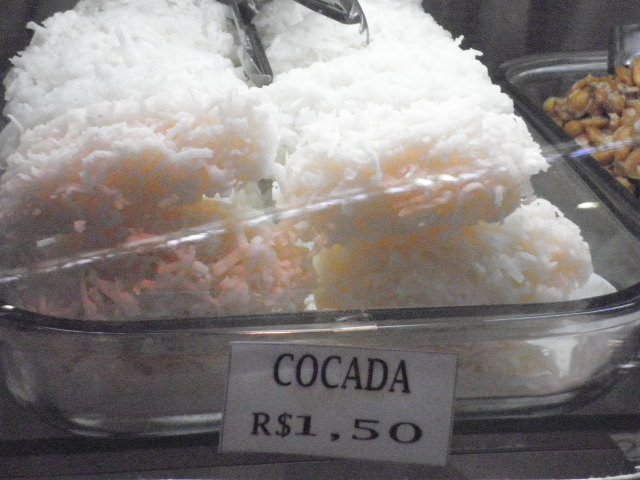
Cocada: doce brasileiro de coco, tradicional e saboroso
Sendo o alimento parte essencial da vida de todos nós, bem como as emoções e percepções através dos sentidos, cada indivíduo está presente no texto desta autora; suas experiências coincidem com as nossas próprias lembranças. Temos em comum a humanidade e, como ela refere, a ‘fome’. Por instantes, nos sentimos personagens de sua autoria; noutras vezes, nos sentimos o ‘Eu Gastronômico’ que escreve as histórias. As fomes são as mesmas.
E, então, a beleza do último parágrafo deste prefácio está na partilha de sua emoção, com o leitor: “Há uma comunhão para além dos nossos corpos, quando o pão é partido e o vinho é bebido. E esta é minha resposta, quando as pessoas me perguntam: ‘por que você escreve sobre fome, e não sobre guerras ou amor?‘”
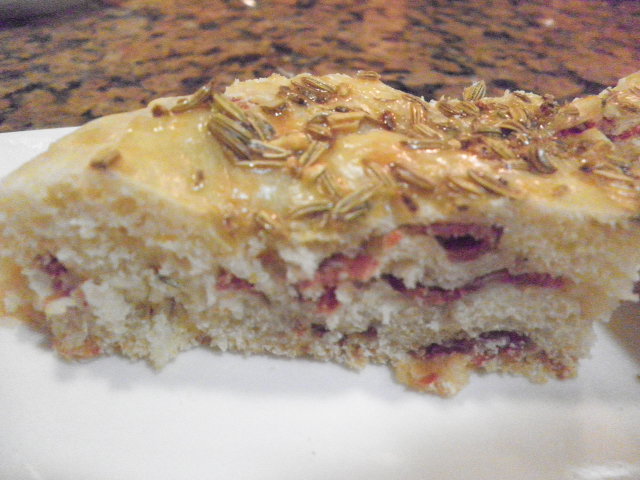
Partilha do meu pão de salame e funcho, no primeiro dia de 2013…
Seja ao ver sua avó fazendo geléias, seja ao partilhar uma refeição com sua irmã e seu pai, seja ao olhar com atenção um cardápio e escolher seu desejo, pela primeira vez: em cada história contada, há algo de nós. Porque, se as emoções são tão diversas em nossa subjetividade, há um ponto em comum em nós, humanos, e que nos torna co-autores destes textos: comemos, sentimos o sabor (ou a falta dele), temos fome, preparamos o alimento, sentimos prazer(aceso ou apagado)…Em qualquer tempo e geografia, comida e emoção nos despertam ou adormecem, nos satisfazem ou nos incompletam, nos nutrem ou nos destroem; seja como for, comida e emoção respondem à nossa necessidade primordial, a fome. Esta, de que Mary Frances Kennedy Fisher fala com tanta profundidade.
É de cada um de nós que a autora conta, quando escreve um texto que intitula: ‘A dimensão de minhas forças’. Você pode não desejar cozinhar, nem desejar escrever sobre a comida ou sobre o ato culinário; entretanto, a leitura desta obra é um passo firme, e prazeroso, na trajetória do comer consciente. E, com certeza, também na trajetória da conscientização de nossa fome pelo amor, pelo afeto, pela segurança, pela felicidade.
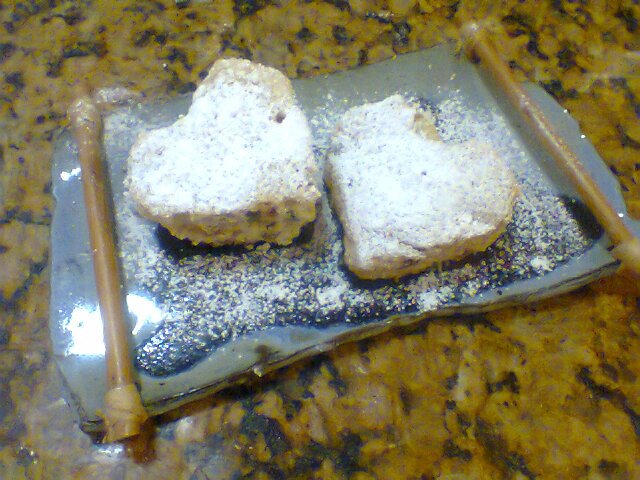
Bolo para celebrar o amor!
Minha leitura? A busca é, no fim das contas, pela ‘dimensão de nossas forças‘ e pelo saciar de nossas fomes, quanto mais buscamos conhecer a nós mesmos. Lendo ou cozinhando, descobrimos trechos de nosso subjetivo, experimentamos nossos sentidos e sentimentos. Somos nós, ali, refletidos em temperos ou em palavras. Basta nossa fome pela descoberta.
Sou Betina Mariante Cardoso, brasileira, trinta e poucos anos. Nasci e moro em Porto Alegre, no Sul do Brasil, cidade que amo de coração e onde vivencio o apego, o calor da família e a constância, virtudes necessárias na minha vida. Paradoxo, tenho encantos por viajar, romper a linearidade rotineira, esquecer o mapa no hotel e perder-me pelas ruas dos lugares que visito. Por quê? Para ter a chance de conhecer aquela confeitaria antiga na rua lateral, coisa que só o acaso permite. Tenho uma ligação forte com o conforto do cotidiano mas, quando me torno viajante, parto em busca das descobertas, do desconhecido. É quando me entrego à Serendipity que as viagens propiciam. E é com este mesmo estado anímico que venho para a cozinha: trazendo comigo a aventura, a curiosidade, o ímpeto pelo novo. Gosto de criar minhas receitas, mas sou também fã dos cadernos culinários, escritos à mão e com manchas de vida em suas páginas. Outro paradoxo.
Agradam-me os livros, as revistas, os blogs de forno-e-fogão. E tenho verdadeiro encanto pelas ‘Histórias do como-se-faz’, as narrativas orais que transmitem o conhecimento empírico, prático e caseiro, de geração a geração. Escutar uma história de cozinha é, para mim, uma riqueza única, porque faz parte de uma conversa, de uma partilha entre as pessoas. Sou médica psiquiatra e psicoterapeuta, profissão que exerço com amor e dedicação, e que dispara meu olhar para o subjetivo de nossas entrelinhas. Minha segunda atividade profissional é como proprietária de uma pequena editora, a Casa Editorial Luminara, ligação entre trabalho e espaço de liberdade.
No tempo livre, meu hobby principal é a culinária, desde a infância. Hoje, com a descoberta da ‘food writing‘, realizar a escrita culinária é, para mim, uma prática tão lúdica quanto cozinhar. Realizo algo que chamo de ‘cozinha perceptiva’. Nesta, escrita e a fotografia são ferramentas, pois ampliam a percepção e a descrição dos detalhes do ato culinário, ampliando também a exploração sensorial e a atenção ao presente, com benefícios para o autoconhecimento. Escrever, curiosar, ler, fazer colagens, blogar, viajar e fotografar são também experiências prazerosas para mim, com altas doses de felicidade.
I’ve just discovered , dedicated to making traditional Swiss and other recipes dairy-free.
Heddi started her site in 2012 to face up to the daily task of cooking for her son, who has multiple allergies, including milk allergies.
A dairy-free version of many traditional Swiss recipes for lactose-intolerant people. Switzerland is a land of milk and cheese, so this is a difficult task. Bravo for her efforts.
1 large fennel
3 medium-size raclette or new potatoes
Juice of one blood orange or regular orange, if not available
Olive oil
Salt and pepper to taste
1 1/2 to 2 teaspoons Country Potato spice* OR aniseed/fennel seeds
Preheat grill or broiler.
Cut stalk end of fennel out, then slice thinly in the lengthwise direction.
Scrub potatoes, but do not skin. Slice thinly.
Spread fennel and potatoes onto a heavy roasting tin, in a single layer. Brush both sides with olive oil.
Grill under broiler until nice and brown. Remove tin from oven, and use a metal spatula to turn them, taking care to still have a single layer.
Put back under broiler. When cooked but not yet brown, add spices. Stir well and put back under broiler. When golden brown, remove from oven.
Put mixture into a mixing bowl. Pour juice of one blood orange over mixture. Mix gently but thoroughly, so that the vegetables absorb the juice.
Set aside for 5 minutes so that all the flavors blend together.
Serve warm, either as a salad or side dish. It is a perfect accompaniment to grilled cod or salmon, and why not chicken?
*Country Potato spice is readily available in Switzerland, but if you don’t have access to it, you can make your own. It’s great on oven fries, chicken breast, and all sorts of other bland dishes you just want to liven up. It is a mixture of curcuma, cumin, coriander, ground manioc, fenugreek, garlic, salt, fennel seeds, chili powder, pepper, paprika, marjoram, ginger, garlic and a touch of sugar.
Pork is a great meat to play with for wine pairing. Depending on the cut of the animal, how it is cooked and the sauce accompanying the dish you have a whole wealth of wines from which to choose. Red wine, white wine, dry and savoury, off-dry and fruity; there are many options.
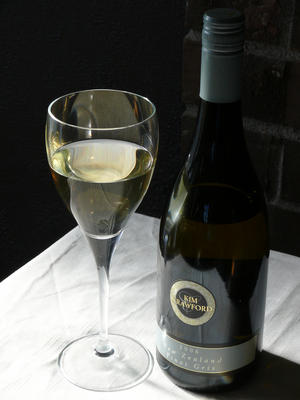
One of my favourite choices and one I think works very well with this recipe is an Alsatian or New Zealand Pinot Gris. These are full-bodied, rich white wines with a pear and honey bouquet that is the perfect foil for pork in such a sauce. The honey and fruit notes in the wine echo the honey and vanilla flavours in the sauce; the richness of the palate counteracts the piquant mustard and coriander seeds; the body carries enough weight to handle the meatiness of the dish; and the wine brings forth enough acidity to cut through the fat in the fillet and the sauce. Try for a wine with at least 5 years age and you’ll notice truffle and mushroom notes developing to add an additional level of complexity.
About James Flewellen
Dr James Flewellen is a biophysicist at the University of Oxford. James learned his trade in taste through the Oxford Blind Wine Tasting Society, of which he was the President from 2010-2012. During his term, he represented Oxford at many international blind tasting competitions – twice winning the prestigious ‘Top Taster’ Award in the annual Varsity blind tasting match against Cambridge University and captaining winning teams in competitions throughout Europe.
One of James’s goals is to clarify the complex and hard-to-navigate world of wine for both novice and experienced tasters. He applies his scientific training to wine education, illuminating concepts of taste, tannin and terroir in an approachable, entertaining manner. James runs wine education courses in Oxford through the Oxford Wine Academy and is completing the WSET Professional Diploma in Wine and Spirits. He is the regular wine writer for The Rambling Epicure and is the founder of The Oxford Wine Blog. He is also currently co-authoring The Concise Guide to Wine and Blind Tasting – a book surveying the wine regions of the world and how to blind taste.


 Simon Says: Daily Food Quote, September 11, 2013



 by
by 


 Apricot Rosemary Pork Tenderloin with Grilled Apricots