A cozinha como metáfora:o ato culinário e seus horizontes

Published by Monday, August 26, 2013 Permalink 0


Exif_JPEG_422

A COZINHA COMO METÁFORA: O ATO CULINÁRIO E SEUS HORIZONTES

by Betina Mariante Cardoso

English translation coming soon

Minha cozinha

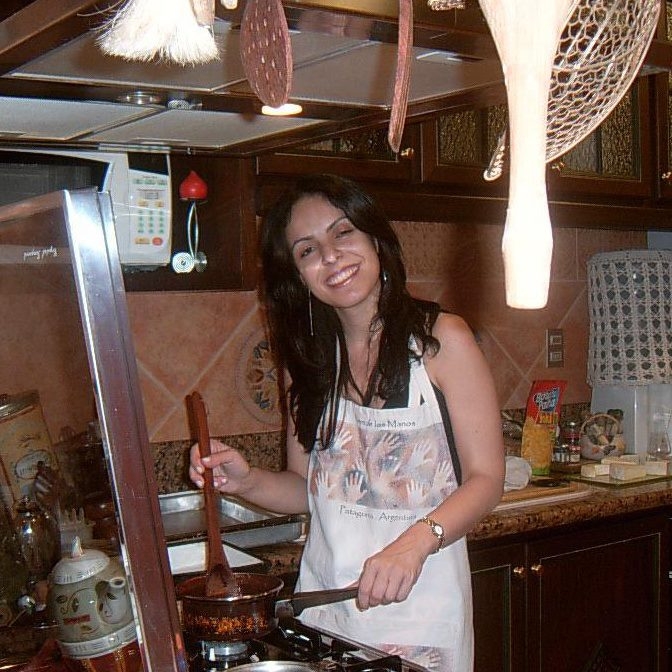
Sou eu, Betina, na minha cozinha de hoje!

E por falar em subjetividade, a partir da minha escrita sobre a obra de M.F.K. Fisher, “The Gastronomical Me”…Você já pensou na cozinha como   metáfora? Pois a reflexão de hoje  é sobre o ato culinário e  seus horizontes,  sua subjetividade… Deste  universo, nasceu minha  escrita  de cozinha, em começo de 2012,   pelo meu desejo de compartilhar  as epopeias criativas de forno-e-  fogão. Não apenas as receitas,  mas toda a riqueza que a  culinária pode produzir em  nosso mundo interno, do  autoconhecimento à percepção  de aptidões, anseios,  sensibilidade e tantas outras  riquezas. Assim, surgiram meu blog Serendipity in Cucina, em  março, e meu livro, nove meses  depois. No  entanto, esta história tem início  há trinta anos atrás, lá na minha infância.

Explico.

Para mim, a cozinha sempre foi um território mágico, um espaço de descobertas, de experiências, de sabores, de liberdade. Quando éramos crianças, meu irmão e eu fazíamos o ‘bolo inventado’, onde tudo era possível na elaboração da massa do bolo, estimulados e supervisionados pela mãe. Aprendíamos a sentir o efeito dos ingredientes na textura da preparação, a conhecer os aromas e cores que cada etapa assumia, a viver nossa criatividade de modo lúdico, livre e, sem dúvida, cauteloso nas tarefas que só os adultos poderiam executar. Espiávamos o bolo crescendo no forno, sentíamos o cheiro inundando a cozinha, e entendíamos que o resultado era produto de nossas ideias, possibilitado pela expertise da mãe. Preparar receitas, conhecer elementos e reações químicas aplicados, vivenciar a diversão ímpar de mexer a massa e de vê-la crescer no forno, tudo isso era viver a culinária como objeto de nossa primeira autoria. E, além de tudo, saboreávamos o bolo no lanche da tarde!

Com sete ou oito anos, disse para a Vó Léia que desejava fazer um bolo de Natal, de maçã com castanha-do-pará, recheado e coberto com doce de leite e castanhas raladas. Nem imagino de onde tirei esta ideia, e nem mesmo porque escolhi esses ingredientes. Cozinheira de mão cheia, ela me deu um dos maiores presentes que eu poderia ganhar naquele Natal: a confiança na minha ideia e os ensinamentos práticos de como realizá-la – explicou-me tudo, tim-tim por tim-tim, deixando que eu mesma fizesse cada passo, exceto quando a atividade envolvesse cortar alimentos ou mexer no forno. Ali, pude descobrir que poderia inventar uma receita, mas isso envolvia uma nova etapa: descobrir que as medidas devem ser seguidas à risca, que há uma metodologia para o desenvolvimento da criação, que certos cuidados são essenciais, e tantas outras coisas que sei hoje sobre as receitas culinárias. Inventar ganhava um método.

Entretanto, o mais importante que aquela ocasião me proporcionou foi saber que eu poderia, a partir de um desejo, elaborar sua realização através de passos definidos, prestando atenção em cada detalhe de cada etapa. Então, a autora daquela torta seria eu mesma, da teoria à prática,  com supervisão cuidadosa dos adultos. Claro que minha compreensão, na época, estava muito longe desta complexidade toda, mas me lembro de ter sentido alegria, muita alegria, e um orgulho por ter criado a receita. Era como o prazer de abrir um presente de Natal. Aquela experiência ficou profundamente marcada em mim, assim como a prática do bolo inventado. Criatividade e método eram atributos que começavam a me despertar encanto. Repeti o ‘como-se-faz’ da torta de maçã com castanha-do-pará nos outros Natais, seguindo os registros da primeira experiência. Com isto, verifiquei que o método, seguido à risca e com atenção aos passos do processo, resultava muito semelhante entre uma e outra vez. Acredito mesmo que tenha nascido ali meu prazer em inventar receitas e repeti-las.
Exif_JPEG_422

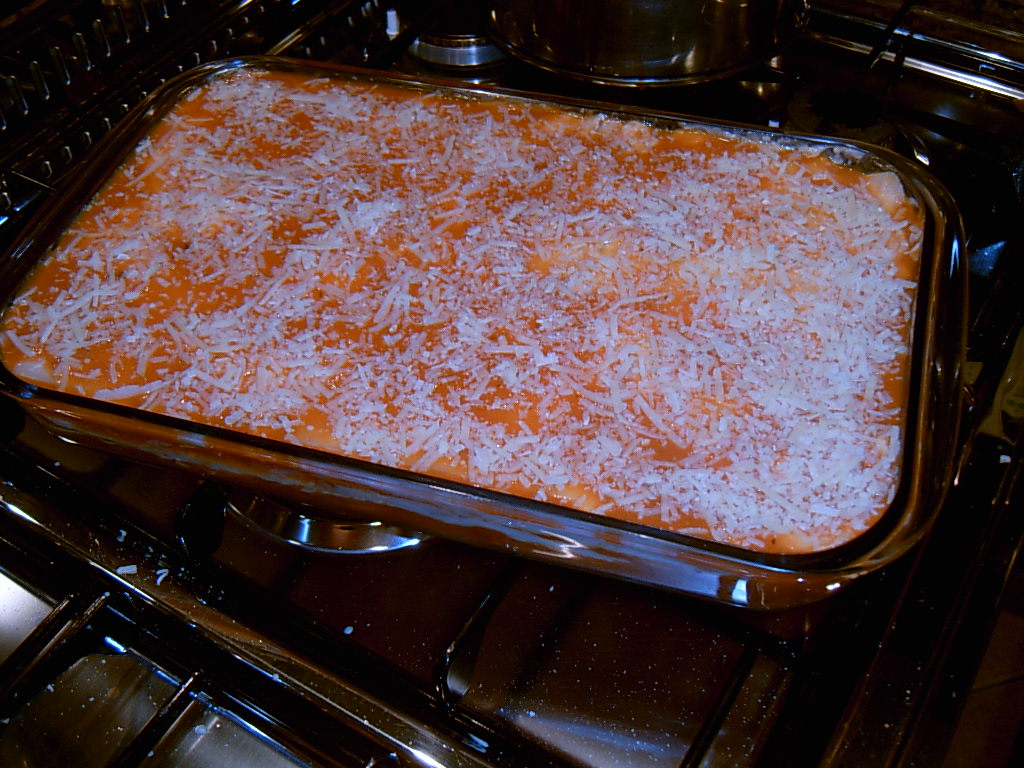
A lasanha feita por minha mãe, desde nossa infância…


Seguiu-se então o aprendizado  de preparar receitas já  conhecidas,  como a da Nega  Maluca, sempre sob supervisão.  E, como toda a  família    era  adepta da prática culinária, as  oportunidades de  observação e  de    treinamento eram  múltiplas, e o encanto era  crescente. Via minha mãe    fazendo  a lasanha anotada em  seu caderno  de receitas – feito à  mão  por  uma tia –, camada por  camada da  lasanha, tudo passo a  passo. E fui    gostando cada vez  mais de ler  cadernos de  receita:  dos ingredientes ao  modo de  fazer, da leitura das   receitas  escritas à mão ao exercício mágico do preparo dos quitutes.  Além disso, via o entusiasmo coletivo da mesa da cozinha nas vésperas  de festas, principalmente nos Natais, em que a mãe, as avós e as tias picavam oleaginosas, preparavam sabores e compartilhavam a alegria festiva de produzir os cardápios de nossa história. Aquelas reuniões de cozinha pareciam ser a coisa mais divertida do mundo, um lugar em que se reuniam o prazer e a prática de todas as gerações, em uma vivência contagiante. Ajudando nos preparativos, observando a força de cada uma das criações próprias da mãe, da Vó Léia, da Vó Alda – cuja ambrosia ensolarava qualquer mesa de doces – e das minhas tias, descobri que cada uma tinha suas especialidades, suas preferências por esta ou aquela receita e a habilidade fervorosa na execução das gostosuras.

Continue Reading…

Never miss a post
Name: 
Your email address:*
Please enter all required fields
Correct invalid entries

Serendipity: meus caminhos na cozinha e nas viagens…

Published by Saturday, July 6, 2013 Permalink 0
Exif_JPEG_422

Entre uma Serendipity e outra, um bom café!

SERENDIPITY: MEUS CAMINHOS NA COZINHA E NAS VIAGENS…

Translation coming soon in English – Introduction to Betina Mariante Cardoso’s new Brazilian food column

Olá!

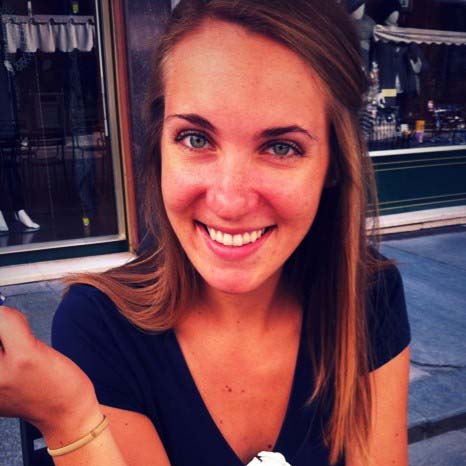
Sou Betina Mariante Cardoso, brasileira, trinta e poucos anos. Nasci e moro em Porto Alegre, no Sul do Brasil, cidade que amo de coração e onde vivencio o apego, o calor da família e a constância, virtudes necessárias na minha vida. Paradoxo, tenho encantos por viajar, romper a linearidade rotineira, esquecer o mapa no hotel e perder-me pelas ruas dos lugares que visito. Por quê? Para ter a chance de conhecer aquela confeitaria antiga na rua lateral, coisa que só o acaso permite.  Tenho uma ligação forte com o conforto do cotidiano mas, quando me torno viajante, parto em busca das descobertas, do desconhecido. É quando  me entrego à Serendipity que as viagens propiciam.

E é com este mesmo estado anímico que venho para a cozinha: trazendo comigo a aventura, a curiosidade, o ímpeto pelo novo. Gosto de criar minhas receitas, mas sou também fã dos cadernos culinários, escritos à mão e com manchas de vida em suas páginas. Outro paradoxo.

Continue Reading…

Never miss a post
Name: 
Your email address:*
Please enter all required fields
Correct invalid entries

A Look at Slow Food’s Salone del Gusto, October 2012, in Turin, Italy

Published by Saturday, November 3, 2012 Permalink 0

by Diana Zahuranec

Salone del Gusto ended on Monday 29, but I can’t stop thinking about it.

Salone del Gusto, held in Turin, Italy, is a Slow Food biannual food fair and conference. To sum it up in these few words undermines everything else it is, too, and its importance as an event that brings together producers from all over the world. These are producers that grow ancient varieties of grain to save genetic biodiversity, that make Slow Food Presidia cheeses or salumi, that pipe their cannoli full of the freshest organic ricotta you’ve ever tasted, and whose principles and values align with your own and, it goes without saying, Slow Food’s – good, clean, and fair food for all.

The Slow Food mascot

For all things Slow Food, here are some links courtesy of Scoop.it and Slow Food. To understand a few of those words in the paragraph above, just look at the end of the article.

This year, Salone del Gusto was a marriage of the original Salone del Gusto, first held in 2006, and Terra Madre, first held in 2004. While both events had food artisans and producers from all over the world, different activities were held at each and were not all accessible to the public. Salone del Gusto focused more on the exposition and sale of high quality foods and products, while Terra Madre was a gathering of a network of food producers from around the world. Having never been to either of these before, I can’t offer judgment on the differences of before and after. What I would love to do is share my first-time impressions of this year’s.

To say Salone is a food fair means that, like your down-home county fair, the place is jumping with activity – with a few notable differences. The funnel cakes are replaced with French butter cookies in 20 different flavors, the groundhog whacking game is replaced with the foodie’s (divisive word, I know) form of fun, that is vertical Barolo wine tastings, and that feeling of riding the Zipper right after you eat your funnel cake is replaced by the feeling of pressing up against crowds right after you drink your Barolo wines.

Continue Reading…

Never miss a post
Name: 
Your email address:*
Please enter all required fields
Correct invalid entries

‘Nduja: The Spicy and Spreadable Calabrian Treat

Published by Tuesday, March 13, 2012 Permalink 0

by Diana Zahuranec

‘Nduja (n-due-yah) is a spreadable, spicy, red pork meat that can be found everywhere in Calabria. Calabria is the southern Italian region that is the “toe” of the boot, so to speak. Nduja Nduja is used for sauces, bruschetta, or on anything that spreadable meat – spalmabile – would be tasty, including a spoon.

‘Nduja is produced from the throat of a pig, called the guanciale meat, and also the guanciale – stomach meat – and the back lardo, or fat. The lardo, when mixed with salt and added to the meat, takes on another name that has no exact English translation, called sugna. This meat and fat mix is ground with salt, local peperoncino (the Italian chili pepper), and absolutely nothing else. Not even nitrates, a common preservative added to most sausages and cured meats (linked to a higher risk in cancer), adulterate this all-natural ‘nduja. Salt, the extended maturation, and the fact that 30% of ‘nduja is peperoncino, which acts as a natural preservative, defy the need for synthetic additives.


Luigi Caccamo, left

Continue Reading…

Never miss a post
Name: 
Your email address:*
Please enter all required fields
Correct invalid entries

After the Cheese Making comes the Cheese Tasting

Published by Thursday, March 8, 2012 Permalink 0

by Diana Zahuranec

A black trash bag is tossed onto my desk. When I peer inside, four rounds of cheese stare up at me, one with a small wedge like a Pac-Man smile sliced out of it.

These raw cow’s milk cheeses are the result of the efforts of a group of students from the University of Gastronomic Sciences who, for one January day, were cheese mongers. After a year of visiting cheese producers, tasting cheese in class, and going  a little crazy at the biennial Slow Food Cheese 2011 fair, the next logical step was a DIY cheese-making party (see how here). Five and half weeks later, and the two big and two small rounds are set on the picnic table outside in the approaching spring’s warmth.

The knife squeaked when I pushed it through the small cheese with both hands. It definitely had grate-able potential. Tiny flecks of dark blue mold gathered on the bottom of the rind, but it was mostly creamy white and clean-looking. I sniffed the small cheese, and it smelled like butter. Tentatively biting a small piece, I tasted the saltiness first, and then a slight acidity cut through. It was crumbly and reminded one girl of pecorino cheese, nevermind that it’s cow’s milk, not sheep’s. It had a faint animal-like taste (normal enough in a cheese), but a weird, pungent aftertaste. A little salty overall, but not bad. A few friends thought otherwise. The most exciting thing about it was that we had made it.


Continue Reading…

Never miss a post
Name: 
Your email address:*
Please enter all required fields
Correct invalid entries

Epicurean Adventure: the first of this year’s Great Barrier Feasts

Published by Tuesday, July 5, 2011 Permalink 0

by Rebecca Varidel, our Australian correspondent

Destination dining has never been more inviting. Luxury resort, qualia on Hamilton Island (in the Whitsunday Islands – off the coast of northern Queensland Australia) recently hosted the first of this year’s three Great Barrier Feasts. Gourmands travelled, from around Australia and internationally, to attend the intimate three-day soiree.

And the weekend delighted, with masterclasses by leading Chef Peter Gilmore of Quay restaurant Sydney (Quay is the only one of the Australian restaurants placed this year in the S. Pellegrino World’s 50 Best Restaurants), and culminated in a magnificent showpiece dinner. Gilmore flew a team with him from his Sydney restaurant kitchen to replicate a number of his beautiful signature dishes. Gilmore has been instrumental in Australia for changing the way we eat, and like Chef Serge Dansereau before him, raised the bar on the Aussie expectations of fresh produce. A keen home gardener and seed saver, Chef Peter Gilmore, introduces many varieties of heirloom vegetables into Australia from around the world. After testing the veggies in his home garden, he commissions small local farmers to grow the required quantities for his top restaurant.

Qualia Executive Chef Jane-Therese Mulry also delighted on the previous night, with a modern, imaginative and brave welcome dinner to start the weekend. Prior to her appointment at qualia, Mulry is perhaps best known as the first female head chef to be appointed by Chef Marco Pierre White. Chef Jane-Therese Mulry seeks out the best quality artisan and interesting local ingredients to create her own unique dishes across the resorts dining venues.

Transport between the guest pavilions, dining destinations, qualia spa and library, as well as the many other island recreational facilities is in itself entertaining, with guests driving themselves around on golf buggies.

While the feasting was just fabulous, the warm waters of private horizon plunge pools also enticed. Even in the midst of an Australian winter, swimming, sailing and other water sports were warm and tempting in the northern pristine waters of the Great Barrier Reef.


Never miss a post
Name: 
Your email address:*
Please enter all required fields
Correct invalid entries

Epicurean Adventure: Cities in a Basket: Food Markets of the World

Published by Tuesday, February 22, 2011 Permalink 0

by Rebecca Varidel

What better place to start an Epicurean Adventure than exploring the hub of any city — the food market.

Towns historically formed around the market centre. Farmers brought their produce to town to barter or sell, long before 20th-century industrialisation and long before we turned the fashionable 21st-century urban phrase ‘farmers’ market’. All around the world, food markets are still the bustling heart of local cuisine, and the best place to start your culinary holiday.

Continue Reading…

Never miss a post
Name: 
Your email address:*
Please enter all required fields
Correct invalid entries

Introducing Rebecca Varidel, a new Voice, a new column: Epicurean Adventure

Published by Tuesday, February 22, 2011 Permalink 0

by Rebecca Varidel

Rebecca Varidel believes in the generosity of food and enjoys home and restaurant cookery that uses fresh local seasonal produce as its base.

Australian born and bred, Rebecca worked as a chef, in restaurants and later, cooked for the rich and famous in award-winning, private catering. Her latest endeavour is contributing editor for the popular food and travel website Inside Cuisine.

The 2011 Foodies Guide to Sydney says, “Rebecca Varidel seems to live a fortunate life. When she’s not quizzing celebrity chefs, she pops up at the best food parties, escapes to fabulous locations, or dissects a major foodie festival. Prize recipes from big name chefs only add to the caché.”

Never miss a post
Name: 
Your email address:*
Please enter all required fields
Correct invalid entries

UA-21892701-1