Simon Says: Daily Food Quote, October 12, 2011

Published by Wednesday, October 12, 2011 Permalink 0

by Simón de Swaan

Good food is in effect the basis for true happiness.–Auguste Escoffier, c. 1912

French chef, restaurateur and culinary writer August Escoffier (1846 – 1935) popularized and updated traditional French cooking methods. He is a legendary figure among chefs and gourmands, and was one of the most important leaders in the development of modern French cuisine.

Three of Escoffier’s most noted career achievements are revolutionizing and modernizing the menu, the art of cooking, and the organization of the professional kitchen. Escoffier simplified the menu as it had been, writing the dishes down in the order in which they would be served (service à la Russe), referred to Russian style service. He also developed the first à la carte menu. His books are still used by culinary students and chefs alike.

Marie-Antoine Carême
Related articles
Never miss a post
Name: 
Your email address:*
Please enter all required fields
Correct invalid entries

Chocolate News: It’s chocolate week, & here are some exciting chocolate adventures around the world

Published by Tuesday, October 11, 2011 Permalink 0

by Jonell Galloway

This is one of the best and most comprehensive lists I’ve seen about high-quality chocolate adventures around the world. I want to go them all!

Click here to read the entire article.

The evidence continues to build a factual basis that dark chocolate is actually good for you. See the related articles:

  • Chocolate – the miracle drug?
  • Chocolate Week Heaven
  • High Chocolate Consumption Linked To Lower Stroke Risk In Females

And in Peru, they’re still finding new varieties of chocolate. Exciting future for chocoholics! Click here to read.


Related articles
Never miss a post
Name: 
Your email address:*
Please enter all required fields
Correct invalid entries

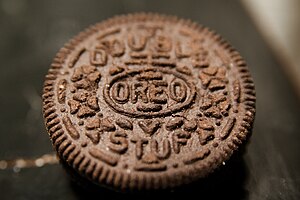
A Brief History of the Oreo Emboss

Published by Friday, October 7, 2011 Permalink 0
Oreo Double Stuff Cookie


Interestingly, when the Oreo was first introduced by Nabisco in 1912, it used a much more organic wreath for its emboss, later augmented with two pairs of turtledoves in a 1924 redesign.

To follow the evolution of the Oreo cookie’s embossing, click here.

Related articles
  • Food Art: Giant Oreo cake, food photography by SandeeA


Never miss a post
Name: 
Your email address:*
Please enter all required fields
Correct invalid entries

Switzerland: Rosa’s Musings: Butterzopf, The History Of A National Sunday Bread

Published by Saturday, October 1, 2011 Permalink 0

by Rosa Mayland

Switzerland (also known as “Confoederatio Helvetica” or “die Schweiz”, “la Suisse”, “Svizzera”, “Svizra”) is a federal republic composed of 26 cantons and 4 different linguistic and cultural areas (German, French, Italian and Romansch). It’s therefore not surprising if its cuisine reflects its rich heritage and highly diverse cultures. It is rather like an island in the middle of Europe, like a tiny kingdom.

Each region and canton has its very own traditional dishes and specialties as well as produce, and they defend and even protect it fiercely, because there are dishes, cheeses, wines, breads, and many more food items that are now protected by AOCs in Switzerland.

Even if this tiny piece of land stuck between Germany, Austria, France, Italy has its own highly diverse culinary identity, one cannot refute that each part of the Swiss Confederation has, to a certain extent, been influenced by its neighbors, and vice versa. For example, a sausage resembling the anise-flavored Geneva sausage called Longeole can also be found in Chablais (Haute-Savoie); a cheese similar to Valais raclette is made in Savoie too; the Swiss German spätzli seem to be of Swabian (German) origin. Then there is polenta or risotto which evoke the Apennine Penninsula, and are often found in Ticino, and, well, the list goes on. As it is the case with every place that is not in total isolation, the borders are quite permeable, so it is pretty understandable that ideas, information, arts and science cross back and forth across the borders.

Continue Reading…

Never miss a post
Name: 
Your email address:*
Please enter all required fields
Correct invalid entries

It’s apple season: Matefin à la pomme / apple pancakes/pie

Published by Thursday, September 29, 2011 Permalink 0

by Jonell Galloway

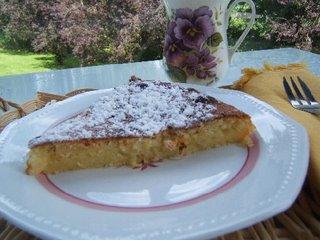
O Délices discovered this recipe on blog de Guillemette.

This is a traditional recipe from the Savoy, so it’s not so far from us in Switzerland.

The original name comes from the French mâte faim. Peasants prepared these potato pancakes in the morning before going to work in the fields. It was meant to keep them going until lunchtime.

This version uses apples instead of potatoes, and is perfect for the apple season, which has just started here in Switzerland.

Continue Reading…

Never miss a post
Name: 
Your email address:*
Please enter all required fields
Correct invalid entries

Food News Daily: September 27, 2011

Published by Tuesday, September 27, 2011 Permalink 0

Mainstream Anglo Media and Press

Nigel Slater’s classic salsa verde recipe, The Guardian

Is Junk Food Really Cheaper?, The New York Times

Small Factories Take Root in Africa, Wall Street Journal

For Rosh Hashanah, honey, you have options, Los Angeles Times

A new generation of student cooks?, Is the accepted wisdom about students being uninterested in cooking still accurate or is it a myth kept alive by those who graduated years or decades ago?, The Guardian

Asian snack time is all the time, The Seattle Times

Munch ado about Doritos, one man’s iconic snack, The Washington Post

Best of the Anglo Food and Travel Blogs

From Polenta to Peach Cobbler, Measure Free Hippie Cook

Continue Reading…

Never miss a post
Name: 
Your email address:*
Please enter all required fields
Correct invalid entries

David Downie: Gallette, Italian Riviera Sea Biscuits

Published by Tuesday, September 27, 2011 Permalink 0

by David Downie

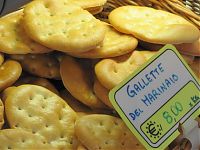
gallette del marinaio, sea biscuits, panificio maccarini

Everyone knows about the focaccia of Genoa and the Italian Riviera. But who remembers the region’s hardtack?

Sea biscuits: those hard, dry crackers that sailors would take with them on long journeys, because normal bread got moldy within days?
In Italian, sea biscuits are called “gallette.” The same word is used for the surf-worn, flattened stones you find on beaches. That’s because sea biscuits look very much like those stones, with pock marks.

There used to be hundreds of bakeries up and down the coast of Italy, and in America too, that baked sea biscuits. Now only a handful continue the tradition, most of them in Liguria, and only one makes gallette in the old-fashioned way, meaning the way they were made in the nineteenth and early twentieth centuries.

Continue Reading…

Never miss a post
Name: 
Your email address:*
Please enter all required fields
Correct invalid entries

Food News Daily: September 23, 2011

Published by Friday, September 23, 2011 Permalink 0

Mainstream Anglo Media and Press

Kosher cuisine: Beyond the bagel. Traditional Jewish food is homely, hearty and intended to be shared. Now foodies of all faiths are joining the feast, The Independent

Female Farmers Sprouting: More Md., Va. Women Lead Farms, The Washington Post

Fancy a Peruvian? Andean state pulls up a seat at the food world’s high table: Gastón Acurio, the ‘Peruvian Jamie Oliver’, is at the forefront of the country’s latest gastro-boom, The Guardian

After His Brother’s Killing, a Chef Turns to Israeli Food, The New York Times

On Nutrition: Are egg whites just a bunch of feathers? (and other important questions), The Seattle Times

Curry — it’s more ‘Japanese’ than you think, The Japan Times

Best of the Anglo Food and Travel Blogs and Sites

For German bier, it’s all in the glass, Eatocracy

Continue Reading…

Never miss a post
Name: 
Your email address:*
Please enter all required fields
Correct invalid entries

Ahoy Matey! International Talk Like a Pirate Day – September 19

Published by Monday, September 19, 2011 Permalink 0

by Alice DeLuca

Musing over 16th century drawings of highly specialized, obsolete cooking equipment from Il Cuoco segreto di Papa Pio V (The Private Chef of Pope Pius V)[i], I was prompted to remember the seasonal holiday, now over a decade old, that causes lots of fun-loving souls to pretend to be pirates. “Talk Like a Pirate Day” is a silly parade of all things pirate, associated with the violent pirates of the great age of sail, not the modern-day pirates in business suits. This holiday is now upon us, September 19, so we can give a little thought to what a pirate might eat.

By an amazing coincidence, whilst rummaging through a musty old trunk in a spider-filled corner of the attic today, I came upon a weathered scrap of paper wrapped up in a bit of tarred leather. The picture drawn thereon is unlike the idealized food plate recently released by the U.S. government[ii], but illustrates the proper proportions of pirate foods as depicted in fiction and history books – a surefire recipe for scurvy and pellagra, ancient diseases now rarely encountered:

Pirate Plate:

PiratePlate_C2011_AliceDeLuca

United States Department of Agriculture Plate:

myplate_green_usdweb

If you haven’t recently read Treasure Island, written by Robert Louis Stevenson in the late 19th century about 18th century pirates, take it in your hands again – it is a wild adventure story, available as an ebook through Project Gutenberg, at no cost.  There is some value to the book as a culinary guide, since Stevenson traveled at sea quite a bit, voyaging to Hawaii numerous times, becoming friends with Hawaiian King Kalākaua (the Merrie Monarch) and meeting his demise in Samoa. He was onboard ship only a hundred years after the period of his pirate story that holds our attention.

The first ten percent of Treasure Island is a riveting description of the family of innkeepers managing the Admiral Benbow tavern, as they are terrorized by a raging alcoholic in his last days. The buccaneer lodger’s drunken ravings and addiction to rum are a part of nearly every page. Pirates from the age of sail would have drunk beer, because that ancient drink is preserved by hops and therefore is safer than standing water, and they would have drunk great quantities of rum.

Pirates certainly appeared to “eat to live” instead of “living to eat” like a modern gourmet.  Combing through the material in Treasure Island, I can provide a nearly comprehensive list of the drinks and foods mentioned in that tome, but I follow up with a proposal for a more appetizing menu:

Pirate Food enumerated in Treasure Island

  • Drink:

A bottle of Spanish wine and some raisins, strong wine (red or white), old wine, a pannikin of rum, casks of whiskey, brandy.

  • Starchy Food

Duff, plum-duff, bags of biscuits, bread-bags, biscuit and fried junk.

  • Meat

Goat or salted goat, kegs of pork, roasted oxen, hot bacon or bacon and eggs, oysters.

Pork, bread and brandy for the midday meal.

  • Fruits

Apples, berries, tropical fruits, pickled fruits.

  • Spices:

Nutmeg.

  • Other:

Notably, when the marooned Ben Gunn dreams of food, he dreams of

“Cheese toasted”, and would have preferred a piece of parmesan cheese and some Port to any dish of boiled, salted meat and “duff.”

Here is a much improved Luncheon menu for your consideration, loosely based on Treasure Island:

Pirate Menu_C_2011_AliceDeLuca_framed
Grog – The proper Treasure Island toast to make would be “Here’s luck” – as you  down your diluted drink of rum and water.  If we are to believe everything we read, rum was added to the stored, algae-contaminated water onboard ship, to make it more palatable. However, we also know that the British Royal Navy made rum a staple, and served the last official ration of rum to its sailors July 31, 1970 after a few centuries of providing daily rum rations.  For a palatable drink that would ward of scurvy and please your guests, serve a Mojito made with rum, mint and limes, or a Caipirinha made from Brazilian Cachaça.

Main courseBarbecue, shared equally amongst all diners. The alleged origin of the word “buccaneer” is the French word boucanier that comes from the word boucan that referred to a wooden frame used in the Caribbean for smoking meat. This certainly seems like a plausible history, whether or not it is true.  The character Long John Silver’s nickname in Treasure Island is “Barbecue,” as he is the ship’s cook.

A Ben Gunn Toasted Cheese Sandwich: In honor of all who are marooned, whether at sea on a deserted island or in a modern city apartment, serve a toasted cheese sandwich made with fine cheese.

Salamagundi: Salamagundi was somewhat similar to the modern-day Salade Niçoise or Cobb Salad. Richard Wilk[iii] gives a recipe that includes romaine lettuce, cooked meat and poultry, anchovies or other small fish such as herring, hard-boiled eggs, pickled vegetables, onions, watercress, palm hearts and parsley or cilantro, nicely arranged and served up with a familiar vinaigrette made with hot mustard.

Pickled Fruits:

plums and apricots_C_2011_AliceDeLuca

plums and apricots make nice pickled fruits

According to Richard Wilk[iv], the pirates who worked in Central America had access to pickled foods. Perhaps the modern pirate, a hedge-fund trader betting against the success of some hopeful entrepreneurial company, would prefer some other pickle, but an old-time pirate would have had access to pickled fruits:

Modern Recipe for Pickled Fruits, (made using the convenient refrigerator):

These pickled fruits are delicious, and if you prepare them now and refrigerate them instead of “canning” them, they will be ready for your Thanksgiving table without a great deal of fuss. The Italian Prune Plum, only available for about 3 weeks each September, is the right fruit to use, so make the pickles now. For each pound of firm but ripe “Italian prune plums” or apricots (shown in the picture above), allow the following:

1 ½ inches of cinnamon stick
2-3 whole cloves
1 cup sugar
1 cup vinegar

These measurements are for one pound of fruit. Leave the fruit whole. Wash all the fruit and prick the skin of each whole fruit in three places with a wooden toothpick. Put the fruits and spices in a large bowl that is safe to use with vinegar – stainless steel, glass or modern food-safe ceramic.  Boil the vinegar and sugar to make a syrup, cooking until the sugar dissolves. Pour the hot syrup over the fruit and spices and let sit until completely cool. Then cover to keep out fruit flies and allow to sit for 2 days. A thin white scum may rise to the surface; just scoop it off.

Drain the plums, reserving the syrup. Bring the syrup to a boil and pour it back over the plums. Let the plums cool again, cover and let sit for 1 day covered (room temperature.)

On the 4th day, bring the whole mixture (plums and syrup) to a boil in a heavy pot, then reduce the heat and simmer for 10 minutes. Do not overcook the fruit. Drain the fruit again, reserving the syrup. Using a large spoon, pack the fruit in to a sterilized quart jar, then boil the syrup until reduced to 1 cup.  Pour the boiling syrup carefully over the fruit, then seal immediately (there may be leftover syrup) and let stand in the refrigerator for 2 weeks before serving.

Plum Duff – don’t bother with Plum Duff, read on, and you will see why:

Recipes for plum duff (dough) call for kneading flour, suet, salt, water and raisins or currants in to a ball, placing the ball of dough in to a pudding bag and suspending the bag in boiling water for a period of hours, turning the bag from time to time so that the material in the bag does not burn from extended contact with the edge of the pot.  This apparently makes a sort of dumpling-like creation that can be sliced and eaten with boiled salt pork or beef.  As my own diet does not include flour, I am spared from recreating this nasty recipe for a staple of antiquity.[v]

Instead of plum duff, you could create Pieces of Eight – I am imagining a shortbread 8-reale coin-shaped cookie that can be broken in to eight “bits”. I think that any shortbread recipe would be suitable for this project.  Just score the cookie into 8 wedges with a knife before baking as you might a giant shortbread.  Sounds like fun, and I just may try it!

It might be fun, if one owned an Inn or a Bed-and-Breakfast, to offer a “Talk Like a Pirate Day” meal. But take great care to recall the difficulties of the family managing the Admiral Benbow, an Inn overrun by drunken buccaneers tipping each other the black spot, helping themselves to rum from the bar, stroking-out in the main dining room and convalescing in bed. You never know who may rent a room.


[i] Gillies, Linda, Anita Muller, and Pamela Patterson. A culinary collection; recipes from members of the Board of Trustees and staff of the Metropolitan Museum of Art.. New York: Metropolitan Museum of Art, 1973. Print.

[ii] http://www.choosemyplate.gov/images/MyPlateImages/MyPlate-green300x273.jpg

[iii] Wilk, Richard R. Home cooking in the global village: Caribbean food from buccaneers to ecotourists. English ed. Oxford ; New York: Berg, 2006. Print. P.49

[iv] Wilk, Richard R.

[v] http://www.britishfoodinamerica.com/Our-First-Nautical-Number/the-lyrical/Food-at-sea-in-the-age-of-fighting-sail/




Never miss a post
Name: 
Your email address:*
Please enter all required fields
Correct invalid entries

A Taste of Switzerland: Absinthe Anyone?

Published by Friday, September 9, 2011 Permalink 0

A Taste of Switzerland: Absinthe Anyone?

by Sonja Holverson

Our thoughts immediately go back to Bohemian culture, to writers and artists of 19th-century France: absinthe, also known as La Fée Verte (literally, “the green fairy”), was created in the canton of Neuchâtel, Switzerland, notably in the Jura Mountains bordering France. Most of the production has traditionally been in small quantities. But absinthe is back after being outlawed for nearly a century.

Absinthe glass and customary spoon

The liquor, high in alcohol content and with a full anise flavor, is made from plants such as anise, fennel, flowers, and leaves of the medicinal plant called Artemisia Absinthium, which we know as wormwood, and which is found in abundance in Switzerland. Other herbs such as lemon balm angelica, dittany, coriander, juniper and nutmeg are sometimes added. The nickname “green fairy” comes from its color, a pale green.

Chemist and absinthe expert T.A. Breaux describes it as “a push-me, pull-you effect of the various herbs; some have a heightening effect while others have a lowering effect.” It as a double impact: a sensation of inebriation along with a heightened state of clarity.

Romanticized by many famous people in the 19th and early 20th centuries, including Henri de Toulouse-Lautrec, Edgar Degas, Vincent van Gogh, Édouard Manet,  Pablo Picasso, Oscar Wilde, Charles Baudelaire, Paul Verlaine, Ernest Hemingway and the list goes on, absinthe is ever-present in both the stories and works of these creative people.

“L’Absinthe” by Edgar Degas 1876

Practical uses were also found during this period of history and absinthe was given to French troops to prevent fever. Naturally, they acquired a taste for the “green fairy” and when they returned home, they popularized the drink in bars, bistros and cabarets. Absinthe was initially expensive, but when prices declined, the French began drinking it to excess and experienced addictive psychoactive reactions. As a result, opposition movements started scare campaigns that resulted in the ban of absinthe in 1914 in France.

Ironically, Switzerland had already banned it in 1907, although the production went underground and home distillers produced the much sought-after liquor clandestinely in small quantities. In the U.S., it was banned in 1912. By 1915, most European countries followed suit, except Britain, where it was not popular, and both the production and consumption of absinthe were made illegal.

In the mid-1990s, legal practices regarding absinthe were highly ambiguous. Drinking it was legal, but producing it was illegal. Former French President Jacques Chirac drew criticism from his own citizens because he drank absinthe during a state visit to Switzerland in the late 1990s. President Chirac and I had something in common but no one really cared if I drank it… Anyway, it was difficult to come by and you had to have friends who lived in the canton of Neuchâtel to get your hands on it.

With renewal of interest on the part of both producers and consumers, the Swiss Parliament lifted the 97-year ban on the production, sales and consumption of absinthe in 2004. A French absinthe producer, Lucid, was the first absinthe producer to receive certification in France in 2007.

Other European countries followed, and by 2008, there were nearly 200 brands of absinthe available in a dozen countries such as Switzerland, France, Spain and the Czech Republic.

In the U.S., the first legal brand of absinthe was approved in 2007: St. George Absinthe Verte, made in Northern California.

Kubler Swiss Absinthe

While visiting Switzerland, some of you may want to taste this once forbidden elixir. Kubler Absinthe was the first Swiss absinthe to become commercially available and has an excellent reputation for being the highest quality of all international absinthe brands. They use only natural plants in accordance with local traditions, rather than extracts or oils that are used by some other European producers.

Another excellent Swiss brand is Absinthe Studer, made of distilled wormwood, a blend of 8 different secretly selected herbs, pure alcohol and fresh water from their own spring. The original recipe has been preserved and passed down from generation to generation despite the 97 years of legal issues.

But the Studer family is open to innovation and have collaborated with the famous haute couturier chocolatiers, the Beschle family in Basel, producing Studer’s absinthe-filled milk chocolate pralines in the shape of the most famous Swiss Alp, the Matterhorn.

Beschle’s Studer Absinthe, Swiss Collection

The country fair stand “Absintissimo” serving absinthe from the local producers of the region is always a highlight at the Fall Automanales Fair held in Geneva every November.

Absintissimo: Swiss-made “green fairy

So fascinating is the story of absinthe that this elixir is being used as the backdrop for a film currently being produced called “Les Absintheurs” (The Absinthe Drinkers), due out in 2012. The plot is not so much about the drink as about the people in the era when the green fairy was a part of daily life in Paris. The film recounts the life of a talented young woman painter in an art scene dominated by men in 1889 (one year before van Gogh died). It takes places during the Impressionist period in the then-decadent Montmartre neighborhood of Paris.

Enjoy your taste of the once forbidden green fairy while in Switzerland, but if you are obliged go pass through the United States Customs, keep in mind that despite the allowance of local production of absinthe in the U.S., it is prohibited to bring it into the country.

Related articles


A version of this article was originally published in Nile Guide.

Never miss a post
Name: 
Your email address:*
Please enter all required fields
Correct invalid entries

UA-21892701-1