About Jonell Galloway

Published by Monday, August 5, 2013 Permalink 0


//

Jonell Galloway, The Rambling Epicure, Mindful Eating, Spontaneous Cuisine, Editor of The Rambling Epicure.Jonell Galloway

Based in Switzerland and France
Skype telephone number: 1-270-859-1112
Skype name: jonell.galloway.white
E-mail: jonell@theramblingepicure.com


Professional History and Experience

I started my culinary career in Paris in the early 80s. At the Sorbonne, where I studied French, I asked for special authorization to write my thesis on the history of French cuisine, which was, exceptionally, granted. I later studied at both the Cordon Bleu and La Varenne, and studied wine in various locations all over France, including Steven Spurrier’s Académie du Vin, often associated with the 1976 Judgment of Paris, and at CAVE S.A. in Switzerland. While in France, I developed and taught a method, Spontaneous Cuisine, a market-based derivation of classic French cuisine; was a contributing editor for the English version of GaultMillau for France, wrote freelance for Paris Voice, and worked as a food translator and interpreter. My articles are available on TheRamblingEpicure.com, 10Best.com/USAToday, GenevaLunch.com, Travora.com, TheRamblingEpicure.tumblr.com, in the Paris Voice archives, as well as those of CityGuide Paris and Gayot Publications for France.

I recently collaborated with Jean-Philippe de Tonnac on Le tour du monde en 80 pains / Around the World with 80 Breads, a bilingual French-English book published by Orphie in Paris. I also collaborated on a review of the life work of contemporary Swiss sculptor André Raboud for Edipresse in Lausanne. I am currently producing an American-adapted version of Christophe Certain’s book Ma Cuisine Méditerranéenne, which I will call Small Plates of the Mediterranean in English.

After moving to Switzerland in 2003, I didn’t work for 7 years. I have recently dedicated myself to a “literary” food website. The Rambling Epicure joins the voices and visions of professional writers and photographers from around the world who promote a mindful, responsible approach to real food shopping, cooking, and eating, as well as wine tasting and pairing, food politics, safety, history, art, literature and philosophy. I invite you to browse the site to see the depth and professionalism of the coverage. http://theramblingepicure.com/

A few years ago, I opened a farm-to-table with my sisters in my hometown of Hardinsburg, Kentucky, where we used local agricultural products and organic ingredients.

I am fluent in English (native tongue), French and Spanish, with rudimentary Italian and Portuguese. Having a scientific background, I thrive on investigative journalism and writing that requires in-depth research and documentation.

I currently divide my time between Switzerland and France, where I have a 1,000-year-old house in Chartres.

Continue Reading…

Never miss a post
Name: 
Your email address:*
Please enter all required fields
Correct invalid entries

Part 2: Reasons to Ferment Food

Published by Friday, August 2, 2013 Permalink 0

Part 2: Reasons to Ferment Food

by Diana Zahuranec

From the archives

For the second post in this mini series on fermentation, let’s get into the “why” of fermentation.

Cultures from all over the world have fermented a food or drink. The principle reason has been to preserve their harvest. Over the winter months, fermented vegetables last and provide a source of calories, nutrients, and an accompaniment to the endless plates of what I imagine were sausage, jerky, smoked meat, and potatoes.

A 3 litre jar of salsa, ready to start ferment...

A 3 -litre jar of salsa, ready to start fermenting.


I like to imagine what the first aspiring fermenters thought when they heaped their extra produce into a large mound in a dark, warm, covered area, poured brine over top (or not), and – fully aware that vegetables rot – left it to stew before digging in with their hands. “Let’s see what this tastes like! Sort of sour but…”

Continue Reading…

Never miss a post
Name: 
Your email address:*
Please enter all required fields
Correct invalid entries

Recipes: Dairy-Free Switzerland

Published by Saturday, July 27, 2013 Permalink 0

Recipes: Dairy-Free Switzerland

I’ve just discovered , dedicated to making traditional Swiss and other recipes dairy-free.

Dairy Free Symbol, image by http://www.americaseatingstrategist.com/2013/04/10/gone-dairy-free-here-are-some-ways-to-optimize-your-diet/


Heddi started her site in 2012 to face up to the daily task of cooking for her son, who has multiple allergies, including milk allergies.

A dairy-free version of many traditional Swiss recipes for lactose-intolerant people. Switzerland is a land of milk and cheese, so this is a difficult task. Bravo for her efforts.


Never miss a post
Name: 
Your email address:*
Please enter all required fields
Correct invalid entries

Spontaneous Cuisine: Swiss Easy Fennel and Raclette Potato Salad Recipe

Published by Saturday, July 27, 2013 Permalink 0

Spontaneous Cuisine: Swiss Easy Fennel and Raclette Potato Salad Recipe

by Jonell Galloway


Photo courtesy of Five Prime.

Ingredients

1 large fennel
3 medium-size raclette or new potatoes

Juice of one blood orange or regular orange, if not available
Olive oil
Salt and pepper to taste
1 1/2 to 2 teaspoons Country Potato spice* OR aniseed/fennel seeds
  1. Preheat grill or broiler.
  2. Cut stalk end of fennel out, then slice thinly in the lengthwise direction.
  3. Scrub potatoes, but do not skin. Slice thinly.
  4. Spread fennel and potatoes onto a heavy roasting tin, in a single layer. Brush both sides with olive oil.
  5. Grill under broiler until nice and brown. Remove tin from oven, and use a metal spatula to turn them, taking care to still have a single layer.
  6. Put back under broiler. When cooked but not yet brown, add spices. Stir well and put back under broiler. When golden brown, remove from oven.
  7. Put mixture into a mixing bowl. Pour juice of one blood orange over mixture. Mix gently but thoroughly, so that the vegetables absorb the juice.
  8. Set aside for 5 minutes so that all the flavors blend together.
  9. Serve warm, either as a salad or side dish. It is a perfect accompaniment to grilled cod or  salmon, and why not chicken?
*Country Potato spice is readily available in Switzerland, but if you don’t have access to it, you can make your own. It’s great on oven fries, chicken breast, and all sorts of other bland dishes you just want to liven up. It is a mixture of curcuma, cumin, coriander, ground manioc, fenugreek, garlic, salt, fennel seeds, chili powder, pepper, paprika, marjoram, ginger, garlic and a touch of sugar.

Continue Reading…

Never miss a post
Name: 
Your email address:*
Please enter all required fields
Correct invalid entries

Switzerland: Valais Apricots and 10 Things You Can Do with Them

Published by Friday, July 19, 2013 Permalink 0

Switzerland: Valais Apricots and 10 Things You Can Do with ThemJonell Galloway, Spontaneous Cuisine, Mindful Eating, Slow Food, Editor of The Rambling Epicure

by Jonell Galloway

Height of season for Valais apricots, considered best in Switzerland

It is the height of the Valais apricot season, I thought it timely to offer you a few ideas for using them while they’re ripe and ready.

Choosing your apricots

apricots_valais_tree_switzerland_suisse_geneva
Photo courtesy of Ellen Wallace.

The first and most important thing is to buy tree-ripened apricots. By definition, this means local ones, since ripe apricots are soft to the touch and do not travel well.

If you plan to eat them fresh, they should be soft, but not blemished or bruised. The riper they are, the more flavorful they are.

If you are using them for cooking, the riper the better, and you can even get by with blemishes as long as they are not rotten-looking. As a general rule, the softer the sweeter.

You will often see crates of extra-ripe apricots discounted in farmers markets. Look them over, and if there are not too many black or rotting ones, they are actually the best for cooking purposes, especially for jams, cakes and sauces.

Recipe ideas for apricots

Note: With all apricot recipes, the amount of sugar used depends on the acidity of the apricots. The acidity depends on the ripeness, origin and variety. With so many factors coming into play, taste tests are indispensable and the quantity of sugar should be determined by taste, using the quantities given here as a guideline.

Continue Reading…

Never miss a post
Name: 
Your email address:*
Please enter all required fields
Correct invalid entries

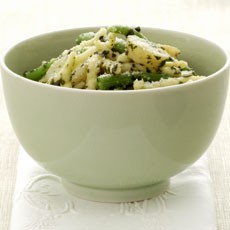
Recipe: Trofie alle Castagne: Chestnut Pasta with Pesto, Potatoes and Green Beans

Published by Monday, July 15, 2013 Permalink 0

by Rosario Indelicato

Recipe: Trofie alle Castagne: Chestnut Pasta with Pesto, Potatoes and Green Beans

Serves 4 people

Ingredients

2 jars of Genoese pesto for 500 g of chestnut Trofie pasta
3 potatoes, peeled and cut into thin Julienne strips
75 g of French-style green beans, ends cut off and cut in half
Fresh Parmesan cheese to taste

Continue Reading…

Never miss a post
Name: 
Your email address:*
Please enter all required fields
Correct invalid entries

Metric-Imperial Recipe Converter – French/British/American Equivalents

Published by Sunday, June 23, 2013 Permalink 0

Metric-Imperial Recipe Converter – French/British/American Equivalents //


From Southern Food:

Liquid Measures

1 cup 8 fluid ounces 1/2 pint 237 ml
2 cups 16 fluid ounces 1 pint 474 ml
4 cups 32 fluid ounces 1 quart 946 ml
2 pints 32 fluid ounces 1 quart 946 ml
4 quarts 128 fluid ounces 1 gallon 3.784 liters
8 quarts one peck
4 pecks one bushel
dash less than 1/4 teaspoon

Dry Measures

3 teaspoons 1 tablespoon 1/2 ounce 14.3 grams
2 tablespoons 1/8 cup 1 fluid ounce 28.3 grams
4 tablspoons 1/4 cup 2 fluid ounces 56.7 grams
5 1/3 tablespoons 1/3 cup 2.6 fluid ounces 75.6 grams
8 tablespoons 1/2 cup 4 ounces 113.4 grams 1 stick butter
12 tablespoons 3/4 cup 6 ounces .375 pound 170 grams
32 tablespoons 2 cups 16 ounces 1 pound 453.6 grams
64 tablespoons 4 cups 32 ounces 2 pounds 907 grams

Continue Reading…

Never miss a post
Name: 
Your email address:*
Please enter all required fields
Correct invalid entries

Foraging and Post-Neolithic Cooking: Antonio’s Wild Spinach Salad Recipe, by Jane Le Besque

Published by Sunday, June 16, 2013 Permalink 0

Foraging and Post-Neolithic Cooking: Antonio’s Wild Spinach Salad Recipe, by Jane Le Besque

Antonio’s Wild Spinach Salad Recipe

Jane and Antonio’s recipe is based on foraging and what they imagine post-neolithic cooking to be, foraging and all, but with a modern twist, i.e. the olive oil.


Continue Reading…

Never miss a post
Name: 
Your email address:*
Please enter all required fields
Correct invalid entries

Switzerland: Swiss-style Knepfle Pasta

Published by Thursday, June 13, 2013 Permalink 0

by Jonell Galloway

Switzerland: Swiss-style Knepfle Pasta

Knepfle is originally from Alsace in France, but it is also eaten in Switzerland, in particular in the Jura region, which borders Alsace.

You can buy them at the supermarket, but they’re much better when you make them at  home.

Swiss-style Knepfle Recipe

Ingredients

3 1/3 to 4 1/10th cups unbleached white flour
3 eggs
2 cups milk
About 1/2 cup water
3 large pinches of salt
1 oz. butter
Large pan of water for boiling knepfles
Coarse sieve with large holes

Instructions

  1. Put eggs into a bowl. Add milk, water and a pinch of salt. Beat with wire whip.
  2. Little by little, use wire whip to add flour until a heavy dough is formed. The dough should fall naturally off the whip.
  3. Let dough rest for 30 to 60 min.
  4. When time is almost up, bring  large saucepan of water to boil. Add 2 pinches of salt.
  5. Heat an oven dish large enough to hold all the knepfles.
  6. NOTE: The hard part: Real pros push the dough through a coarse sieve, but this can be a bit tricky. If this is your first time making knepfles, I suggest that you drop the dough by teaspoons the first time, and try using a sieve the next time. Make sure you have a sieve with large holes before trying this.
  7. Leave water to boil gently and start dropping teaspoons of dough into water, in several goes.
  8. Let knepfles poach until they rise to the surface. This should take about 15 minutes.
  9. Use a slotted spoon to remove them. Do this carefully so they don’t fall apart. Drain well. Place in heated oven dish.
  10. Do this in steps, until all the dough is used up.
  11. To serve, over medium to medium high heat, melt butter in a frying pan (butter should be sizzling).
  12. When hot, add dry knepfles and brown, carefully turning them from time to time. Cook until browned, about 15 minutes.
  13. Serving: There are many ways to serve knepfles: plain, with cream or bacon bits, or with other sauces.


Never miss a post
Name: 
Your email address:*
Please enter all required fields
Correct invalid entries

The Top 10 Restaurants in French-Speaking Switzerland

Published by Wednesday, June 5, 2013 Permalink 0

I compiled this list of the top 10 restaurants in French-speaking Switzerland from the March 28, 2013, issue of the French-language magazine L’Hebdo.

  1. Hôtel de Ville – Benoît, Crissier
  2. Domaine de Châteauvieux, Satigny
  3. Hôtel Terminus – Didier de Courten, Sierre
  4. L’Ermitage de Bernard Ravet, Vufflens-Le-Château
  5. Le Pont de Brent, Brent
  6. Le Cerf, Cossonax
  7. Hôtel Beau-Rivage, Le Chat Botté, Geneva
  8. Hôtel Beau-Rivage, Anne-Sophie Pic, Lausanne
  9. Georges Wenger, Le Noirmont
  10. Denis Martin, Vevey

English: Logo of the Swiss magazine L'Hebdo Fr...

Never miss a post
Name: 
Your email address:*
Please enter all required fields
Correct invalid entries

UA-21892701-1