The Many Faces of Swiss Fondue and Chasselas wine

Published by Friday, October 14, 2011 Permalink 0

by Jonell Galloway

The word “fondue” means literally “melted” in French. In Switzerland, fondue is made by melting cheese with white wine, pepper, garlic and kirsch (cherry schnapps).

Photo courtesy of Fribourg Tourist Bureau.

Different regions use different cheeses and have different recipes however. In the canton of Valais, no starch, butter, or eggs are added, while in many other regions they are used for thickening. Today, many people use corn starch.

Fribourg fondue is different from other cantons in that it uses Fribourg Vacherin cheese. Both Gruyère and Fribourg make what is referred to as “half and half”, meaning they use half Gruyère and half Fribourg Vacherin cheese.In central Switzerland, it is common to use Gruyère, Emmental and Sbrinz, a hard cheese from central Switzerland that is claimed to be the oldest cheese in Europe.

Continue Reading…

Never miss a post
Name: 
Your email address:*
Please enter all required fields
Correct invalid entries

What is Mindful Eating?

Published by Wednesday, October 5, 2011 Permalink 0

by Jonell Galloway

Mindful Eating : Get serious about what you put in your mouth!

Mindful Eating means getting serious about what you put in your mouth.

Mindful Eating is sensual — in this case visual — as well as cerebral.

You don’t have to think with your taste buds every minute of your life, like I do, but eating takes on a new importance in your life, and is no longer just an essential action required to fuel your body.

Mindful Eating starts by being mindful of every aspect of our food chain, from the very soil to the end product we put in our mouths. It is about taste and smell and nutrition, but also about respect for the land and soil that provide our nourishment.

It is about the seeds we plant, the fertilizer we spread.

It is about the human contact between a producer and a buyer and the bond that is formed when he puts the vegetables he has grown with tender loving care and the sweat of his brow into your hand. It is about leaving the land in a condition that will allow our children to live on in a healthy manner.

Mindful Eating is not only about how the steak tastes, but also about what the cow has eaten, where it comes from, how it has been treated.

It is about cooking real homemade food for our family in a spirit of love and awareness, and making sure they are getting the nutrients they need and about avoiding the toxic ingredients so many foods contain.

Photo courtesy of Odette de Crecy.

It is about reading labels in supermarkets, about trying to eat natural, if we can, or at least making the best effort we can to put quality products on the table.

Mindful Eating requires us to look at the food we eat, smell it, chew it slowly and appreciate its texture and flavor, and then pause and enjoy the aftertaste.

Mindful Eating is somewhat a way of life, although we mustn’t become obsessive about it. Almost by definition, it moves toward consumption of local products, and thus re-creation of local economies.

It is a way of communing with our environment – our family, our community, local business, producers, nature – and the satisfaction that is derived from this.

Mindful Eating gives concrete, practical results. It can improve our health and help us lose weight; it can help us lower cholesterol and consume more nutritious food.

It can give us a sense of well-being, because we have the feeling we’re doing what is right not only for ourselves and our family, but also for our community and the world.

Photo courtesy of Nikoman.

It can cut down our food budget, since seasonal products bought directly from local farmers will invariably be cheaper. They will also fresher and have more vitamins.

This is Part One of a series of articles exploring the endless possibilities incorporating this approach into our daily lives. Stay tuned for the following segments:

Part Two: Mindful Eating and Farmers
Part Three: Mindful Eating and Health
Part Four: Mindful Eating and the Local Economy
Part Five: Mindful Eating and the Land
 
___________________

Alessandro Guerani is a food and still life photographer in Bologna, Italy. He also has a food photography blog with beautiful food photos, Food-o-Grafia. The pomegranate photo is from his Baroque Food photo album.

Never miss a post
Name: 
Your email address:*
Please enter all required fields
Correct invalid entries

17 ways of eating on a budget without sacrificing your health

Published by Wednesday, October 5, 2011 Permalink 0

by Rosa Mayland

  1. Never shop on an empty stomach.
  2. Buy in bulk.
  3. Visit your supermarket as little as needed and make precise shopping lists.
  4. Don’t buy more than needed. Stick to your shopping lists.
  5. Make a budget, stick to it, and keep track of all expenses.
  6. Know your supermarket well and be wise to supermarket tricks.
  7. Limit your dining out. Eat at home.
  8. Shop seasonally and locally. It’s cheaper and healthier.
  9. Avoid all bagged, fancy packaged, ready-to-eat and processed food/meals (unless it is straightforward canned food). Avoid junk food unless it’s a treat you make at home from time to time.
    Swiss food pyramid.

  10. Eat more frugally (smaller portions) and only when you are hungry.
  11. Eat less meat, but more sustainable fish, cheese and eggs.
  12. Emphasize grains, legumes and vegetables (understand the food pyramid).
  13. Make double batches when you cook — one batch to eat straight away and one to freeze.
  14. Recycle leftovers and don’t waste food.
  15. Always stock your freezer with a selection of ice-friendly food, your kitchen pantry with imperishable and your spice cupboards with lots of condiments.
  16. Drink lots of tap water. Limit your consumption of alcohol, coffee, tea, sodas cut out most bought beverages. They represent a large expense.
  17. Take an interest in foreign and exotic culinary dishes, as they use bargain ingredients and small quantities of costlier ingredients.
Related articles


Never miss a post
Name: 
Your email address:*
Please enter all required fields
Correct invalid entries

And here are the winners of the 6 Kuhn Rikon knives at our Expat Expo drawing

Published by Tuesday, October 4, 2011 Permalink 0

by Jonell Galloway

Husband Peter and I and Rosa Mayland, author of our column “Rosa’s Musings,” had a great time at the Expat Expo Geneva on Sunday. It’s a great way to make contacts in Geneva.

Jonell Galloway at The Rambling Epicure’s stand at Expat Expo Geneva 2011


We had a drawing for 6 red polka-dot Kuhn Rikon knives.


Kuhn Rikon Knives Drawing, The Rambling Epicure, Expat Expo Geneva

Here are the winners:

Paula Davies-Smith
M. Rowe
Peter Zornow
Sayjel
Alison Farley
Michelle Arevalo-Carpenter

Congratulations. You are now the proud owner of knives made by one of the most reputable brands of cookware in the world, and they’re made in Switzerland!

Related articles


Never miss a post
Name: 
Your email address:*
Please enter all required fields
Correct invalid entries

Switzerland: Rosa’s Musings: Butterzopf, The History Of A National Sunday Bread

Published by Saturday, October 1, 2011 Permalink 0

by Rosa Mayland

Switzerland (also known as “Confoederatio Helvetica” or “die Schweiz”, “la Suisse”, “Svizzera”, “Svizra”) is a federal republic composed of 26 cantons and 4 different linguistic and cultural areas (German, French, Italian and Romansch). It’s therefore not surprising if its cuisine reflects its rich heritage and highly diverse cultures. It is rather like an island in the middle of Europe, like a tiny kingdom.

Each region and canton has its very own traditional dishes and specialties as well as produce, and they defend and even protect it fiercely, because there are dishes, cheeses, wines, breads, and many more food items that are now protected by AOCs in Switzerland.

Even if this tiny piece of land stuck between Germany, Austria, France, Italy has its own highly diverse culinary identity, one cannot refute that each part of the Swiss Confederation has, to a certain extent, been influenced by its neighbors, and vice versa. For example, a sausage resembling the anise-flavored Geneva sausage called Longeole can also be found in Chablais (Haute-Savoie); a cheese similar to Valais raclette is made in Savoie too; the Swiss German spätzli seem to be of Swabian (German) origin. Then there is polenta or risotto which evoke the Apennine Penninsula, and are often found in Ticino, and, well, the list goes on. As it is the case with every place that is not in total isolation, the borders are quite permeable, so it is pretty understandable that ideas, information, arts and science cross back and forth across the borders.

Continue Reading…

Never miss a post
Name: 
Your email address:*
Please enter all required fields
Correct invalid entries

Switzerland: Coop’s Pro Montagna Label: 5 Years of Protecting Traditional Swiss Food Products

Published by Friday, September 30, 2011 Permalink 0

Switzerland: Coop’s Pro Montagna Label: 5 Years of Protecting Traditional Swiss Food Products

Please join us on Sunday, October 2nd, at the Expat Expo Geneva, from 11 a.m. to 5 p.m. in Palexpo, Hall 7. We’d love to meet our readers and make our contact more personal.

We’ll have booth No. B8 against the well, and one of our most popular authors, Rosa Mayland of the column Rosa’s Musings,will be present.

Click here for all the details.

Hope to see you there!

Jonell Galloway, Editor of The Rambling Epicure


Never miss a post
Name: 
Your email address:*
Please enter all required fields
Correct invalid entries

It’s apple season: Matefin à la pomme / apple pancakes/pie

Published by Thursday, September 29, 2011 Permalink 0

by Jonell Galloway

O Délices discovered this recipe on blog de Guillemette.

This is a traditional recipe from the Savoy, so it’s not so far from us in Switzerland.

The original name comes from the French mâte faim. Peasants prepared these potato pancakes in the morning before going to work in the fields. It was meant to keep them going until lunchtime.

This version uses apples instead of potatoes, and is perfect for the apple season, which has just started here in Switzerland.

Continue Reading…

Never miss a post
Name: 
Your email address:*
Please enter all required fields
Correct invalid entries

Food News Daily: September 27, 2011

Published by Tuesday, September 27, 2011 Permalink 0

Mainstream Anglo Media and Press

Nigel Slater’s classic salsa verde recipe, The Guardian

Is Junk Food Really Cheaper?, The New York Times

Small Factories Take Root in Africa, Wall Street Journal

For Rosh Hashanah, honey, you have options, Los Angeles Times

A new generation of student cooks?, Is the accepted wisdom about students being uninterested in cooking still accurate or is it a myth kept alive by those who graduated years or decades ago?, The Guardian

Asian snack time is all the time, The Seattle Times

Munch ado about Doritos, one man’s iconic snack, The Washington Post

Best of the Anglo Food and Travel Blogs

From Polenta to Peach Cobbler, Measure Free Hippie Cook

Continue Reading…

Never miss a post
Name: 
Your email address:*
Please enter all required fields
Correct invalid entries

Food News Daily: September 23, 2011

Published by Friday, September 23, 2011 Permalink 0

Mainstream Anglo Media and Press

Kosher cuisine: Beyond the bagel. Traditional Jewish food is homely, hearty and intended to be shared. Now foodies of all faiths are joining the feast, The Independent

Female Farmers Sprouting: More Md., Va. Women Lead Farms, The Washington Post

Fancy a Peruvian? Andean state pulls up a seat at the food world’s high table: Gastón Acurio, the ‘Peruvian Jamie Oliver’, is at the forefront of the country’s latest gastro-boom, The Guardian

After His Brother’s Killing, a Chef Turns to Israeli Food, The New York Times

On Nutrition: Are egg whites just a bunch of feathers? (and other important questions), The Seattle Times

Curry — it’s more ‘Japanese’ than you think, The Japan Times

Best of the Anglo Food and Travel Blogs and Sites

For German bier, it’s all in the glass, Eatocracy

Continue Reading…

Never miss a post
Name: 
Your email address:*
Please enter all required fields
Correct invalid entries

Food News Daily: September 21, 2011

Published by Thursday, September 22, 2011 Permalink 0

Mainstream Anglo Media and Press

Giant vegetables: more fun than flavour + gallery of massive veg, The Guardian

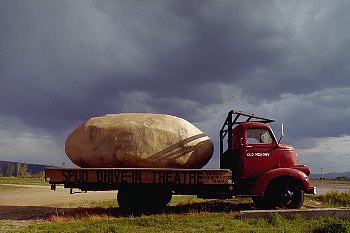
Giant potato on truck

Fry me to the moon: British cuisine takes off in Berlin, The Guardian

Antibiotic Resistance and the Case for Organic Poultry and Meat, The Atlantic

Angela Hartnett’s ham hock and cannelini bean soup – a soup hearty enough to serve as a full meal, The Guardian

Best of the Anglo Food and Travel Blogs and Sites

5 Ways Bloggers Changed Restaurant Reviewing, Will Write for Food, DianneJ

Pomegranate Walnut Relish, Leite’s Culinaria

The Shark Fin Debate, Zester Daily

Who Wants to Be a Career Food Critic Anyway, The Atlantic Wire

To Ditch the Dessert, Feed the Brain, PsyPost

The People’s Grocery in West Oakland is a great example of a community taking charge of their food (video), Organic Nation

Cooking smoke deadly threat in developing world, Eatocracy

Food Photography

Apricots on silver platter, Foodografia (Alessandro Guerani)

Alternative Press/Sites

Is Your Choice Of Food A Fundamental Right?, Food Renegade

You say tomato, I say code violation: Judge wages war against urban gardener, Mother Nature Network

Project: Design the Ultimate American Sandwich, GOOD

World

Chocolate Roundup #9: Switzerland, UK, USA, Poland, MyKugelhopf

Tomate: el duro camino hasta el éxito, ADN.es

Pumpkin Salad Tripoli style, Mom’s Recipes And More, An Israeli food blog

Healing South Indian Tomato & Black Pepper Soup, love food eat

Australian chocolate industry praised for commitment to accredited cocoa, Food Magazine

Brasil Afora: Pernambuco – Bolo de RoloChef Fafá – Receitas

Les Espoirs de Mougins 2011: The Winner, Le Gagnant, Gayot

Gâteaux Basques à la Confiture de Cerises Noires,  J’en reprendrai bien un bout

Related articles
Never miss a post
Name: 
Your email address:*
Please enter all required fields
Correct invalid entries

UA-21892701-1